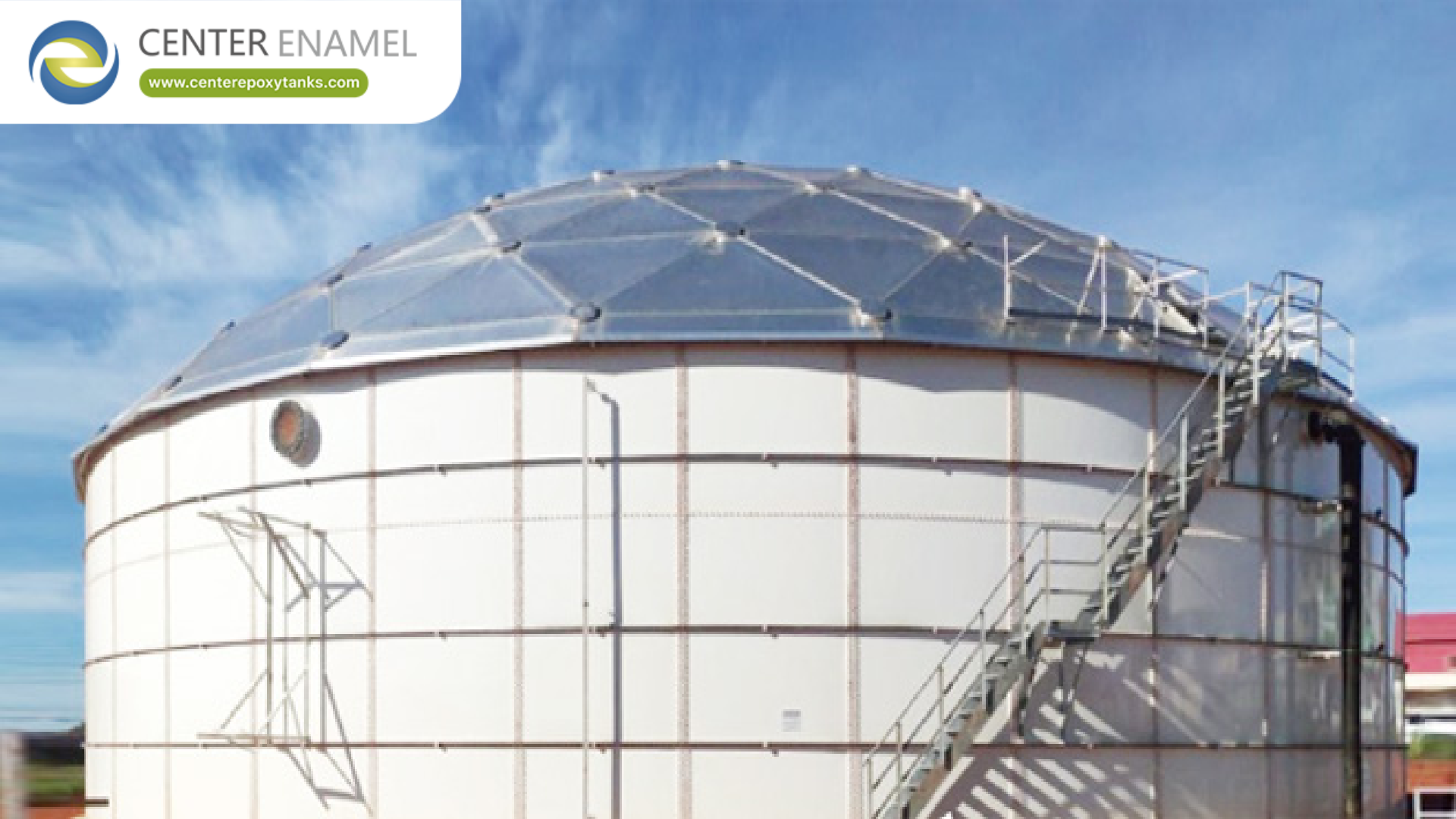
In the complex and highly regulated world of refined petroleum, kerosene occupies a unique and critical position. From its role as a primary heating fuel in residential sectors to its essential function as the foundational base for Jet A-1 aviation turbine fuel, kerosene is a product whose value is defined entirely by its chemical purity and stability. Unlike heavier fuel oils, kerosene is a "clean" distillate that is highly susceptible to atmospheric degradation, moisture-induced hazing, and oxidative instability. For refinery operators, strategic reserve managers, and terminal logistics hubs, the structural integrity and enclosure technology of Kerosene Storage Tank assets are the most vital factors in preserving this value.
Shijiazhuang Zhengzhong Technology Co., Ltd (Center Enamel), acting as a premier China Floating Roofs Manufacturer, has engineered a definitive solution to the challenges of light distillate storage. Our high-performance Floating Roofs are designed to provide a continuous, impermeable barrier between the liquid product and the atmosphere. By eliminating the hazardous vapor space and sealing out environmental contaminants, our technology ensures that kerosene stocks remain in a "ready-to-use" state, meeting the world’s most stringent quality specifications while simultaneously optimizing the safety and economic efficiency of the storage facility.
Industry Pain Points: The Strategic Risks of Kerosene Contamination
The storage of kerosene in large-scale Kerosene Storage Tank infrastructure involves managing a delicate chemical balance. Traditional fixed-roof storage without internal protection often leads to several persistent industry pain points that compromise the product's marketability and the terminal's operational safety:
1. Oxidative Degradation and Color Instability
Kerosene is composed of hydrocarbons that are sensitive to the presence of oxygen. When stored in a tank with a large air headspace, the fuel reacts with oxygen to form peroxides, organic acids, and gums. This oxidative process leads to "color darkening"—a primary indicator of fuel degradation. For aviation-grade kerosene, any deviation from the "water-white" color standard can result in the entire batch being rejected, leading to massive financial losses and logistical disruptions.
2. Moisture Ingress and Microbial Proliferation
Kerosene is naturally hygroscopic, meaning it has a high affinity for water. In traditional tanks, the daily "breathing" cycle—driven by temperature fluctuations—draws in humid ambient air. As the temperature drops at night, this moisture condenses on the internal walls and settles at the bottom of the fuel. This water-fuel interface is the perfect breeding ground for microorganisms (often called "fuel bugs"). These biological contaminants create sludge, cause fuel hazing, and release corrosive byproducts that damage both the tank and downstream engine components.
3. Volatile Organic Compound (VOC) Emissions
While kerosene is less volatile than gasoline, it still contains "light end" hydrocarbons that evaporate into the tank's headspace. This evaporation represents a constant loss of valuable inventory. Furthermore, as environmental regulations tighten globally, terminal operators are under increasing pressure to eliminate VOC emissions to comply with clean air standards. The release of these vapors is not only an economic loss but also a significant environmental liability.
4. Fire Hazards and Explosive Atmospheres
The headspace of a fixed-roof Kerosene Storage Tank often contains a mixture of air and flammable vapors. During filling operations, the risk of static electricity discharge or external ignition sources creates a potential for catastrophic fire or explosion. Managing this risk through nitrogen blanketing is expensive and requires complex, high-maintenance monitoring systems.
5. Internal Corrosion and Structural Deterioration
The humid, oxygen-rich environment in a tank's headspace is highly corrosive to carbon steel. Over time, the underside of a fixed roof and the upper shells of the tank will suffer from localized pitting and rust scaling. These rust flakes can fall into the kerosene, compromising its particulate cleanliness and necessitating frequent, expensive tank cleanings.
Product Definition: The Engineering Logic of Floating Roofs
To resolve these vulnerabilities, Center Enamel defines hydrocarbon containment excellence through our advanced Floating Roofs. Unlike a fixed cover, a floating roof is a dynamic structural deck that floats directly on the surface of the kerosene.
The Internal Floating Roof (IFR) Advantage
For kerosene storage, we primarily utilize the Internal Floating Roof (IFR) configuration. This system involves a floating deck installed inside a fixed-roof tank. This "double-layer" approach provides the best of both worlds: the fixed roof protects the product from rain, snow, and wind, while the floating roof eliminates the vapor space and blocks the ingress of atmospheric moisture.
Geodesic Buoyancy and Stability
As a specialized China Floating Roofs Manufacturer, we utilize a geodesic space-frame design supported by high-buoyancy closed-cell pontoons. This ensures that the roof remains perfectly level and stable, even during high-flow filling or emptying cycles. The independent nature of the pontoons ensures that even in the unlikely event of a single pontoon failure, the roof maintains its structural integrity and buoyancy.
Specialized Material Selection
Our roofs are fabricated from high-grade aluminum or stainless steel alloys. These materials are chosen specifically for their non-sparking properties and their total chemical compatibility with kerosene. Unlike steel, these alloys do not rust or flake, ensuring that the fuel's particulate count remains within the strict limits required for high-precision industrial and aviation applications.
Hermetic Rim Sealing Systems
The critical interface between the floating deck and the tank shell is secured by our precision-engineered rim seals. We offer primary and secondary seal configurations made from specialized elastomers that are resistant to the solvent properties of kerosene.
Integrated Solution Advantages: A Unified Storage Ecosystem
The true value of the Center Enamel approach lies in our ability to provide integrated solution advantages that treat the Kerosene Storage Tank as a holistic system rather than a collection of separate parts.
1. Synergy with Aluminum Dome Roofs
When our Floating Roofs are paired with Center Enamel Aluminum Dome Roofs, the storage system achieves peak performance. The dome roof reflects a vast majority of solar radiation, keeping the internal environment of the tank significantly cooler. This lower temperature further stabilizes the kerosene, reduces the rate of any residual evaporation, and minimizes the risk of condensation-driven moisture buildup.
2. Seamless Infrastructure Integration
Our roofs are designed to be fully compatible with modern terminal infrastructure, including automated tank gauging (ATG) systems, high-level alarms, and centralized fire suppression interfaces. We ensure that the floating roof does not interfere with sampling ports or water draw-off systems, allowing for easy quality control and operational monitoring.
3. Single-Source Engineering Confidence
As a comprehensive China Floating Roofs Manufacturer, we provide a "Brand Backer" for the entire project. By sourcing the tank enclosure, the floating deck, and the dome roof from Center Enamel, operators eliminate the technical conflicts that often arise when mixing components from different manufacturers. This ensures that every seal, vent, and structural node is perfectly synchronized for a 20-year-plus service life.
4. Environmental Seepage and Risk Mitigation
Our integrated solutions are engineered with a focus on risk assessment and environmental seepage prevention. We utilize advanced sealing technology at the tank rim and all penetrations (such as support legs and gauge poles) to ensure that the facility meets the most stringent global environmental protocols for groundwater and air quality protection.
Product Advantages and Performance Parameters
Choosing Center Enamel Floating Roofs for your kerosene assets provides a range of transformative technical advantages that directly impact the facility's ROI:
Unrivaled Vapor Suppression: Our sealing systems are tested to reduce VOC emissions by a significant margin compared to fixed-roof tanks. This preservation of high-value "light ends" ensures that the fuel maintains its flashpoint and energy density.
Superior Corrosion Resistance: The use of 6000-series aluminum alloys ensures that the roof structure will never rust or require anti-corrosion painting. This is a critical advantage in the humid environments of coastal fuel terminals.
Lightweight Geodesic Engineering: The high strength-to-weight ratio of our aluminum designs allows for the installation of massive-diameter roofs without overstressing the tank shell or foundations. This makes our roofs the ideal choice for retrofitting older Kerosene Storage Tank units.
Maintenance-Free Lifecycle: Because our materials do not degrade in the presence of kerosene or moisture, the roofs require only minimal periodic inspections. This eliminates the need for expensive "hot work" repairs or sandblasting throughout the roof's life.
Fire Risk Elimination: By removing the oxygen-rich headspace, our floating roofs inherently prevent the formation of explosive atmospheres, significantly enhancing the fire safety profile of the entire fuel farm.
Manufacturing Excellence and Company Core Competitiveness
The core competitiveness of Shijiazhuang Zhengzhong Technology Co., Ltd (Center Enamel) is built on thirty years of industrial leadership and a commitment to precision manufacturing.
Advanced CNC Precision Fabrication
Our manufacturing facility utilizes state-of-the-art CNC technology to produce every component of our Floating Roofs. This automated approach ensures that every strut, node, and pontoon is manufactured to a dimensional tolerance of mere millimeters. This precision is what allows our roofs to be assembled quickly and accurately on-site, ensuring a perfect, leak-free fit within the Kerosene Storage Tank.
Massive Production Power and Global Reach
As a premier China Floating Roofs Manufacturer, we operate one of the largest specialized production bases in the region. This capacity allows us to support multiple large-scale infrastructure projects simultaneously, ensuring that our global clients in over 100 countries receive their containment solutions on time and to the required specifications.
Factory-Controlled Quality Assurance
Every component we produce undergoes rigorous quality control testing, including pressure testing for pontoons and chemical compatibility testing for seal materials. By maintaining total control over the manufacturing process, we eliminate the defects and inconsistencies common with manual, field-fabricated solutions.
Global Supply Chain and Logistics Expertise
With three decades of experience, Center Enamel has mastered the complexities of international logistics. We provide seamless door-to-door delivery and technical supervision, ensuring that our precision-engineered components arrive on-site in pristine condition, ready for immediate assembly.
International Standards, Installation, and Maintenance
At Center Enamel, we understand that municipal and industrial energy projects require the highest levels of structural and safety compliance.
Adherence to Global Engineering Standards
Our Floating Roofs are designed in strict accordance with international engineering protocols, including API 650 Appendix H, ISO 28765, and relevant AWWA standards. This compliance provides the "Brand Backer" required for acceptance by international energy majors, municipal water authorities, and global engineering consultants.
Simplified and Safe Installation Process
One of the key advantages of our modular, bolted design is the speed and safety of installation. Because the components are precision-manufactured at our factory, they can be assembled inside the Kerosene Storage Tank without the need for welding. This "cold work" approach is essential for safety when retrofitting existing fuel tanks and significantly reduces the duration of operational interruptions.
Low Maintenance and Operating Costs
Our commitment to using non-corrosive, high-durability materials means that the maintenance requirements for our roofs are exceptionally low. We provide comprehensive maintenance manuals and localized technical support to ensure that terminal personnel can perform the necessary periodic checks with minimal training and no specialized equipment.
Risk Assessment and Performance Monitoring
We provide every client with a detailed risk assessment and performance profile for their specific installation. This includes analysis of seismic resilience, wind load tolerance, and seal life expectancy, allowing operators to plan their long-term infrastructure strategy with total confidence.
Customization: Different Storage Tank Schemes
Center Enamel recognizes that no two kerosene projects are identical. We offer a range of customized storage tank schemes to meet specific regional and operational requirements:
Retrofit Solutions for Welded Tanks: We specialize in designing floating roofs that can be integrated into existing welded steel tanks, extending the life of older assets and bringing them into compliance with modern environmental standards.
Integration with Epoxy Coated Tanks: For specialized chemical or high-purity industrial kerosene storage, our floating roofs can be paired with our world-class Epoxy Coated Tanks, providing a double-layered barrier against both internal and external corrosion.
Varying Sealing Configurations: Depending on the volatility of the specific kerosene blend and the localized air quality regulations, we offer a range of seal types—from simple mechanical shoe seals to high-efficiency liquid-mounted resilient foam seals.
The Definitive Choice for Kerosene Infrastructure
The storage of kerosene demands a level of precision and protection that traditional tank covers simply cannot provide. By addressing the critical industry pain points of oxidative degradation, moisture contamination, and VOC emissions, Shijiazhuang Zhengzhong Technology Co., Ltd (Center Enamel) has established itself as the global leader in kerosene containment technology.
As a premier China Floating Roofs Manufacturer, our mission is to provide the engineering "Brand Backer" that energy terminals need to operate safely and profitably in a competitive global market. Through our advanced CNC manufacturing, thirty years of expertise, and a commitment to international engineering standards, we ensure that every Kerosene Storage Tank equipped with Center Enamel technology becomes a model of efficiency and sustainability. Our integrated solution advantages—combining Floating Roofs with Aluminum Dome Roofs—represent the highest standard of product purity protection available today.


