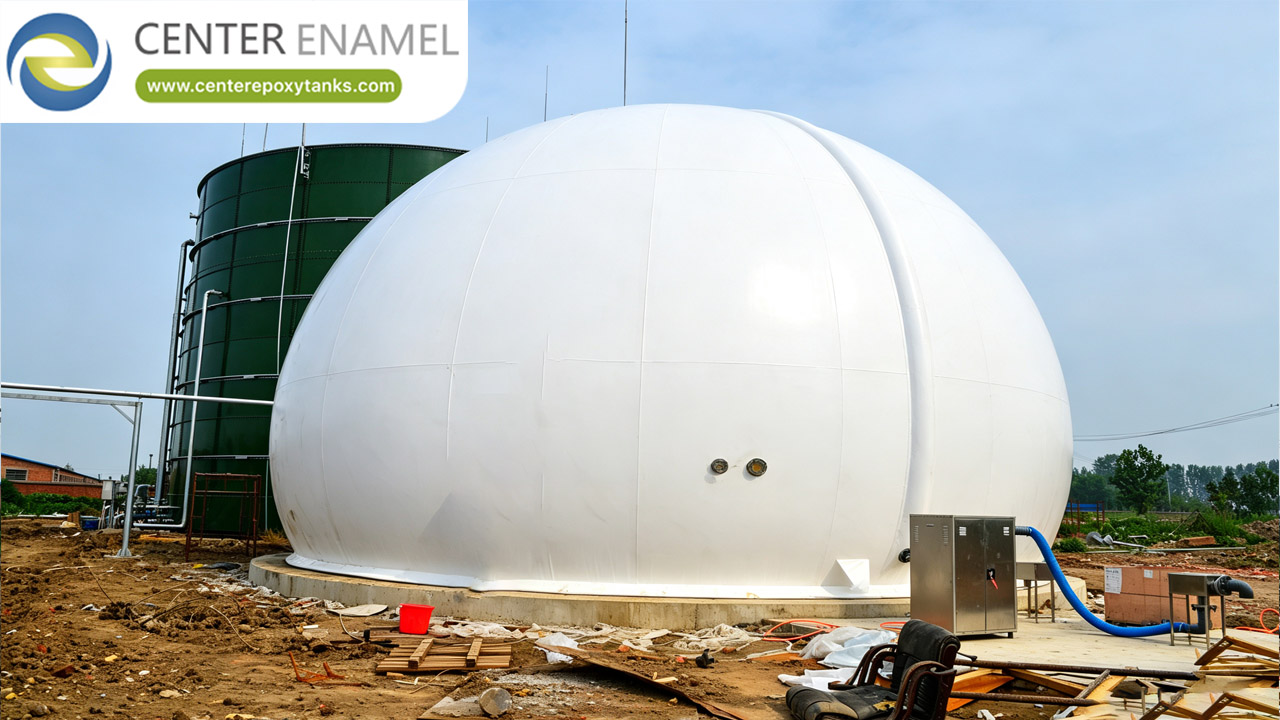
Optimizing Compressed Biogas (CBG) Plants: The Role of Gas Holders
For Compressed Biogas (CBG) production, the gas holder is more than a container; it is a critical pressure-buffer system. Unlike plants that burn biogas locally in a CHP unit, CBG plants require high-quality, stable-pressure gas for the upgrading/purification process. Double Membrane Biogas Holders have become the industry standard for these plants, providing the precise pressure regulation and durability needed for efficient gas compression.
The Engineering Challenge: Why CBG Plants Need Specialized Storage
In a CBG facility, raw biogas must be moved through a purification system (scrubbers/membranes) to reach the purity level of biomethane. This process is sensitive to:
Pressure Fluctuations: Inconsistent pressure causes inefficiencies in the upgrading system.
H2S Exposure: Biogas is highly corrosive; the storage system must withstand high H2S concentrations to avoid leaks.
Vapor Management: The storage system must handle gas flow variations without compromising the air-tightness required for hazardous gas containment.
Why Double Membrane Systems are the CBG Gold Standard
A double membrane holder consists of two layers: an air-inflated outer membrane for structural protection and an inner membrane for flexible gas storage.
Comparative Performance: CBG Storage Solutions
Feature | Double Membrane Gas Holder | Fixed Steel/Concrete Roof | Traditional Storage Bag |
Pressure Stability | Excellent (Consistent) | Low | Variable |
Volume Flexibility | High | Fixed | Low |
H2S Resistance | Superior (PVDF/Specialized) | Poor | Moderate |
Maintenance | Minimal | High (Corrosion) | High (Wear) |
Operational ROI | Highest | Low | Low |
Technical Advantages for CBG Production
1. Constant Pressure for Upgrading Systems
The dual-membrane design provides a constant, positive pressure on the stored biogas. This stability is critical for the compressors and gas-purification (upgrading) modules that transform raw biogas into high-purity Compressed Biogas (CBG).
2. H2S and Chemical Resilience
Raw biogas is highly aggressive. Our gas holders utilize specialized, chemically inert membrane fabrics (often PVDF-coated) that resist degradation from H2S and other impurities, ensuring the containment system remains leak-proof over its 15+ year lifespan.
3. Scalable Capacity
CBG plants are often designed with modularity in mind. Double membrane holders can be integrated into the layout to handle surge capacities or expanded easily if you choose to increase your upgrading system throughput.
4. Integration with PLC/SCADA Systems
Modern CBG facilities rely on real-time data. These holders are easily integrated with plant monitoring systems, allowing operators to track gas levels and pressure trends continuously, ensuring the purification system always operates within its optimal input range.
Frequently Asked Questions (FAQ)
Q: Why is gas pressure stability important for a CBG plant?
A: Gas upgrading systems (membranes or PSA) require stable inlet pressures to reach their target purity levels. A double membrane holder acts as a "buffer," smoothing out the fluctuations in biogas production from the digester so the upgrading compressors receive a constant, uniform stream of gas.
Q: Do double membrane holders require extra gas compression?
A: No. The membrane system operates at a low, consistent pressure (typically 2–50 mbar). This is usually sufficient to feed the initial stage of your upgrading compressors without needing additional booster fans.
Q: Are these membranes resistant to the impurities found in raw biogas?
A: Yes. We use high-performance, multi-layered PVDF or specialized PVC/PU-coated fabrics that are specifically engineered to be chemically inert, providing long-term resistance to the corrosive gases generated during anaerobic digestion.
Q: Can these gas holders be installed outdoors?
A: Yes. They are designed for outdoor installation and are equipped with an air-inflated outer membrane that protects the system from rain, UV radiation, and heavy snow loads, making them ideal for any climate.
Q: Is it possible to use these holders with existing digesters?
A: Absolutely. Double membrane gas holders can be installed on top of existing concrete or steel tanks, or as standalone "gas bag" units next to the digester, making them the most flexible solution for retrofitting an existing biogas plant for CBG production.
Are you designing a new Compressed Biogas plant or looking to optimize the gas storage and purification stage of your existing facility? [Contact the Center Enamel engineering team] today for a technical consultation or a custom design proposal tailored to your CBG production requirements.
Expert Follow-Up Question: To provide the best technical recommendation, are you in the preliminary design phase for a new CBG project, or are you retrofitting an existing biogas plant to move into high-purity biomethane production?


