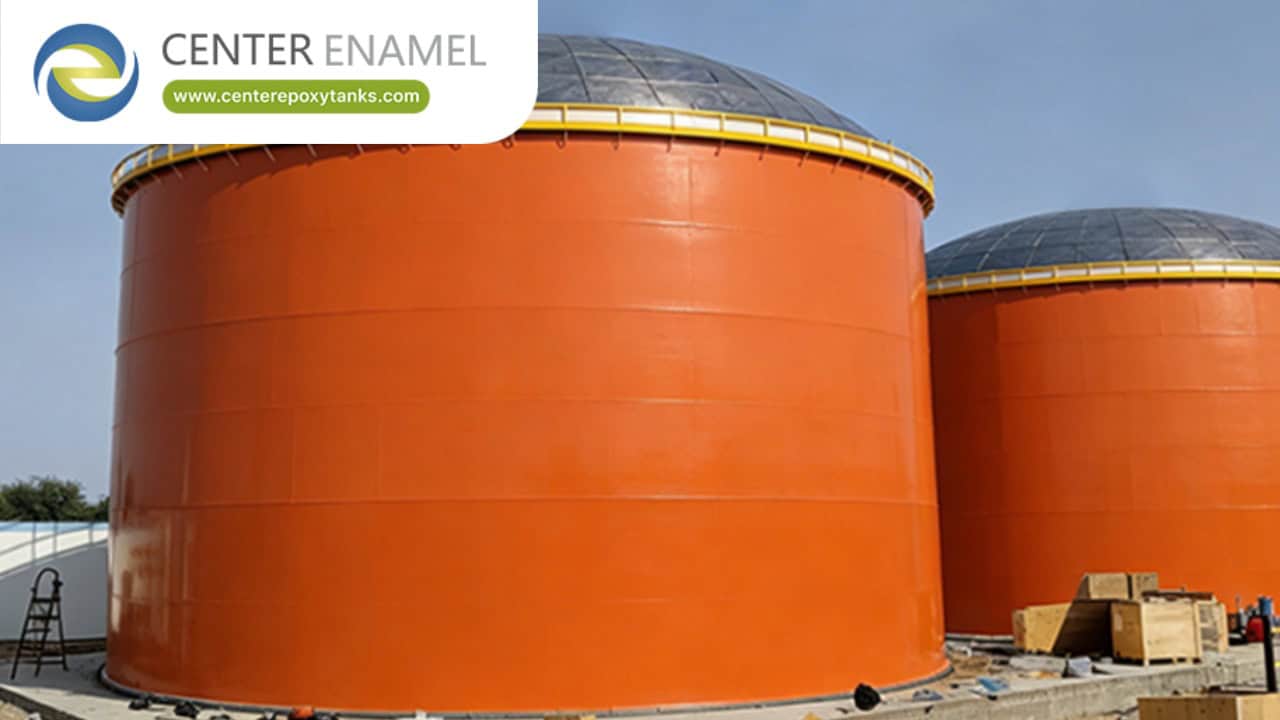
Oil Tanks: Choosing Between Welded, Bolted, and Shop-Built Options
The phrase oil tanks hides three very different ways of putting steel together. A bolted tank arrives as plates and is raised on site; a welded tank is fabricated in place; a shop-built tank is made whole and shipped. The right pick is rarely about price alone and almost always about volume, access, and how fast the tank must be in service.
Oil tanks divide into field-welded, bolted, and shop-assembled builds. Welded construction scales to the largest volumes and gives the strongest single shell, bolted tanks erection faster with lighter site plant, and shop-built units suit smaller volumes where transport allows a complete tank to arrive. The decision tracks capacity and site access more than material cost.
1. The Three Build Methods
Each method trades site labor against factory control. Understanding the trade is the whole specification, because the wrong method shows up as either an unmovable weight or an unshippable size. Bolted shells cap near 20,000 m3 and shop-built units near 5,000 m3, while welded construction scales past 50,000 m3 in a single shell.
· Field-welded: Plates joined on site; best for large diameters and heights where shipping a shell whole is impossible.
· Bolted: Factory-coated plates bolted with gaskets; fast erection, lighter cranes, and relocatable if needs change.
· Shop-built: Complete tank built under factory control and shipped; quality is high but size is capped by road or sea transport.
· Hybrid: Some projects weld the floor and bolt the shell, mixing speed and strength.
· Factory control: Shop and bolted routes move more welding into the factory, improving repeatability versus pure field welding.
2. Speed and Site Logistics
Erection speed is usually won by the method that needs the least site plant. Bolted tanks need a small crane and a trained crew; welded tanks need welding stations, NDE, and more weather protection. On a remote site a bolted tank can rise in 2-4 weeks, where a welded shell of equal volume may need 8-12 weeks of weather-dependent work.
· Cranage: Bolted shells use a light crane for plate lifts; welded shells need heavier and longer crane time per course.
· Weather: Field welding stops for wind and rain more often than bolting, extending the schedule on open sites.
· Crew: Bolted erection is a kit build needing fewer specialist welders on site.
· Relocatability: Bolted tanks can be dismantled and moved; welded tanks are effectively permanent once erected.
· Access: Remote or constrained sites favor the method with the lighter equipment footprint.
3. Capacity Ceiling and Welded Necessity
Above a certain volume, physics removes options. Very large crude and product tanks are welded because no other method reaches the diameter or the single-shell integrity required. Welded construction uniquely spans 50,000 m3 and beyond in one shell, whereas bolted and shop-built routes are capped by plate size and transport limits well below that scale.
· Large volumes: Welded construction uniquely reaches 50,000 m3 and beyond in a single tank for crude and products.
· Small volumes: Shop-built tanks win below transport limits where a complete unit arrives and is set in a day.
· Mid-range: Both welded and bolted compete here, and logistics usually decide.
· Integrity: A continuous welded shell has no joint gaskets to maintain across the full height.
· Code: API 650 welded practice is the referenced basis for the largest oil tanks, reinforcing the welded choice at scale.
Design parameter | Typical value or range | Why it matters |
Welded ceiling | 50,000+ m3 | Single-shell scale |
Bolted crane | Light, short | Kit erection |
Capacity range | 20-60,000 m3 | Welded tank span |
Shell plate | 6-40 mm | Hydrostatic head by elevation |
Coating DFT | 0.25-0.40 mm | Verified before shipment |
NDE coverage | 10-100 % | Seam length examined |
Vapor loss | up to 99 % | Standing-loss reduction |
Service life | 30-50 years | Design target |
Operating temp | 20-60 °C | Product and climate |
Limitation to check | Site access for crane | Bolted needs flat pad |
Wind / seismic load | 0.5-1.5 kPa | Roof and shell load |
Foundation settle | 0.1-0.3 m | Controlled subgrade |
Throughput | 50-500 m3/d | Typical draw |
Operating temp | 20-60 °C | Product and climate |
Product density | 800-950 kg/m3 | Typical range |
Design margin | 10-20 % | Allowance in steel |
Build Method | Welded | Bolted | Shop-Built |
Erection speed | Slower, weather-bound | Fast, kit-built | Fastest if shippable |
Capacity ceiling | Very large (50,000+ m3) | Medium-large | Capped by transport |
Site plant | Heavy crane + weld | Light crane | Minimal on site |
Relocatable | No | Yes | Rarely |
Best use | Crude, large product | Fast, mid volumes | Small, remote |
Engineering Assurance and Project Support
Every welded oil tank delivered by Shijiazhuang Zhengzhong Technology Co., Ltd. (Center Enamel) is designed to API 650 with shell courses sized by the one-foot method and checked for wind, seismic and hydrostatic load cases, or to EN 14015 and the Eurocodes where the site is European. Shell plate is shot-blasted to Sa 2.5 and coated to a documented dry film thickness, longitudinal and annular plate welds are examined by radiography or ultrasonic testing to the acceptance level written into the purchase order, and every tank is hydrostatically tested and dimensionally surveyed before hand-over. Build method, crane plan, and NDE scope are documented together so the chosen route is demonstrably the right one for the site and the volume before steel is ordered under API 650.
The cheapest oil tank on paper is often the most expensive in the yard when the build method cannot reach the volume or the access you actually have.
Frequently Asked Questions (FAQ)
What are the three build methods for oil tanks?
Field-welded tanks are joined on site and scale to the largest volumes; bolted tanks arrive as factory-coated plates and are raised quickly with light plant; shop-built tanks are made complete under factory control and shipped whole, capped by transport size.
Which method wins on erection speed and site logistics?
Bolted tanks usually win, needing only a small crane and a kit-build crew with less weather downtime than field welding. Shop-built tanks are fastest where the complete unit can be delivered and set in a day.
Where is welded construction still the only choice?
For very large crude and product tanks above roughly 20,000 to 50,000 m3, welded construction is the only method reaching the diameter and single-shell integrity required, with API 650 as the referenced basis.
How does capacity change the build decision?
Small volumes favor shop-built tanks, mid-range volumes are contested between welded and bolted on logistics, and the largest volumes default to welded. Capacity, not unit price, is the deciding axis.


