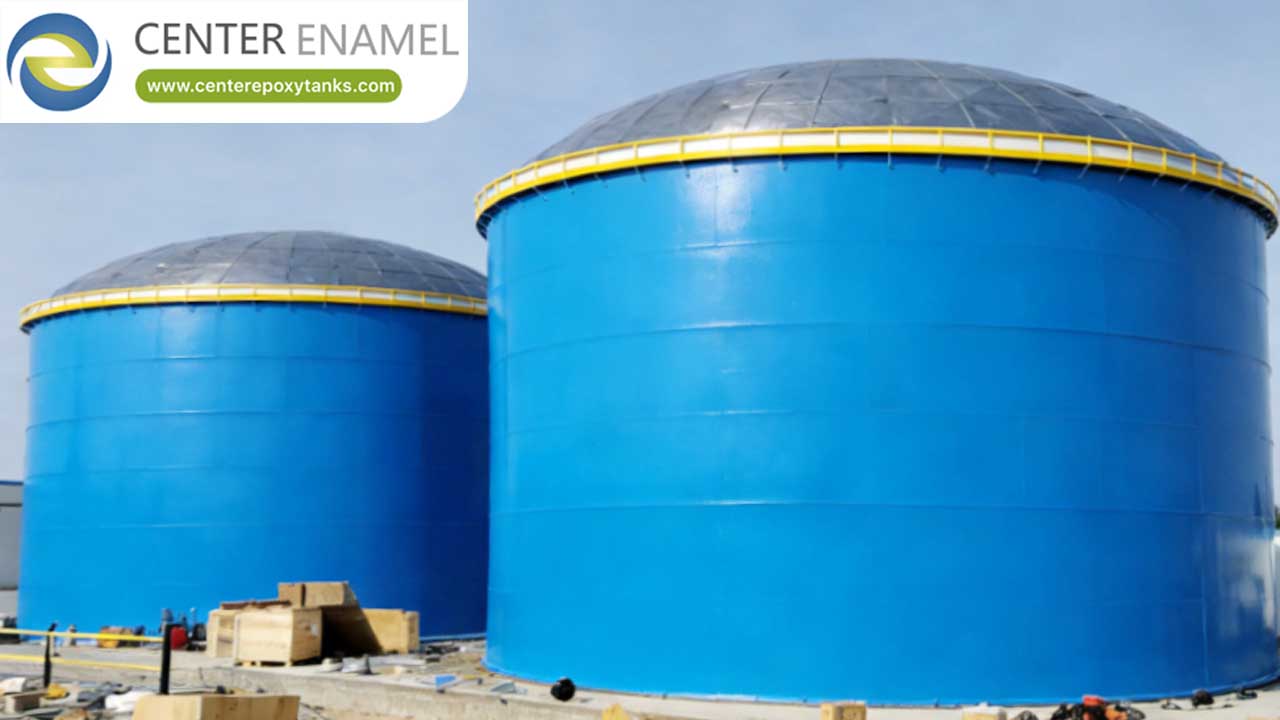
Oil Tank Roof Types: From Fixed Cone to Geodesic Dome
The roof is the part of an oil tank most exposed to the sky and least forgiving of a wrong assumption. A cone roof that is fine in a desert fails under snow, and a dome specified for aesthetics cannot carry the live load a working terminal demands. Roof choice is a load and emission decision dressed up as a cosmetic one.
Oil tank roofs span fixed cone, internal floating with fixed roof, external floating, and aluminum geodesic domes. Fixed cone roofs are cheapest and vent to atmosphere; geodesic domes give clear-span, low-maintenance, emission-friendly cover; floating roofs remove the vapor space entirely. The right type follows climate, product volatility, and access needs.
1. The Roof Type Menu
Four families cover almost every oil tank from 20 m3 to 150,000 m3. Knowing which is which prevents specifying a roof for the wrong job. Fixed cone, geodesic dome, and external or internal floating roofs each trade cost, span, and vapor control differently, so the selection should start from the product and the climate rather than from a preferred shape.
· Fixed cone: A self-supporting or column-supported cone venting to atmosphere; cheapest and simplest where vapor control is not required.
· Geodesic dome: A clear-span aluminum triangular lattice dome; no internal columns, low maintenance, and good for emission and weather control.
· External floating: Open deck on the liquid; maximum vapor-space removal, exposed to weather.
· Internal floating: Deck under a fixed or domed roof; vapor control with weather protection above.
· Cone vs dome: Cone is lowest cost; dome trades cost for span, maintenance, and containment quality.
2. Loads and Climate
Roofs live or fail on what they must carry. Snow, wind, and live load separate the types more sharply than price does. A geodesic aluminum dome is aerodynamic and sheds snow rated to 1-3 kPa, while a tall cone roof needs bracing above 40 m/s wind, so climate sets the structural rating before cost is compared.
· Snow load: Domes and cone roofs must be specified for local snow; unsupported spans need careful member sizing.
· Wind: Domes are aerodynamic and stable; tall cone roofs need bracing in high-wind zones.
· Live load: Working terminals add catwalks and equipment; the roof must carry them, favoring dome stiffness.
· Clear span: Aluminum domes span without internal columns, easing cleaning and mixing below.
· Maintenance: Factory-finished aluminum needs no repaint, lowering lifecycle cost in corrosive or coastal sites.
3. Emission and Access
The roof decides how much vapor escapes and how easily the tank is serviced. These two concerns usually point to different types, so terminals prioritize by permit and access. Floating roofs cut standing losses by up to 99 %, while a dome with an internal deck adds column-free access, letting the same roof satisfy both the emission permit and the crew.
· Vapor control: Floating roofs remove the space; domes with internal decks combine cover and control; fixed cones vent openly.
· Access: Domes and cones give full top access; external decks limit it to the rim.
· Containment: A dome or fixed roof adds a barrier above a floating deck for sites requiring secondary containment.
· Inspection: Column-free domes simplify internal inspection and equipment mounting.
· Cost curve: Fixed cone is lowest capital; dome is higher but recovers via low maintenance and longer life.
Design parameter | Typical value or range | Why it matters |
Dome span | Column-free | Easy cleaning |
Dome material | Aluminum | No repaint |
Snow load | Site-rated | Member sizing |
Capacity range | All sizes | Service-driven |
Shell plate | 6-40 mm | Hydrostatic head by elevation |
Coating DFT | 0.25-0.40 mm | Verified before shipment |
NDE coverage | 10-100 % | Seam length examined |
Vapor loss | up to 99 % | Standing-loss reduction |
Service life | 30-50 years | Design target |
Limitation to check | Dome higher capital | Payback via lifecycle |
Wind / seismic load | 0.5-1.5 kPa | Roof and shell load |
Foundation settle | 0.1-0.3 m | Controlled subgrade |
Throughput | 50-500 m3/d | Typical draw |
Operating temp | 20-60 °C | Product and climate |
Product density | 800-950 kg/m3 | Typical range |
Design margin | 10-20 % | Allowance in steel |
Roof Type | Fixed Cone | Geodesic Dome | Floating (E/IFR) |
Vapor control | None (vents) | With IFR deck | Full removal |
Clear span | Columns possible | Yes, no columns | Open deck |
Maintenance | Repaint needed | Low (aluminum) | Seal upkeep |
Climate | Snow-rated req. | Aerodynamic | Deck exposed |
Best fit | Low-cost, inert | Terminals, coastal | Volatile products |
Engineering Assurance and Project Support
Every welded oil tank delivered by Shijiazhuang Zhengzhong Technology Co., Ltd. (Center Enamel) is designed to API 650 with shell courses sized by the one-foot method and checked for wind, seismic and hydrostatic load cases, or to EN 14015 and the Eurocodes where the site is European. Shell plate is shot-blasted to Sa 2.5 and coated to a documented dry film thickness, longitudinal and annular plate welds are examined by radiography or ultrasonic testing to the acceptance level written into the purchase order, and every tank is hydrostatically tested and dimensionally surveyed before hand-over. Roof type, span, snow and wind loads, and any internal deck are documented as one package so the cover can be reviewed against the product and the climate together under API 650.
A roof is a load and emission decision wearing a cosmetic hat; pick it for what it must carry and what it must keep in, not for how it looks from the road.
Frequently Asked Questions (FAQ)
What roof types exist for oil tanks?
The main families are fixed cone roofs that vent to atmosphere, aluminum geodesic domes that span without columns, and external or internal floating roofs where a deck rides the liquid. Each serves a different mix of vapor control, load, and access.
How does a fixed cone roof differ from a dome?
A fixed cone is the lowest-cost roof and vents openly, while a geodesic aluminum dome spans without internal columns, needs no repaint, and pairs well with an internal floating deck for emission and weather control at higher capital cost.
When does an aluminum geodesic dome make sense?
For terminals wanting clear-span access, low maintenance in coastal or corrosive sites, and a rigid cover that carries snow, wind, and equipment loads. It is the practical choice when lifecycle cost and access outrank first price.
What roof gives the best emission control?
Floating roofs remove the vapor space entirely and control emissions best; a geodesic dome with an internal floating deck combines that control with a weatherproof cover. Fixed cone roofs give the least control because they vent to atmosphere.


