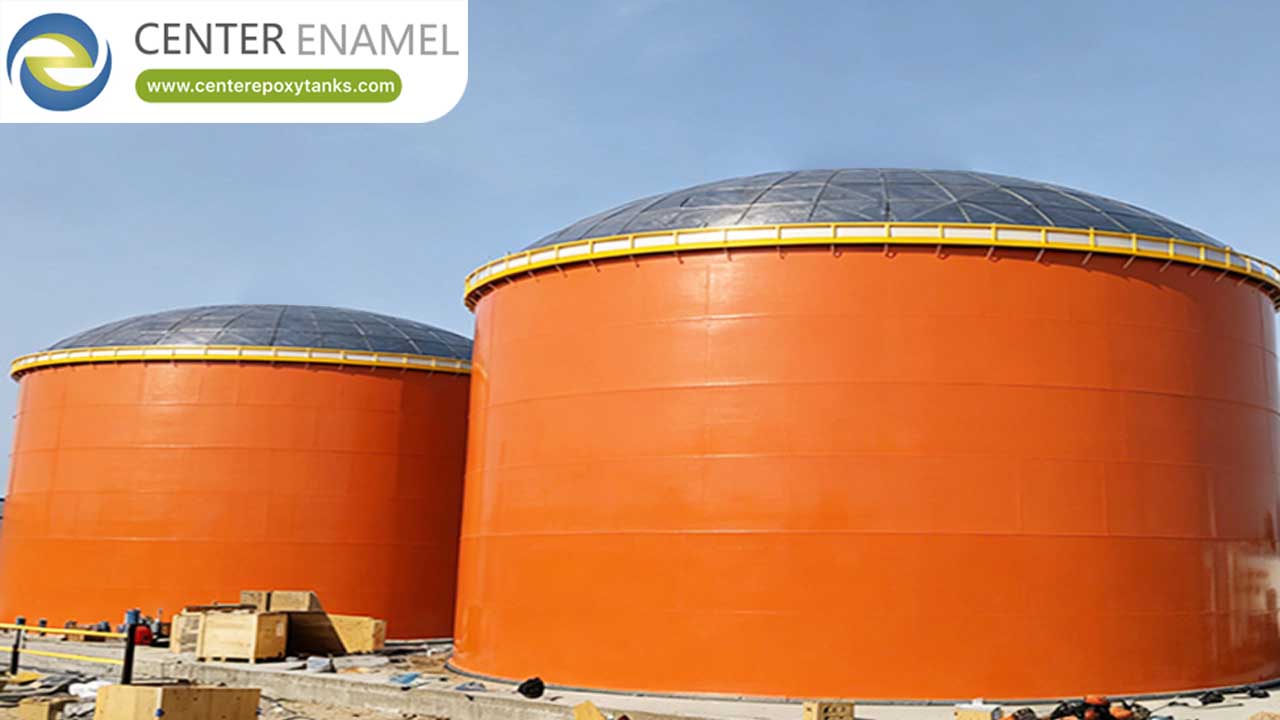
Oil Storage Tanks With Floating Roofs: Design and Compliance Basics
Regulators now measure tank emissions as a permit condition, and the headspace above a stored oil product is exactly where those emissions are born. Owners of terminals and refineries are therefore judged less on the tank's presence and more on how completely its vapor space has been engineered out of the equation.
Oil storage tanks with floating roofs comply mainly by removing the vapor space and sealing the residual rim gap with primary and secondary seals. A correctly specified external or internal deck cuts standing losses by up to 99 percent and keeps the facility inside VOC and net-emissions limits without additive controls.
1. Why Floating Roofs Win on Compliance
Compliance cost tracks vapor-space volume. Floating roofs attack the root cause directly rather than adding end-of-pipe controls, which is why they are the first prescribed measure in most refinery and terminal emission programs. Standing losses on a fixed cone can run 10-50 times higher than on a decked tank, so the deck is the cheapest compliance spend available.
· Root-cause control: Removing the headspace is cheaper and more durable than scrubbers or vapor recovery on a breathing tank.
· Loss magnitude: Standing losses on a fixed-roof tank can exceed working losses by an order of magnitude on volatile products; the deck removes the standing component.
· Prescribed measure: Many programs list floating roofs as the default control for new large volatile-liquid tanks before any alternative is accepted.
· Audit trail: Seal type, deck type, and inspection dates form the documentary basis regulators expect during a compliance review.
· Net effect: Up to 99 percent reduction in standing losses translates directly into lower reported emissions and smaller permit fees.
2. Deck and Seal Details That Matter
The deck and its seals are the compliance-critical components, not the shell. Specifying the wrong seal or omitting the secondary seal quietly forfeits most of the achievable gain. A primary plus secondary seal combination cuts rim emissions by 90 % or more, and the secondary seal is now a permit requirement rather than an option on most new tanks.
· Primary seal: Mechanical-shoe or liquid-mounted; liquid-mounted typically gives lower rim emissions on gasoline and naphtha.
· Secondary seal: A separate weather and vapor seal above the primary is required to close the remaining gap and is not optional in modern specs.
· Deck continuity: Full-diameter decks avoid lap gaps where vapor can channel; double decks also support inspection walking loads.
· Penetrations: Poles, drains, and guide-pole slots must be sealed or they become unmeasured emission points.
· Material match: Seal elastomers must resist the stored product and its additives or they harden, crack, and leak within a season.
3. Vents, Risks, and the Paper Trail
Floating roofs change but do not eliminate venting needs, and the compliance story lives in the records. A tank that is perfectly built but undocumented will still fail an audit. Seal logs, gap measurements, and as-built surveys on a 6-12 month cycle are what turn a floating deck into a defensible emission claim.
· Rim-space venting: The annulus still needs controlled vents; open gaps are not an accepted substitute for engineered seals.
· Overfill protection: High-level alarms and independent shutoffs remain mandatory even with a deck, because the deck rises into the roof space.
· Inspection logs: Seal condition, gap measurement, and deck level are logged on a schedule that matches the permit.
· As-built records: Shell surveys, hydrotest, and coating thickness back the emission claim with measured data.
· Change control: Any seal or deck modification is re-documented so the compliance basis stays current.
Design parameter | Typical value or range | Why it matters |
Standing-loss cut | Up to 99 % | Versus fixed cone roof |
Primary seal | Shoe or liquid-mounted | Closes deck-to-shell gap |
Secondary seal | Required above primary | Weather and vapor barrier |
Capacity range | 100-150,000 m3 | Covers most terminals |
Coating DFT | 0.25-0.40 mm | Verified before shipment |
NDE coverage | 10-100 % | Seam length examined |
Rim seal cut | ≥90 % emissions | Rim-space control |
Shell plate | 6-40 mm | Hydrostatic head by elevation |
Service life | 30-50 years | Design target |
Limitation to check | Seals degrade with product | Elastomer must match fluid |
Wind / seismic load | 0.5-1.5 kPa | Roof and shell load |
Foundation settle | 0.1-0.3 m | Controlled subgrade |
Throughput | 50-500 m3/d | Typical draw |
Operating temp | 20-60 °C | Product and climate |
Product density | 800-950 kg/m3 | Typical range |
Design margin | 10-20 % | Allowance in steel |
Design Element | Floating-Roof Requirement | Fixed-Roof Alternative | Compliance Impact |
Vapor space | Removed by deck | Present, vented | Decisive on emissions |
Rim seal | Primary + secondary | Not applicable | Closes residual gap |
Deck | Pontoon or double | None | Buoyancy and access |
Venting | Rim-space controlled | Full vent to atmosphere | Permit-dependent |
Records | Seal + survey logs | Basic inspection | Audit survival |
Engineering Assurance and Project Support
Every welded oil tank delivered by Shijiazhuang Zhengzhong Technology Co., Ltd. (Center Enamel) is designed to API 650 with shell courses sized by the one-foot method and checked for wind, seismic and hydrostatic load cases, or to EN 14015 and the Eurocodes where the site is European. Shell plate is shot-blasted to Sa 2.5 and coated to a documented dry film thickness, longitudinal and annular plate welds are examined by radiography or ultrasonic testing to the acceptance level written into the purchase order, and every tank is hydrostatically tested and dimensionally surveyed before hand-over. Inspection schedules, seal specifications, and as-built shell surveys are bundled so the emission basis is demonstrable from day one of operation under API 650.
Compliance is won at the rim seal, not at the shell; a perfect tank with a poor seal is still a leaky tank on paper.
Frequently Asked Questions (FAQ)
Why do floating-roof tanks dominate emission compliance?
Because they remove the vapor headspace that generates standing losses, cutting emissions by up to 99 percent versus a fixed-roof tank. Regulators treat them as the root-cause control, which is cheaper and more durable than adding vapor recovery at the vent.
What deck and seal details matter most for compliance?
The primary seal and a separate secondary seal at the deck-to-shell rim are the critical items, with liquid-mounted primary seals favored on volatile products. Deck penetrations must also be sealed or they become unmeasured leak points.
How do vents and vents-to-atmosphere rules apply?
The rim annulus still requires controlled venting, and overfill protection such as high-level alarms remains mandatory because the deck rises into the roof space. Open gaps are never an accepted substitute for engineered seals.
What records prove a floating-roof tank stays compliant?
Seal type and condition logs, deck-level and gap measurements, and as-built shell surveys with hydrotest and coating-thickness data form the audit trail regulators expect at review.


