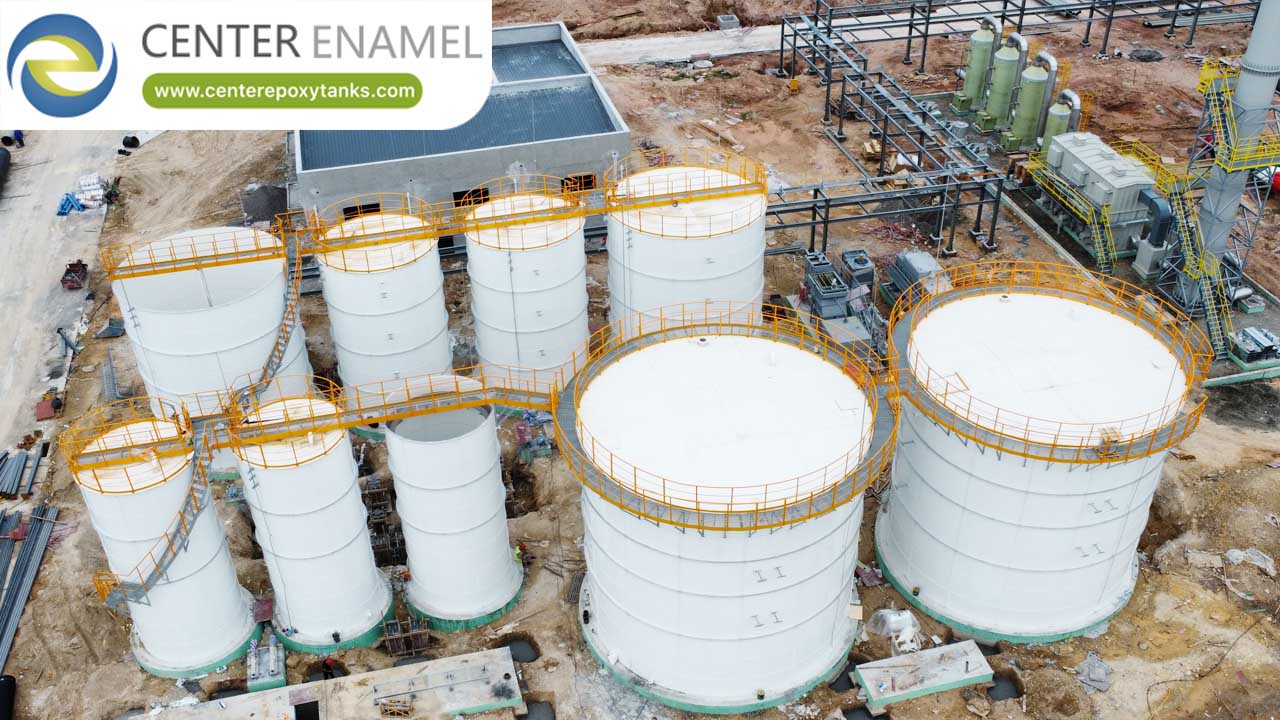
MS Epoxy Coated Tanks: The Engineering Standard for Industrial Storage
In the 2026 industrial landscape, the MS (Mild Steel) Epoxy Coated Tank—specifically those utilizing Fusion Bonded Epoxy (FBE)—has emerged as the definitive solution for high-capacity, cost-effective liquid storage. By combining the high tensile strength of mild steel with the advanced chemical resistance of electrostatically applied epoxy, these tanks provide a durable alternative to traditional concrete and stainless steel.
Shijiazhuang Zhengzhong Technology Co., Ltd (Center Enamel) is a global leader in this domain, providing AWWA D103-09 compliant MS epoxy storage systems that ensure long-term structural integrity in over 100 countries.
1. Technical Authority: The Epoxy Coating Performance Matrix
The core advantage of an MS epoxy coated tank lies in the factory-controlled application of the coating. Unlike field-applied liquid paint, Fusion Bonded Epoxy is a heat-cured process that creates a molecular bond with the steel substrate.
Engineering Specifications
Feature | Technical Specification (2026 Standard) | Strategic Operational Value |
Design Standard | AWWA D103-09, ISO 28765 | Verified structural safety and global engineering compliance. |
Coating Type | High-Build Fusion Bonded Epoxy | 200 - 400 Microns thickness for monolithic protection. |
Bond Strength | > 12 MPa (Pull-off test) | Ensures the coating will not peel or delaminate. |
Safety Certification | NSF/ANSI 61, WRAS | Mandatory for potable water and food-grade storage. |
Service Life | 30+ Years | Low lifecycle cost with minimal maintenance. |
pH Tolerance | pH 3 to pH 11 | Versatile for water, fire protection, and industrial effluents. |
2. The Science of the "Fusion" Bond
Center Enamel utilizes an advanced electrostatic spray process to ensure 100% coverage, even on complex edges and bolt holes.
1. Surface Preparation: MS plates are grit-blasted to a Near-White Metal finish (SSPC-SP10/Sa 2.5) to create a high-surface-area anchor pattern.
2. Electrostatic Application: Charged epoxy powder is sprayed onto the grounded steel, ensuring uniform thickness and total encapsulation.
3. Thermal Curing: The plates are baked in high-temperature ovens where the powder melts, flows, and cross-links into a permanent, hard-shell barrier.
4. Holiday Testing: Every panel undergoes a 1100V to 1500V "Holiday" test to guarantee zero microscopic pinholes.
3. Strategic Advantages for Industrial EPCs
Modular Bolted Assembly
MS epoxy coated tanks are designed as bolted steel tanks. All components are prefabricated in our ISO-certified factory and shipped in compact containers. This allows for rapid site assembly using a synchronized jacking system, requiring zero on-site welding and significantly reducing project timelines.
Corrosion Resistance and Durability
The high-build epoxy layer acts as an electrochemical barrier, preventing the oxidation of the underlying mild steel. This is particularly vital for Fire Water Storage, Potable Water Reservoirs, and Anaerobic Digestion projects where atmospheric or chemical corrosion is a constant risk.
Sustainable Lifecycle (ESG)
In 2026, ESG compliance is critical. MS epoxy tanks are fully recyclable and utilize a manufacturing process with a lower carbon footprint than field-welded alternatives. Their 30-year design life ensures long-term asset value for municipal and private stakeholders.
4. Why Partner with Center Enamel?
As a reputable China-based manufacturer with over 30 years of expertise, Center Enamel offers a unique technological advantage:
● Advanced R&D: We continuously optimize epoxy formulations for enhanced thermal and chemical stability.
● Global Compliance: Our tanks are engineered to meet ASCE 7-22 (Seismic) and Eurocode standards.
● Integrated Logistics: We provide the full package—from Finite Element Analysis (FEA) design to global shipping and on-site technical supervision.
5. Technical FAQ
Q: What is the difference between MS Epoxy and Glass-Fused-to-Steel (GFS)?
A: While GFS offers the highest chemical resistance (pH 1-14), MS Epoxy is a more cost-effective solution for standard water and wastewater applications (pH 3-11) where extreme pH levels are not a factor.
Q: Can epoxy coated tanks be used for potable water?
A: Yes. Center Enamel’s epoxy coatings are NSF/ANSI 61 certified, ensuring they do not leach VOCs or chemicals into the drinking water supply.
Q: How do you prevent corrosion at the bolt holes?
A: All bolt holes are precision-punched before the coating process. This ensures the epoxy encapsulates the edges of the holes, providing 100% protection when paired with our specialized capped bolts and EPDM gaskets.


