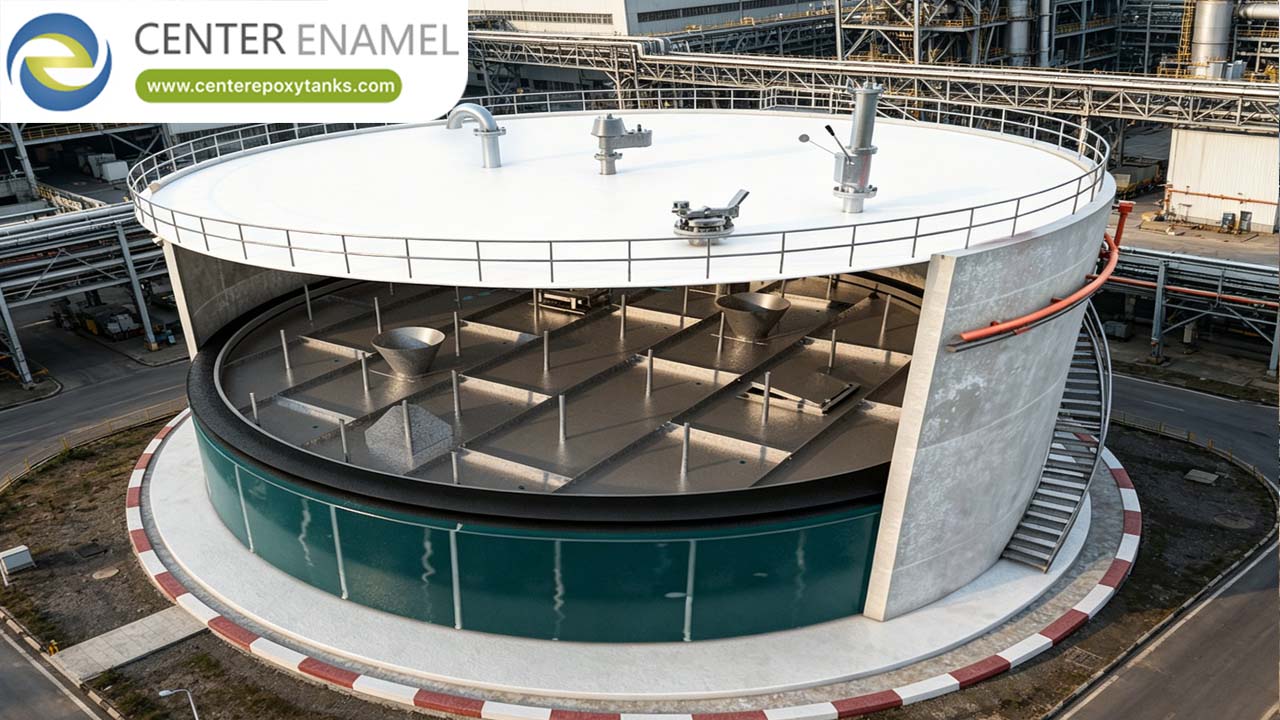
Crude Oil Floating Roof Tanks: Engineering & Procurement Guide
For modern refineries and petroleum terminals, the Floating Roof Tank (FRT) is the definitive infrastructure for storing volatile crude oil and refined products. By resting directly on the liquid surface, floating roofs eliminate the vapor space inherent in fixed-roof tanks, drastically reducing Volatile Organic Compound (VOC) emissions and fire risk. As global environmental regulations tighten, specifying tanks that meet the latest API 650 standards is essential for long-term operational compliance and asset safety.
1. Engineering the Benchmark: API 650 Standards
Any crude oil storage tank must be designed to withstand extreme operational stresses, including seismic "sloshing," thermal expansion, and hydrostatic pressure. The industry-standard framework is API 650 (Welded Tanks for Oil Storage).
● Structural Integrity: Floating roofs are engineered to distribute loads evenly. Whether utilizing a pontoon-type or double-deck design, the structure must maintain buoyancy and stability during rapid filling or withdrawal cycles.
● Seismic Resilience: Floating roofs are susceptible to "sloshing" during seismic events. Modern designs incorporate reinforced rim seals and structural pontoon layouts to prevent the roof from tilting, jamming, or sinking.
● Corrosion Allowance (CA): API 650 mandates specific material thickness "sacrificial layers." Premium manufacturers apply high-performance epoxy coatings or utilize corrosion-resistant alloys to extend the tank’s service life beyond 30 years.
2. Technology Deep Dive: Emission Control
The primary driver for modernizing crude oil storage is environmental compliance. The floating roof operates as a precision mechanical seal against the atmosphere.
Internal Floating Roof (IFR) vs. External Floating Roof (EFR)
Feature | Internal Floating Roof (IFRT) | External Floating Roof (EFRT) |
Environmental Protection | Excellent (Shielded by fixed outer roof) | Moderate (Exposed to weather) |
Maintenance | Low (Minimal debris accumulation) | Moderate (Requires drainage system) |
Emission Control | Superior (Dual protection) | Standard |
Climate Suitability | All climates | Best for low-snow regions |
Typical Use | Refined products, volatile crude | Large-scale crude oil bulk storage |
The "Double-Layer" Defense
For high-volatility crude, the Internal Floating Roof (IFRT)—often protected by an outer fixed roof—is the preferred solution.
● Primary Seal: A mechanical shoe or liquid-mounted seal that bridges the gap between the roof edge and the tank wall.
● Secondary Seal: A rim-mounted wiper that provides an additional barrier against vapor escape, often required by EPA/environmental mandates to achieve >99% emission reduction.
3. Procurement Matrix: Vetting Your Manufacturer
When sourcing from a leading Chinese manufacturer, EPC managers should look for technical maturity over low-cost commodity production.
Critical Evaluation Metric | The "Premium Manufacturer" Standard | The High-Risk Supplier |
Fabrication | Automated SAW/GMAW Welding | Manual welding (Variable quality) |
Testing | 100% NDT (RT/UT/Vacuum box) | Visual inspection only |
Material Traceability | Certified Mill Test Reports (MTRs) | No verifiable steel traceability |
Seismic Design | Stamped FEA calculations provided | Generic/Standardized drawings |
Coating | Factory-controlled blasting & lining | Field-applied (weather-dependent) |
4. Frequently Asked Questions (FAQ)
Q: Why is an internal floating roof (IFR) preferred over a fixed roof for crude oil?
A: A fixed-roof tank creates a large vapor space above the liquid. As temperatures fluctuate, the product "breathes," forcing volatile vapors out of the vents. An IFR floats directly on the liquid, effectively eliminating this vapor space and preventing the formation of explosive atmospheres.
Q: Can I retrofit an existing fixed-roof tank with an IFR?
A: Yes. Retrofitting is a highly cost-effective strategy to bring older infrastructure into compliance with modern environmental standards (such as EPA Subpart Kb) without the capital expense of building a new tank.
Q: What is the purpose of the secondary seal?
A: The secondary seal acts as a fail-safe. It provides an additional layer of protection against vapor escape that may pass the primary seal, ensuring the tank meets stringent air quality regulations and further minimizing product loss.
Selecting a floating roof tank manufacturer is an investment in the reliability and environmental compliance of your terminal. By prioritizing manufacturers that utilize automated API 650-compliant fabrication, rigorous non-destructive testing, and advanced vapor-seal technologies, you ensure that your storage infrastructure remains a high-performance asset for decades.
Are you currently tendering a petroleum storage project, and would you like to review the structural load calculations for your specific site location or receive a technical datasheet for our high-performance rim seal systems?


