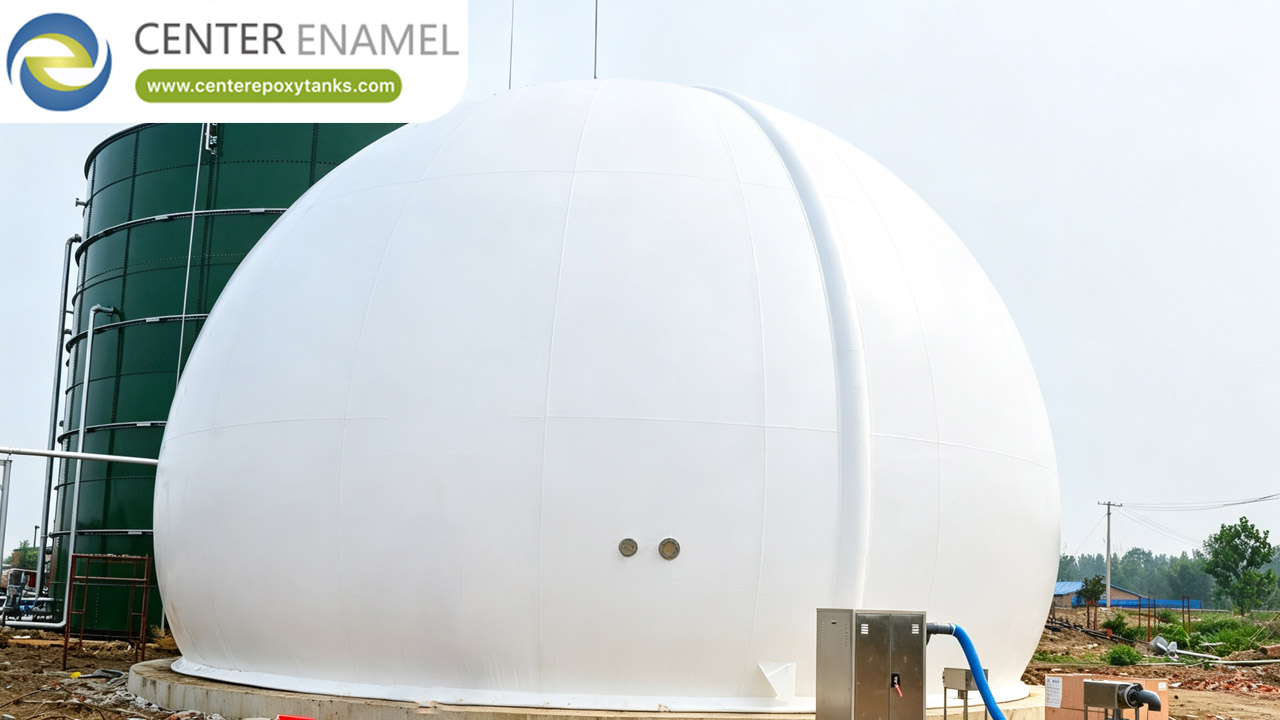
Membrane Gas Holder for Bean Processing Wastewater Treatment Projects: Efficient Biogas Recovery and Environmental Compliance
Bean processing plants—including soybean crushing facilities, tofu manufacturing, soy milk production, and starch extraction plants—generate high-strength organic wastewater characterized by massive concentrations of dissolved proteins, starches, sugars, and suspended solids. When discharged untreated, these high-COD (Chemical Oxygen Demand) effluents consume dissolved oxygen rapidly, causing severe ecological damage.
To manage this, modern bean processing facilities increasingly rely on high-efficiency anaerobic digestion systems to break down organic loads while converting biological byproducts into valuable methane-rich biogas. Capturing, buffering, and utilizing this renewable fuel safely requires advanced containment infrastructure. A membrane gas holder—specifically engineered with double-membrane architecture—provides an optimal, cost-effective storage solution for food processing wastewater treatment plants.
1. The Challenges of Bean Processing Wastewater and Anaerobic Digestion
Effluents from bean and legume processing present unique biochemical challenges:
High Organic Loading Rates: The rapid breakdown of starches and proteins produces high volumes of biogas, often fluctuating unpredictably based on daily production shifts and cleaning cycles.
Corrosive Gas Constituents: Anaerobic digestion of protein-rich food waste generates trace amounts of hydrogen sulfide (H2S) and high moisture levels, which can rapidly degrade standard metal gas holders.
The Need for Pressure Stability: Downstream combined heat and power (CHP) engines or boiler systems require a steady, consistent delivery pressure regardless of whether gas production is peaking or tapering off.
2. Advanced Double-Membrane Gas Holder Technology
Membrane gas holders solve these operational hurdles through a multi-layer, pressure-stabilized design:
Inner Membrane (Gas Containment): Fabricated from specialized, high-tenacity PVC/PVDF-coated polyester fabrics, the inner bladder securely stores the biogas, offering high resistance to permeation, ultraviolet radiation, and biological corrosion.
Outer Membrane (Environmental Protection): Maintained continuously under slight positive pressure by an energy-efficient auxiliary blower, the outer shell protects the inner containment vessel against wind loads, heavy snow, and UV exposure.
Interstitial Pressure Control: The space between the inner and outer layers acts as a regulation chamber, automatically adjusting air volume to ensure a constant, reliable output pressure for downstream energy utilization.
Data Table: Biogas Storage Solution Comparison for Food Processing Wastewater
Technical Parameter | Double-Membrane Gas Holder | Traditional Low-Pressure Steel Holder | Fixed-Volume High-Pressure Tank |
Volumetric Adaptability | Dynamic expansion and contraction based on real-time gas flow | Fixed operating volume with heavy mechanical counterweights | Rigid storage requiring high gas compression energy |
Corrosion Resistance | High (Chemically inert PVC/PVDF fabrics resistant to H2S) | Moderate (Subject to internal rust and moisture degradation) | Moderate (Requires periodic interior recoating) |
Installation Footprint | Lightweight, modular design mounted on concrete pads or tanks | Heavy civil foundation and complex structural framework | Heavy skid mounts and thick-walled steel cylinders |
Maintenance Profile | Minimal upkeep with automated pressure monitoring | High (Requires frequent manual inspections and painting) | High (Requires strict pressure-vessel recertification) |
3. Operational and Environmental Benefits
Integrating a membrane gas holder into a bean processing wastewater treatment project delivers significant advantages:
Renewable Energy Offsetting: Storing and burning captured methane in CHP units generates electricity and thermal energy, significantly lowering plant utility costs and carbon footprints.
Odor and Emission Control: Fully sealed membrane systems eliminate fugitive biogas leaks, ensuring complete odor containment and strict compliance with environmental air quality regulations.
Rapid Modular Deployment: Prefabricated membrane components can be erected quickly on-site, minimizing construction delays and integrating seamlessly with existing anaerobic reactors or glass-fused-to-steel storage tanks.
Frequently Asked Questions (FAQ)
Q: Why is a membrane gas holder ideal for bean processing wastewater treatment?
A: Bean processing effluent produces high volumes of biogas via anaerobic digestion. Double-membrane gas holders safely buffer these gas fluctuations, provide stable delivery pressure for energy recovery, and resist the corrosive moisture and H2S typical of food waste biogas.
Q: How does the dual-membrane system maintain a constant gas pressure?
A: An automated air-side blower system continuously regulates the pressure in the space between the inner and outer membranes, exerting a uniform downward force on the inner gas bladder to ensure a steady output pressure.
Q: Can membrane gas holders be mounted directly onto anaerobic digester tanks?
A: Yes. Membrane gas holders can be configured either as standalone ground-mounted units on concrete slabs or installed directly atop circular digestion tanks as tank-mounted covers, saving valuable space.
Q: What is the expected service life of a high-performance membrane gas holder?
A: Constructed with advanced UV-resistant, anti-aging polymer fabrics and heavy-duty frequency-welded seams, industrial membrane gas holders are engineered for long-term durability, delivering reliable service over many years of continuous operation.


