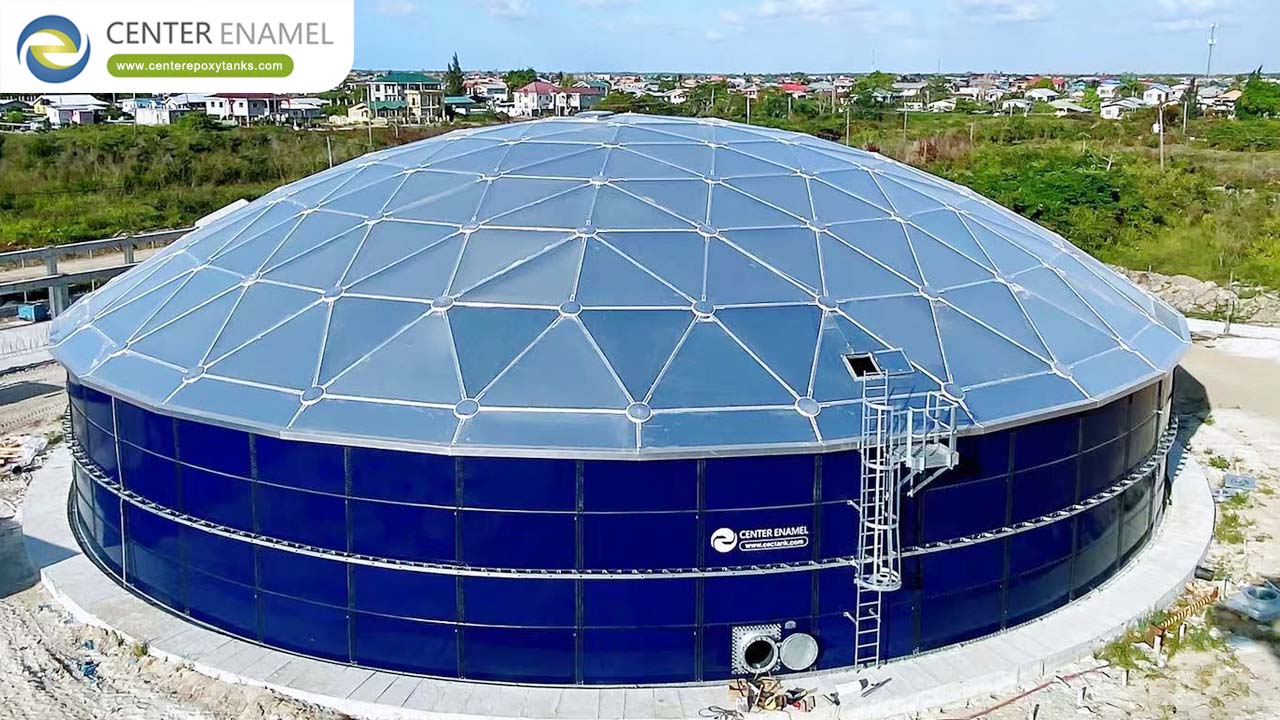
Lightweight Geodesic Dome Roofs for Petroleum Storage Tanks: Engineering Safety, Efficiency, and Environmental Compliance
In the demanding sector of petroleum refining, bulk fuel distribution, and chemical terminal management, aboveground storage tanks (ASTs) represent vital capital infrastructure. Storing volatile hydrocarbons, crude oil, and refined fuels exposes containment systems to severe environmental weathering, corrosive vapor headspaces, and increasingly stringent environmental air quality regulations. Traditional carbon steel fixed roofs have historically dominated tank construction, but they suffer from heavy structural dead loads, frequent maintenance requirements, and ongoing vulnerability to aggressive chemical vapors.
To eliminate these vulnerabilities, modern industrial engineering has standardized on lightweight aluminum geodesic dome roofs. Designed in strict compliance with API 650 Appendix G, these advanced self-supporting structures combine high-strength aluminum alloys with optimized geodesic geometry to deliver unmatched corrosion resistance, structural longevity, and superior environmental compliance.
Core Engineering Principles and Material Advantages
The exceptional performance of aluminum geodesic domes in petroleum environments is driven by advanced metallurgical and structural engineering:
Clear-Span, Self-Supporting Architecture: Unlike traditional steel cone roofs that rely on internal support columns, trusses, and rafters, a geodesic dome is a fully self-supporting spherical space frame. It transfers all dead loads and environmental forces directly to the perimeter tank shell. This eliminates internal columns, maximizes effective storage capacity, and prevents internal bottom-plate corrosion caused by column footings.
Inherent Corrosion Defense and Zero Painting Requirement: Fabricated from high-grade aluminum alloys (such as 6061-T6 or 6063-T6), the structure naturally forms a passive, self-healing aluminum oxide layer. This makes the dome impervious to moisture, atmospheric sulfur, and corrosive trace gases present in sour petroleum service, eliminating the recurring sandblasting and repainting cycles required by carbon steel roofs.
Massive Weight Reduction on Tank Foundations: An aluminum dome weighs approximately one-third to one-fifth of a comparable carbon steel roof. This dramatic reduction in dead load stress relieves structural pressure on the tank shell and foundation, making aluminum domes the optimal solution for retrofitting older tanks without requiring costly foundation reinforcement.
Advanced VOC Emission Mitigation: When installed as a fixed cover over internal floating roofs (IFRs) or external floating roofs (EFRs), aluminum geodesic domes create an airtight barrier that suppresses solar heat gain and blocks wind shear. This dual-layer configuration cuts volatile organic compound (VOC) emissions by up to 90%, helping facilities comply with strict environmental regulations and preventing valuable product loss.
Data Table: Comprehensive Comparison of Petroleum Storage Tank Roof Options
Technical Parameter | Aluminum Geodesic Dome Roof | Traditional Carbon Steel Cone Roof | Open-Top External Floating Roof (EFR) |
Corrosion Resistance | Exceptional; natural aluminum oxide layer prevents rust in aggressive petroleum environments | Poor; highly vulnerable to internal vapor corrosion and exterior weathering without heavy coatings | Moderate; floating deck and rim seals are directly exposed to weathering and UV degradation |
Structural Design | Clear-span, self-supporting dome requiring zero internal support columns | Requires internal rafters, trusses, and intermediate support columns | Open-top structure with no fixed overhead protection |
Weight & Tank Foundation Load | Extremely lightweight; minimizes dead load stress on tank walls and foundations | Heavy structural dead load requiring thick shell plates and robust foundations | Moderate weight concentrated entirely on the floating liquid deck |
VOC Emission Control | Superior VOC suppression and complete weather shielding (rain, snow, dust) | Moderate; fixed vents allow continuous breathing losses and vapor escape | High risk of rainwater pooling, snow accumulation, and wind-driven vapor loss |
Frequently Asked Questions (FAQ)
Q: Why are lightweight aluminum geodesic domes preferred over carbon steel for petroleum storage tanks?
A: Aluminum offers an exceptional strength-to-weight ratio and natural corrosion resistance. Unlike steel roofs that suffer from continuous oxidation and require expensive periodic repainting, aluminum domes are virtually maintenance-free over a 50+ year service life.
Q: How do aluminum geodesic domes help petroleum facilities reduce VOC emissions?
A: By providing a complete, gasketed fixed cover—especially when paired with an internal floating roof—they eliminate wind-induced evaporation, seal in hazardous vapors, and reduce solar heat absorption, cutting VOC emissions by up to 90%.
Q: Can an aluminum geodesic dome be retrofitted onto an existing live petroleum storage tank?
A: Yes. Because aluminum domes are lightweight and modularly assembled using bolt-together construction, they can be easily erected and retrofitted onto existing tanks with minimal downtime and without requiring hot work on active product zones.
Q: What international standards govern the engineering of these domes for petroleum applications?
A: They are designed, fabricated, and tested in strict accordance with API Standard 650 (Appendix G) for structurally supported aluminum dome roofs, ensuring safety under extreme wind, seismic, and snow loads.


