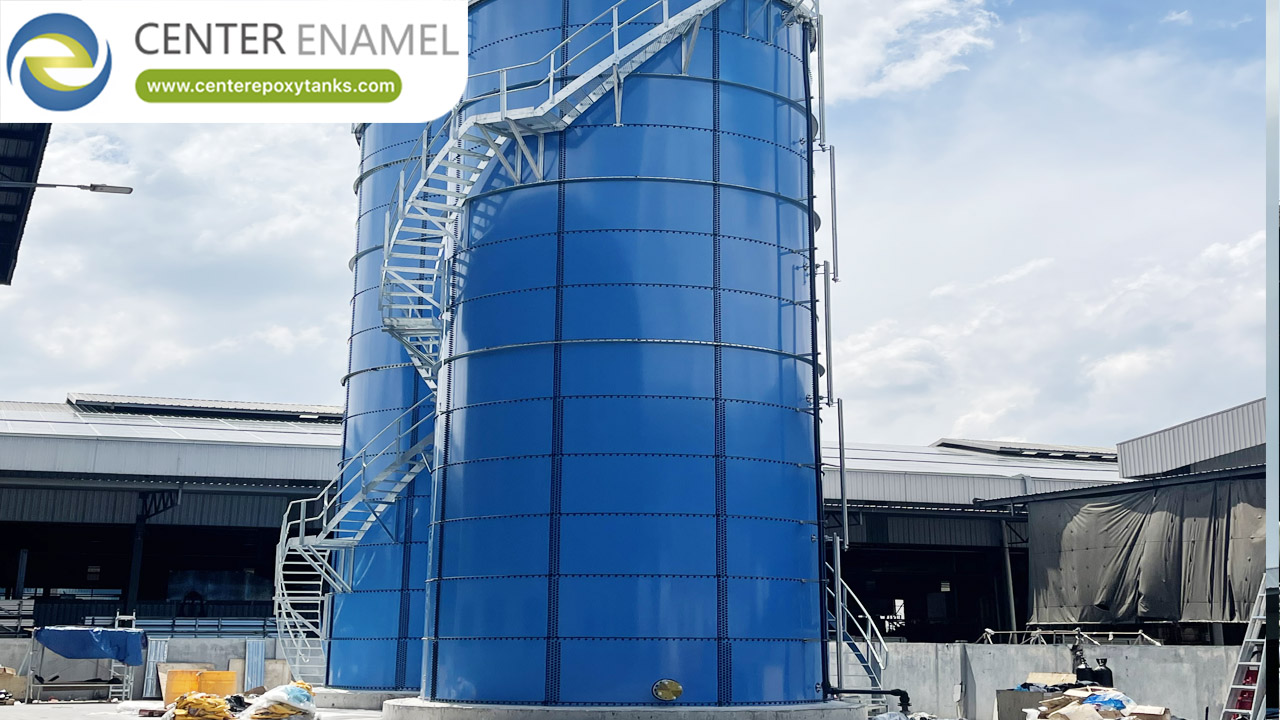
Epoxy Coated Bolted Steel Tanks for Fire Protection Water Storage: Engineering Reliability and Code Compliance
In commercial complexes, high-rise buildings, industrial manufacturing plants, and hazardous petrochemical facilities, an uninterrupted and dependable water supply is the absolute backbone of life safety. When municipal water mains fail or lack sufficient pressure and volume during an emergency, a dedicated fire protection storage tank becomes the sole safeguard protecting property and human life.
Among available containment technologies, epoxy coated bolted steel tanks have emerged as the gold standard for fire protection water storage. Combining factory-controlled coating precision with modular bolted construction, these reservoirs deliver exceptional corrosion resistance, rapid on-site assembly, and full compliance with strict international safety standards.
Core Engineering Principles and NFPA 22 Compliance
Designing a fire water storage tank requires strict alignment with rigorous life-safety regulations. The benchmark for this infrastructure is NFPA 22: Standard for Water Tanks for Private Fire Protection. Epoxy coated bolted steel tanks are engineered to satisfy and exceed these specifications through several key structural features:
Factory-Applied Epoxy Coating Technology: Unlike field-painted tanks that are vulnerable to weather delays and human application error, bolted steel panels undergo advanced factory coating processes (such as thermal-cured fusion-bonded epoxy or proprietary powder coatings). This creates a dense, non-porous, chemically inert barrier that completely seals the steel substrate from water contact and corrosion.
Modular Bolted Construction and Speed of Deployment: Panels are precision-fabricated in ISO-certified manufacturing facilities and assembled on-site using high-tensile hardware and specialized gaskets. This modular approach cuts construction timelines down to a fraction of the time required for poured concrete, allowing facilities to achieve operational readiness quickly.
High Seismic and Environmental Resilience: Engineered to withstand extreme local wind loads, heavy snow accumulations, and seismic forces (compliant with ASCE 7 and local building codes), bolted steel structures offer structural flexibility that minimizes cracking risks associated with rigid concrete basins.
Complete Fire Protection Appurtenance Integration: Modern epoxy bolted tanks are fully equipped with required fire suppression accessories, including anti-vortex plates, fill and drain piping, level indicators, immersion heaters for cold climates, and overflow connections.
Data Table: Comprehensive Comparison of Fire Protection Tank Options
Technical Parameter | Epoxy Coated Bolted Steel Tanks | Reinforced Concrete Basins | Field-Welded Steel Tanks |
Construction Speed | Fast, modular bolting completed in days or weeks with minimal heavy equipment | Slow civil construction requiring weeks of framing, pouring, and curing | Moderate; requires extensive on-site welding, plate fitting, and inspection |
Corrosion Resistance | Superior; factory-baked epoxy coating provides long-term inert protection | Moderate; prone to concrete carbonation and interior seepage unless lined | Low to moderate; requires recurring field repainting cycles |
Seismic Resilience | High structural flexibility absorbs dynamic ground shear forces | Low; brittle mass susceptible to cracking under severe seismic stress | Moderate; rigid welded joints can experience high stress concentrations |
Maintenance Lifecycle | Low-maintenance asset with multi-decade coating durability | High maintenance overhead if cracking, joint leaks, or spalling occur | High ongoing maintenance cost for periodic sandblasting and recoating |
Frequently Asked Questions (FAQ)
Q: Why are epoxy coated bolted steel tanks preferred for fire protection water storage?
A: They offer a combination of rapid modular installation, superior corrosion resistance, low life-cycle maintenance costs, and strict compliance with NFPA 22 standards, ensuring reliable water availability during emergencies.
Q: Do epoxy coated bolted tanks meet NFPA 22 and FM approval requirements?
A: Yes. High-quality bolted steel tanks are specifically engineered and certified to meet or exceed NFPA 22 guidelines for private fire protection water tanks as well as FM Global approvals.
Q: How do bolted steel tanks remain leak-free over decades of service?
A: They utilize high-grade, chemically stable elastomeric gaskets and specialized sealants at every panel lap and bolt intersection, creating a permanently watertight seal when installed by certified technicians.
Q: Can these fire protection tanks be expanded if a facility grows?
A: Yes. One of the unique advantages of a bolted modular design is scalability; tanks can be unbolted and expanded by adding new ring panels to increase storage volume as facility requirements evolve.


