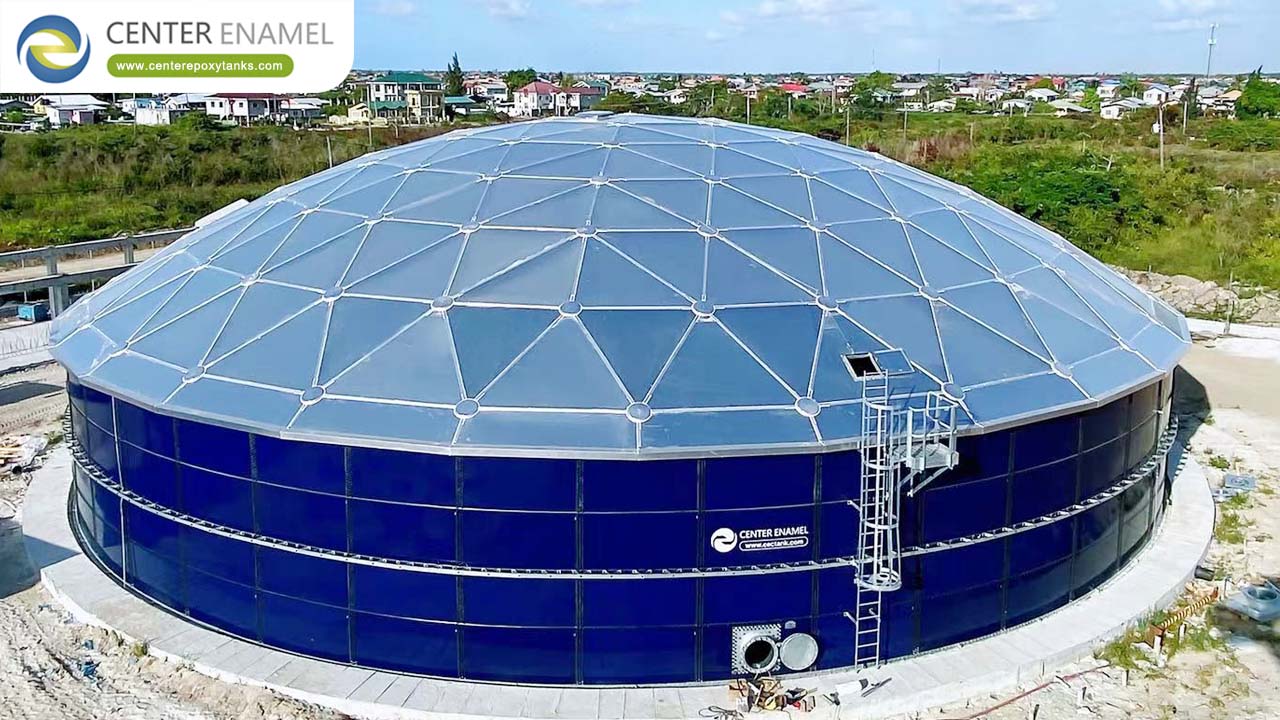
Aluminum Geodesic Dome Roofs: The Future of Oil Storage Integrity
In the modern petroleum and chemical storage industry, protecting the integrity of stored product while ensuring environmental compliance is paramount. The Aluminum Geodesic Dome Roof has emerged as the industry-standard solution for covering large-diameter storage tanks.
Unlike traditional steel cone roofs, which are heavy and prone to oxidation, the aluminum geodesic dome provides a lightweight, corrosion-resistant, and virtually maintenance-free cover system that excels in the most demanding climatic and chemical environments.
Why Industry Leaders Prefer Aluminum Domes
The engineering logic behind the geodesic dome is based on the distribution of stress across a triangular frame, creating a self-supporting structure that requires no internal columns. For oil storage, the benefits are significant:
Exceptional Corrosion Resistance: Aluminum naturally forms an oxide layer that prevents corrosion. In crude oil storage environments—where sour gas (H₂S) or moisture can rapidly deteriorate steel roofs—aluminum domes provide an indefinite lifespan without the need for periodic painting or protective coatings.
Superior VOC Emission Control: By creating an airtight, weather-tight seal, these domes significantly reduce evaporation losses. They are the premier choice for facilities striving to meet stringent volatile organic compound (VOC) emission regulations.
Lightweight Structural Integrity: The high strength-to-weight ratio allows the dome to be installed on existing tanks without requiring extensive foundation upgrades, which is a major advantage for tank renovation projects.
Maintenance-Free Lifecycle: Because the material does not rust, the maintenance costs associated with structural reinforcement or recoating are effectively eliminated.
Performance Comparison: Dome Roofs vs. Traditional Roofs
Feature | Aluminum Geodesic Dome | Fixed Steel Cone Roof |
Corrosion Resistance | Excellent (Naturally resistant) | Low (Requires regular painting/coating) |
Weight | Lightweight (Low dead load) | Heavy (Requires structural support) |
Maintenance | Virtually none | High (Frequent inspection & repair) |
Installation | Rapid (Modular components) | Slow (Extensive welding required) |
VOC Emission Control | High | Moderate/Low |
Column Requirements | None (Clear span) | Often requires internal columns |
Engineering Standards & Compatibility
To ensure long-term safety and reliability, aluminum domes must be designed to adhere to the world's most rigorous engineering benchmarks. Top-tier providers like Center Enamel engineer these structures in accordance with:
API 650: The global benchmark for welded tanks for oil storage, ensuring structural compliance for large-scale covers.
International Building Codes (IBC) & ASCE 7: Ensuring the dome withstands local wind loads, snow loads, and seismic activity.
Customization: Modern manufacturing allows for specialized features, such as integrated skylights, pressure/vacuum relief vents, and customized roof drains, ensuring total operational compatibility.
Frequently Asked Questions (FAQ)
Q: Why is aluminum chosen over steel for tank domes?
A: Aluminum is chosen for its superior corrosion resistance and low density. In the oil and gas industry, storage environments are often corrosive. Aluminum eliminates the cycle of rust and re-painting, offering a permanent solution that is significantly lighter than steel, which reduces the structural load on the tank walls.
Q: Do aluminum domes help with environmental compliance?
A: Yes. These domes are highly effective at suppressing VOC emissions. Their airtight design prevents the escape of vapors, helping operators comply with local environmental regulations and reduce product loss due to evaporation.
Q: Can aluminum domes be installed on existing tanks?
A: Absolutely. Their lightweight design makes them the ideal choice for retrofitting. They can often be installed on existing API 650 tanks without requiring modifications to the tank foundation, significantly extending the service life of aging infrastructure.
Q: Do these roofs require internal columns?
A: No. The geodesic structure is self-supporting, meaning it provides a "clear span" design. This eliminates the need for internal columns, which simplifies tank cleaning, inspection, and the installation of internal floating roofs (IFRs).
Are you looking to optimize your storage infrastructure with industry-leading aluminum cover systems? [Contact the Center Enamel engineering team] to discuss your project specifications and receive a technical proposal tailored to your storage needs.


