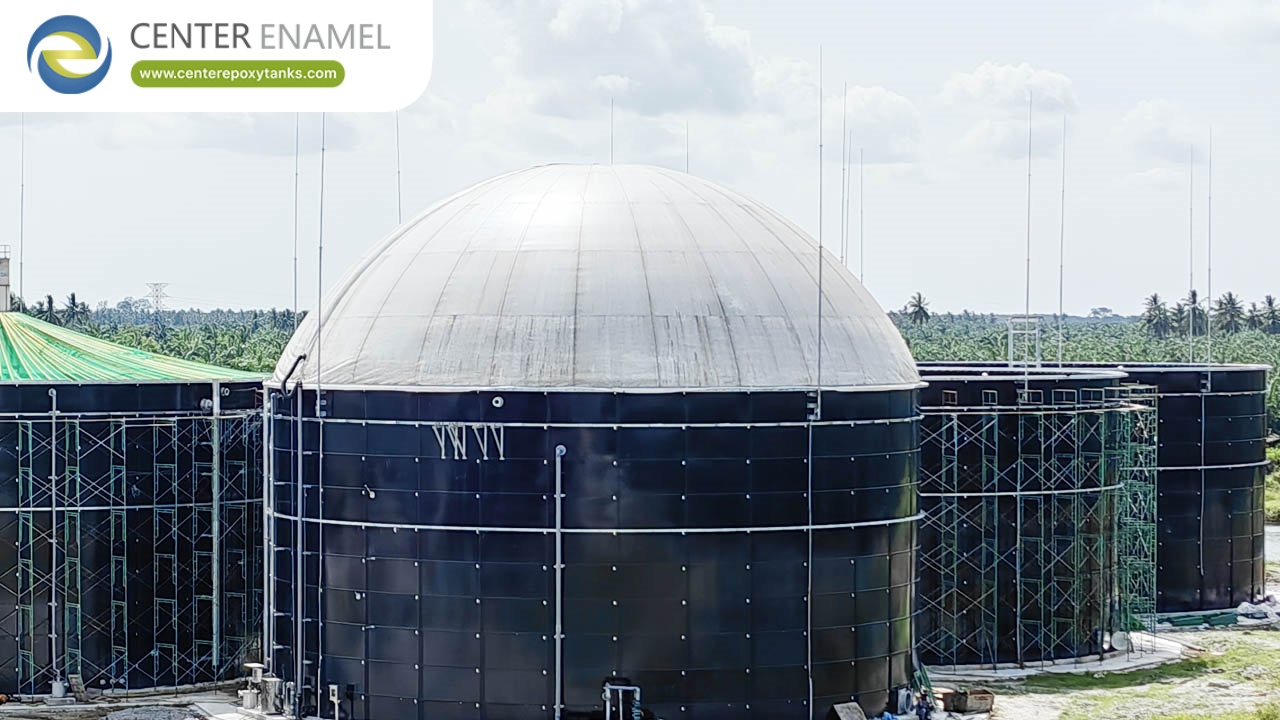
Double Membrane Roofs with Superior Airtightness for Gas Storage on Farms
As agricultural enterprises increasingly adopt anaerobic digestion (AD) to process livestock manure, poultry litter, and crop residues, maximizing renewable energy recovery is a primary operational objective. Biogas generated from agricultural digestion consists primarily of methane and carbon dioxide. However, even minor structural gaps or micro-porosities in storage covers can lead to fugitive methane emissions, reduced energy yields, and severe local odor complaints.
Achieving absolute gas containment requires advanced engineering. Double membrane roofs engineered with superior airtightness have become the gold standard for farm gas storage, providing a hermetically sealed, variable-volume storage solution that eliminates gas loss and optimizes farm-scale bioenergy efficiency.
The Critical Role of Airtightness in Agricultural Biogas Storage
In farm-scale anaerobic digestion systems, biogas production fluctuates based on feeding schedules, ambient temperatures, and organic loading rates. A standard storage cover that allows gas permeation or joint leakage compromises the entire bioenergy value chain:
Energy Loss: Escaping methane represents a direct loss of recoverable thermal and electrical energy that would otherwise power farm operations or generate revenue through grid feed-in tariffs.
Odor and Environmental Compliance: Farm biogas contains trace hydrogen sulfide ($H_2S$) and volatile organic compounds. Superior airtightness ensures complete odor abatement, protecting neighboring communities and meeting strict regional environmental regulations.
Corrosion Mitigation: Uncontrolled gas leakage allows moisture-laden bio-gases to seep into the structural spaces of the tank perimeter, accelerating electrochemical degradation.
Technical Performance Matrix: Farm Gas Containment Technologies
Technical Parameter | Double Membrane Roofs (Superior Airtightness) | Traditional Concrete Slab Covers | Fixed Carbon Steel Tank Roofs | Open-Air Manure Storage Lagoons |
Gas Permeability & Airtightness | Superior; high-tenacity polymer fabrics with molecular-level welded seams ensuring zero gas leakage | Low; concrete micro-cracks and joint gaps permit fugitive gas escape | Moderate; rubber gaskets degrade over time, leading to joint leakage | Zero containment; massive atmospheric methane loss |
Methane & Odor Fugitive Control | 100% hermetic containment; active dual-purpose gas storage and tank roofing | Partial containment; requires separate external storage and complex piping | Moderate odor control if fully gasketed and maintained | Severe odor pollution and uncontrolled greenhouse gas emissions |
Volumetric Flexibility | Dynamic variable-volume adjustment matching live farm gas production | Zero flexibility; fixed headspace volume | Rigid configuration with limited pressure buffering capacity | Zero flexibility |
Global Standards Compliance | Manufactured strictly to ISO 9001, ATEX directives, and Eurocode 1 | Dependent on local civil engineering batch pours and site curing inspections | ASME or localized structural steel code frameworks | N/A |
Advanced Engineering Features Ensuring Zero-Leakage Performance
1. High-Frequency (HF) Molecular Seam Welding
The inner gas-containment membrane is fabricated using advanced high-frequency welding technology. Unlike traditional gluing or thermal strip sealing, HF welding melts the polymer layers together at a molecular level. This ensures that joint tensile strength exceeds the base fabric and completely eliminates micro-porosities along panel seams.
2. Precision Perimeter Clamping and Gasket Systems
Maintaining superior airtightness requires a flawless transition between the flexible membrane and the rigid tank wall (such as concrete or glass-fused-to-steel silos). Double-membrane systems utilize specialized extruded aluminum clamping profiles, continuous EPDM sealing gaskets, and stainless steel hardware to lock the membrane perimeter into a permanent, gas-tight seal.
Frequently Asked Questions (FAQ)
Q: How do double membrane roofs achieve superior airtightness on farm biogas tanks?
A: They utilize high-tenacity, low-permeability polymer fabrics combined with advanced high-frequency (HF) molecular seam welding and precision perimeter clamping profiles, eliminating micro-porosities and ensuring 100% hermetic gas containment.
Q: Why is airtightness important for agricultural anaerobic digestion systems?
A: Superior airtightness prevents fugitive methane leaks, ensuring that 100% of the generated biogas is captured and delivered to farm generators for maximum energy recovery while completely eliminating foul odors.
Q: Can double-membrane roofs maintain airtightness under fluctuating gas volumes?
A: Yes. The flexible inner bladder expands and contracts dynamically inside the tank headspace, maintaining continuous volumetric balance and stable delivery pressure without compromising seal integrity.
Q: How is the gas-tight integrity of a double-membrane roof verified during installation?
A: Certified technicians perform rigorous pressure drop tests, soap-bubble seam testing, and leak-detection checks on all welded joints and perimeter clamping assemblies before final system commissioning.


