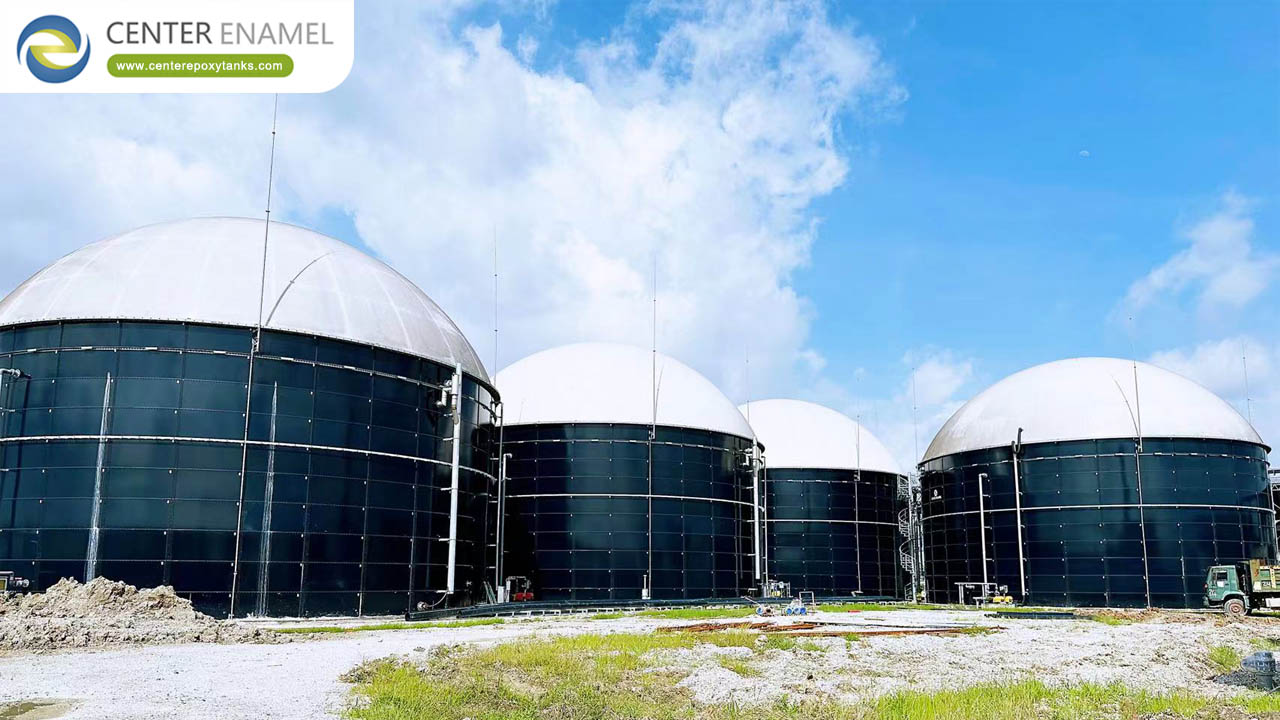
Leading China Double Membrane Roofs Manufacturer: Engineering Biogas Solutions
For anaerobic digestion (AD) facilities, the gas storage system is the critical interface between production and utilization. Leading Chinese manufacturers have revolutionized this space by producing high-performance Double Membrane Gas Holders (DMGH) that combine advanced material science with cost-effective, modular engineering. By leveraging state-of-the-art welding techniques and high-tensile PVDF-coated fabrics, these manufacturers provide reliable, airtight, and chemically resistant biogas collection solutions for global municipal and industrial projects.
1. Technical Architecture: How It Works
A double membrane roof system consists of two distinct layers creating a "gas-in-gas" storage environment.
The Components
● Outer Membrane: Acts as a weather shield, protecting the system from UV radiation, wind, snow, and rain. It is typically manufactured from high-strength PVC/PVDF materials.
● Inner Membrane: Functions as the gas-contact surface. It is engineered for extreme chemical resistance against hydrogen sulfide (H2S), methane, and moisture, maintaining a variable-volume seal for the biogas.
● Air/Gas Control System: A central blower maintains air pressure between the outer and inner membranes, creating the structural rigidity required for the dome shape.
2. Why Source from Leading Chinese Manufacturers?
The Chinese biogas infrastructure sector has undergone a rapid technical transformation. Manufacturers are no longer just "fabricators"; they are precision-engineering firms operating under international standards.
Material Science Excellence
Leading manufacturers prioritize high-frequency welding and the use of PVDF (Polyvinylidene Fluoride) coatings. These coatings provide:
● Self-Cleaning Properties: Preventing dust and microbial buildup.
● Chemical Inertness: Ensuring the membrane does not degrade when exposed to the corrosive vapors common in biogas plants.
● UV Stability: Guaranteeing 20+ years of operational life in diverse climatic zones.
Manufacturing Precision
● High-Frequency Welding: Automated welding machines ensure consistent seam strength, critical for preventing methane leaks.
● Modular Engineering: Roof systems are pre-fabricated and tested in factory conditions, allowing for rapid on-site installation and "bolt-on" compatibility with existing bolted steel or concrete digesters.
3. Comparison Matrix: Biogas Storage Solutions
Feature | Double Membrane Roof | Fixed Steel/Concrete Roof |
Storage Flexibility | Variable (Inflates/Deflates) | Static |
Chemical Resistance | High (PVDF/PVC Polymers) | Low (Requires lining) |
Maintenance | Minimal (Blower/System check) | High (Recoating/Corrosion) |
Gas Pressure | Low (Adjustable) | High |
Installation | Rapid (Lightweight) | Slow (Heavy construction) |
4. Engineering Standards & Quality Assurance
When evaluating a manufacturer, verify compliance with these global benchmarks:
● ISO 9001/14001: Standardized quality and environmental management systems.
● Fire Resistance Standards: Ensuring membranes meet international flame-retardant safety ratings.
● Gas-Tightness Testing: Rigorous pressure testing protocols for every individual seam.
5. Frequently Asked Questions (FAQ)
Q: How do you handle gas fluctuations with a double membrane roof?
A: The inner membrane acts as a variable-volume storage vessel. As biogas production increases, the inner membrane expands, and the air between the inner and outer membranes is displaced into a pressure-regulation system. This maintains constant gas pressure for the downstream CHP (Combined Heat and Power) engine or boiler.
Q: Are these roofs suitable for extreme climates?
A: Yes. Modern membranes are engineered to withstand temperature ranges from -40°C to +70°C. By selecting the correct fabric weave and coating thickness, Chinese manufacturers customize the roof to the specific thermal and wind loads of your site.
Q: How long is the lifespan of a double membrane gas holder?
A: With proper maintenance of the blower and control systems, a high-quality PVDF-coated double membrane roof can achieve a service life of 20 to 25 years.
Engineering Certainty for Your Biogas Infrastructure
Choosing a double membrane roof supplier is about balancing material durability with structural reliability. Leading Chinese manufacturers are now providing the best of both worlds: advanced polymer engineering at a scale and price point that makes large-scale biogas collection economically viable for projects worldwide.
Are you currently in the design phase for an anaerobic digestion facility, or are you looking to retrofit an existing storage tank with a more efficient gas collection system?


