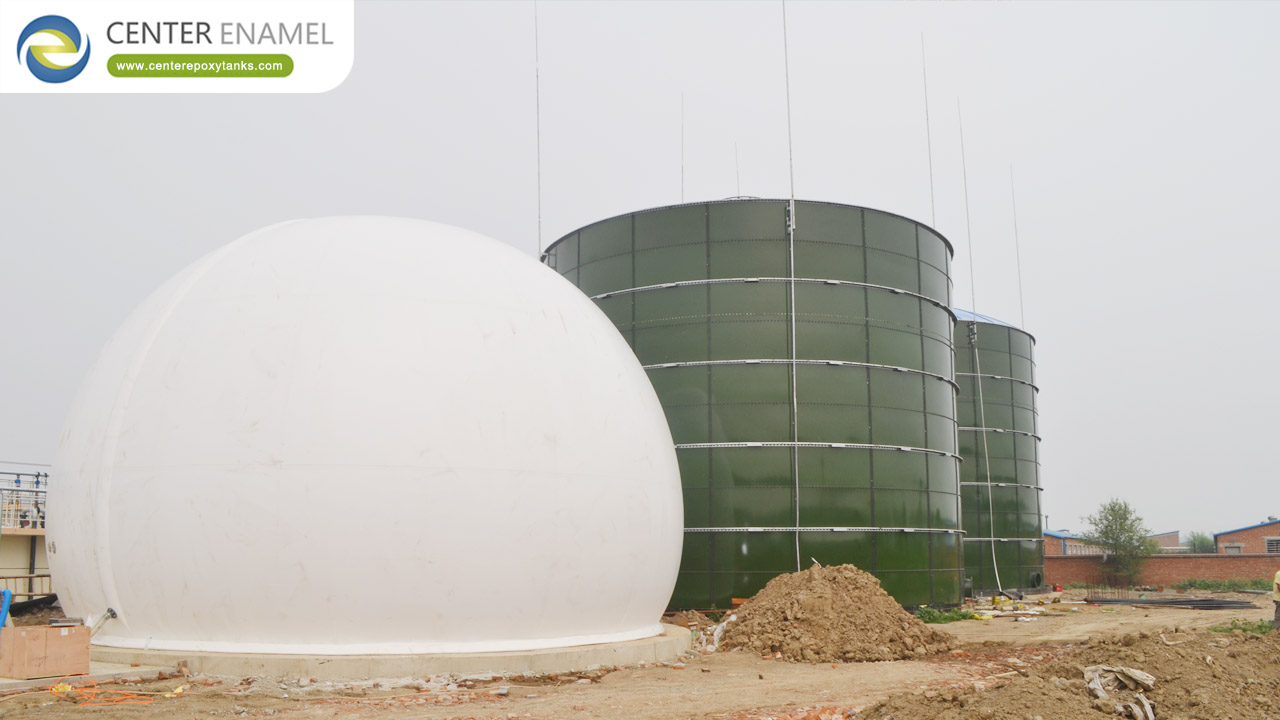
Leading China Biogas Holder Manufacturer: Engineering Global Energy Storage
A leading China-based biogas holder manufacturer provides high-performance, double-membrane gas storage systems designed for the rigors of anaerobic digestion and waste-to-energy facilities. These systems utilize advanced PVDF-coated polyester membranes, engineered to provide high tensile strength, exceptional resistance to sulfur-rich biogas ($H_2S$), and superior UV stability. By integrating intelligent pressure-control sensors and explosion-proof ventilation, these manufacturers deliver turnkey gas management solutions that stabilize pressure fluctuations, optimize energy recovery, and meet stringent international safety codes (such as DIN 4102 B1 for flame retardancy). Global operators source these systems from China for their balance of rapid, modular fabrication and rigorous, factory-controlled quality assurance.
The Engineering Standard: The Double-Membrane Advantage
Modern biogas facilities require gas management systems that can adapt to changing production volumes without risking structural integrity. The double-membrane gas holder has become the industry standard for a reason.
Pressure Stabilization: The primary membrane holds the biogas, while the outer membrane creates an air-filled, protective buffer. This design maintains a constant pressure, ensuring a steady, reliable flow of gas to your CHP (Combined Heat and Power) engines or boilers.
Material Resilience: Biogas is highly corrosive due to $H_2S$ content. Leading manufacturers utilize membranes coated with high-performance fluoropolymers (PVDF), which are chemically inert and prevent the degradation that would quickly destroy standard PVC or cheaper synthetic materials.
Safety Engineering: The air-cushion between the membranes acts as a secondary containment and protective layer, preventing the outer shell from weathering and providing a visual gauge of gas volume through intelligent telemetry.
Comparative Overview: Gas Storage Technologies
Feature | Double-Membrane Gas Holder | Rigid Steel/Concrete Dome | External Floating Roof |
Pressure Control | Dynamic/Active | Static | Minimal |
H₂S Corrosion | Excellent (PVDF Protection) | Low (Needs Lining) | Moderate |
Storage Capacity | Variable (Flexible) | Fixed | Fixed |
Installation Speed | Rapid (Modular) | Very Slow | Slow |
Maintenance | Minimal (Automated) | High | High |
Technical Benchmarks for Global EPC Procurement
To ensure your biogas plant remains operational for its 20–25 year design life, procurement teams must verify the supplier's technical depth in these areas:
Material Tensile Strength: The inner and outer membranes must be tested to exceed specific ISO/ASTM standards for tear resistance and tensile strength. Ask for the membrane's tensile strength data sheet (typically measured in N/5cm).
Flame Retardancy Certification: The membrane material must comply with international fire safety standards, most notably DIN 4102 B1 or UL 94, to ensure safety in the event of an electrical failure or lightning strike.
Intelligent Control Integration: An elite manufacturer provides more than just the fabric; they provide the control logic. Look for systems that include ultrasonic level sensors, pressure-relief valves (PVRV), and integration interfaces for your plant's existing SCADA system.
Weather-Specific Design: Is the membrane designed for high-UV environments (like deserts) or high-snow-load regions? A professional manufacturer will adjust the material thickness and tensioning geometry based on your site's environmental profile.
Frequently Asked Questions (FAQ)
Q: Are Chinese-manufactured biogas holders compliant with international safety codes?
A: Yes. Leading manufacturers have long-standing experience exporting to the EU, North America, and Southeast Asia, adhering to international engineering standards, including explosion-proof requirements and structural integrity codes.
Q: Can your biogas holders be installed on top of existing concrete digesters?
A: Absolutely. We provide specialized steel tension rings and mounting hardware that allow our double-membrane roofs to be retrofitted onto virtually any existing digester or storage tank, regardless of the original construction material.
Q: How do you protect the membranes from extreme weather?
A: Our membranes are UV-stabilized and engineered for extreme temperature fluctuations. For extreme climates, we offer specialized membrane variants with high-strength woven bases and additional protective polymer layers.
Partnering for Reliable Energy Infrastructure
Biogas storage is the final, critical step in the waste-to-energy conversion process. Partnering with a manufacturer that prioritizes material science, automated safety systems, and global export expertise ensures that your plant remains a stable, profitable energy asset.
Are you currently evaluating gas storage solutions for a new biogas facility or a system retrofit?
[Contact our technical engineering team] to request a capacity assessment, review our material test certificates, or receive a technical proposal tailored to your plant’s flow rates and environmental conditions.
Would you like a detailed technical brief on the specific performance differences between standard PVC membranes versus PVDF-coated membranes for high-sulfur biogas environments?


