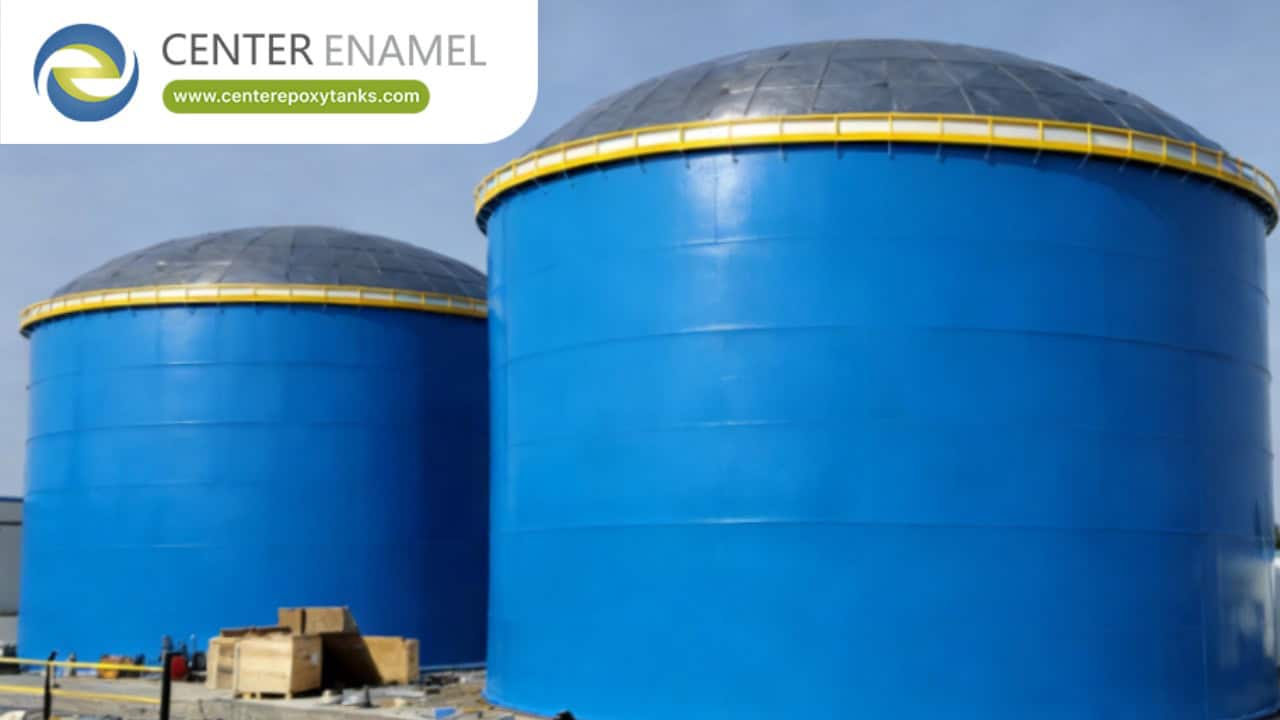
Leading China API 620 Tank Manufacturer: Engineering for Low-Pressure Storage
API 620 defines the "Design and Construction of Large, Welded, Low-Pressure Storage Tanks." Unlike atmospheric tanks, API 620 vessels require sophisticated engineering to manage internal pressures up to 15 psig and diverse temperature ranges. Sourcing these assets from China requires a manufacturer that combines heavy-duty fabrication capabilities with uncompromising adherence to global safety and quality protocols. This guide outlines the engineering benchmarks essential for identifying a reliable API 620 manufacturing partner.
1. Understanding API 620: Beyond Atmospheric Storage
While many industrial tanks are built to API 650 (atmospheric storage), API 620 is reserved for applications requiring higher pressure or specific temperature environments.
Pressure Thresholds: API 620 covers tanks designed for internal pressures above the weight of the roof plates, up to 15 psig.
Material Rigor: The standard mandates strict material thickness calculations and impact testing requirements, ensuring that the tank remains ductile and resistant to brittle fracture under operational stresses.
Welding Integrity: API 620 requires a higher level of radiographic (RT) and ultrasonic (UT) testing compared to atmospheric standards, making the choice of fabrication partner critical.
2. Engineering Benchmarks for China-Based Fabrication
When evaluating a manufacturer in China for API 620 projects, procurement and engineering teams should prioritize the following technical capabilities:
A. Advanced Welding Technology
API 620 success is defined by weld quality. Ensure the manufacturer utilizes:
Automated Submerged Arc Welding (SAW): For consistent, deep-penetration welds on shell seams.
Gas Metal Arc Welding (GMAW) & Flux-Cored Arc Welding (FCAW): Employed by certified welders for complex geometries and piping connections.
Welder Certification: Verify that welders hold current credentials for the specific material grades and thicknesses required for your project.
B. Material Traceability
API 620 tanks require full traceability. A trusted manufacturer must provide:
Mill Test Reports (MTRs): Detailed chemical and physical property analysis for every plate used.
Heat Number Tracking: Ensuring every segment of the tank shell can be traced back to its specific batch of raw steel.
3. Comparative Analysis: API 620 vs. API 650
Understanding the specific standard your project requires prevents over-engineering or, more dangerously, under-engineering your storage system.
Feature | API 650 (Atmospheric) | API 620 (Low-Pressure) |
Design Pressure | Atmospheric | Up to 15 psig |
Design Temperature | Ambient | -325°F to +250°F |
Welding/Testing | Standard Inspection | Rigorous RT/UT & Vacuum Testing |
Common Use | Crude oil, water, chemicals | LNG, refrigerated gases, volatile liquids |
Material Costs | Standard | Higher (due to thickness/grade) |
4. Quality Control & Inspection Protocols
An API 620 tank is a capital-intensive asset. Verification protocols must be embedded in the manufacturing timeline:
Non-Destructive Testing (NDT): Radiographic testing (RT) of all butt welds is mandatory per API 620, ensuring no internal porosity or inclusions.
Vacuum Box Testing: Used specifically on shell-to-bottom joints and other critical seams to guarantee leak-proof integrity under pressure.
Hydrostatic Testing: Post-fabrication, the tank is filled with water (or air pressure tested, if required) to verify structural performance at the design pressure rating.
Third-Party Inspection: A "trusted" manufacturer will have an open-door policy for third-party inspectors (e.g., SGS, Bureau Veritas, TUV) to witness critical inspections.
5. Strategic Recommendation
Sourcing API 620 tanks from China is a viable, high-value strategy only when the manufacturer demonstrates engineering transparency and adherence to international welding standards. Look for partners who provide detailed Calculation Reports (shell thickness, nozzle loading, wind/seismic analysis) alongside their fabrication offer. This engineering-first approach is the best safeguard for your project’s long-term performance and regulatory compliance.
Would you like me to draft a technical comparison white paper that specifically contrasts the welding and inspection protocols of API 620 versus API 650 to help your sales team differentiate your offerings to potential clients?


