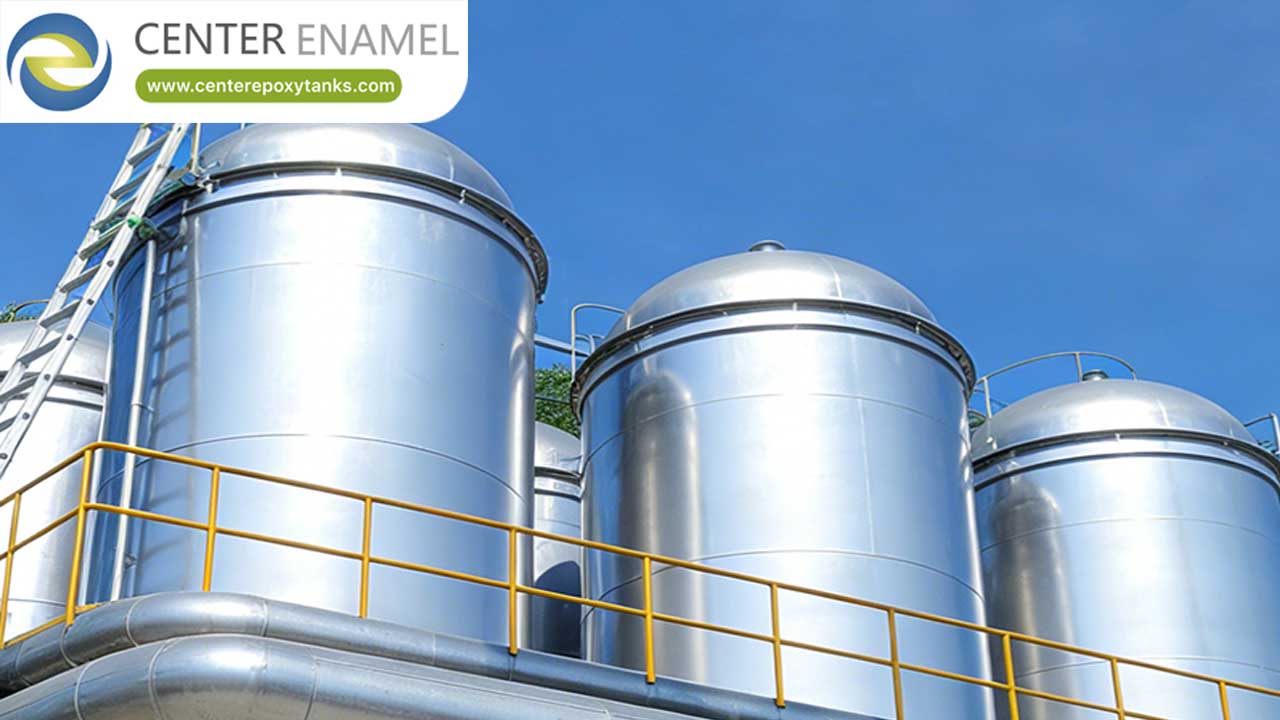
Welded Stainless Steel Tanks For Flammable Liquids: Manufacturer Capabilities And Compliance
Flammable liquid storage raises the stakes on every fabrication decision. The product is hazardous, the codes are prescriptive, and the inspection regime is the difference between a compliant tank and a liability. Stainless steel removes the corrosion question — 304 for general solvent duty, 316L where chlorides or sour traces are present — but it introduces its own fabrication demands: welding procedure control, heat input management, passivation and traceability that survives audit.
This article is a manufacturer capability profile: what qualified stainless fabrication for flammable liquids actually involves, and what buyers should verify before awarding.
Why Stainless For Flammable Liquids
Stainless steel serves flammable liquid storage where coated carbon steel cannot: ethanol and alcohol blends that attack coating compatibility, solvents that permeate or soften organic films, sour streams with corrosive traces, and duties where the cleaning regime itself (caustic, acid) rules out coated systems. Stainless removes the coating as a variable — and with it, the holiday testing, touch-up cycles and coating-compatibility arguments.
The trade-off is cost and fabrication discipline. Stainless costs several times carbon steel per tonne, and its welding requires controlled heat input, dedicated tooling and passivation after fabrication. A shop that treats stainless like carbon steel with a different plate will produce a tank that looks right and fails inspection.
Material Selection: 304 Vs 316L And Beyond
304 covers the broad band of organic solvents and alcohol service. 316L adds molybdenum for chloride-bearing environments and sour media; the low-carbon variant resists sensitization during welding, which is why 316L rather than 316 is the default for welded construction. Beyond these, alloy 2205 and other duplex grades serve aggressive chloride service at premium cost.
Material selection must consider the cleaning regime alongside the product. A tank storing benign solvent but cleaned with chloride-bearing water can fail in 304 service; the cleaning chemistry is part of the design environment, not an operational detail.
Grade | Key Alloying | Best-Fit Service | Watch-Out |
304 | 18% Cr, 8% Ni | General solvents, alcohol service | Chloride pitting; sensitization risk if not low-carbon |
316L | 16% Cr, 10% Ni, 2% Mo | Chloride-bearing, sour traces | Cost premium; not chloride-immune |
2205 duplex | 22% Cr, 5% Mo, Ni | Aggressive chloride service | Fabrication discipline; premium cost |
Welding Qualification For Stainless
Stainless welding is procedure-driven. Heat input is controlled to prevent sensitization and distortion; filler metals are matched to the base grade and the service environment; backing gas and purge regimes protect the weld root from oxidation; and interpass temperature is monitored because stainless conducts heat poorly and accumulates it. Welder performance qualifications are specific to the procedures — a carbon steel qualification does not carry over.
The buyer verification is straightforward: ask for the welding procedure specifications and the performance qualification records covering the actual joint types on the tank. If the shop cannot produce them for the specific procedures used on your tank, the qualifications do not exist.
NDT And Inspection Regimes
NDT coverage for stainless tanks in flammable service typically combines visual examination, liquid penetrant testing on root and final passes of full-penetration welds, and radiographic or ultrasonic examination per the code-specified percentage. Acceptance criteria follow the governing code — API 650 for atmospheric storage, ASME VIII where pressure vessel rules apply — and the coverage map is a project document.
Post-fabrication passivation is the inspection item unique to stainless: chemical treatment that restores the passive chromium oxide layer damaged by welding and handling. Passivation is verified by test methods such as copper sulfate or ferroxyl testing, and the record belongs in the dossier.
NDT Method | Detects | Typical Application | Limitation |
Visual examination | Surface defects, profile | All welds, all passes accessible | Subsurface only by inference |
Liquid penetrant (PT) | Surface-breaking defects | Root and final passes, full-penetration welds | Surface only; not for volumetric |
Radiographic (RT) | Volumetric defects | Shell seams per specified percentage | Access, safety, interpretation |
Ultrasonic (UT) | Volumetric, thickness | Nozzle and shell welds, thickness mapping | Surface condition dependent |
Passivation verification | Passive layer integrity | Post-weld and post-repair zones | Chemical test only |
Code Alignment: API 650 And ASME
Atmospheric flammable liquid storage tanks are designed to API 650 with the owner’s coating and inspection specifications replaced by material and welding specifications appropriate to stainless. Where operating pressure exceeds the atmospheric threshold, ASME VIII Division 1 governs with its material, welding and relief requirements. European scopes follow PED and EN standards.
The code decision must precede design. A tank designed to one framework and certified to another is not compliant with either — the certification follows the design basis, not the nameplate.
Material Traceability
Traceability runs from mill test certificates through heat numbers to installed welds and vessel positions. The dossier allows any future repair weld to be matched to a qualified procedure and a known material, and it is what an insurer, regulator or incident investigator will request first. Stainless traceability also protects against grade substitution — the failure mode that material certificates exist to prevent.
Center Enamel issues full traceability as standard: heat numbers, weld maps, NDT reports and passivation records tied to vessel positions in the as-built drawing set.
Surface Finish And Internal Cleanliness
Internal surface finish in stainless tanks is a functional requirement, not a cosmetic one. Rough interiors trap product residues and cleaning chemistry, which becomes the corrosion initiation site under the deposit. Specifying and verifying surface finish — Ra values agreed at design, verified after fabrication and after any field welding — is part of the fabrication quality regime.
Cleanliness extends to the shipping and storage phase: pickling and passivation completed before shipment, openings sealed against contamination in transit, and a pre-service cleaning procedure documented before the first batch enters the tank. The first product a tank sees should not be the one that discovers the fabrication residue.
Repair Welding And Lifecycle Management
Stainless tanks get repaired, and the repair quality determines whether the asset continues or degrades. Field repair welds must follow qualified procedures with the same purge and heat-input control as the original fabrication, followed by re-passivation of the affected zone. A repair welded with carbon steel practices and left unpassivated is a corrosion cell installed by the maintenance team.
The documentation package exists for exactly this moment: the repair engineer matches the weld map to the original procedure, verifies the material grade from the traceability record, and plans the passivation and inspection of the repair zone before striking an arc.
Shop Fabrication Vs Field Erection
Stainless fabrication quality is easiest to control in a shop: purge and backing gas systems are routine, heat input is monitored in a controlled environment, and inspection access is unrestricted. Field erection of stainless introduces wind, temperature and access variables that must be managed with temporary purge enclosures and dedicated inspection provisions — possible, but planned and priced.
For most stainless flammable-liquid duties in the mid-size band, shop-fabricated construction with field assembly of shop-built shells is the quality-optimal path. The shipping constraint sets the practical ceiling.
Verification Checklist For Buyers
Before awarding a stainless flammable-liquid tank, verify: welding procedure specifications and performance qualifications for the actual joint types; filler metal and purge regime documentation; NDT coverage map with acceptance criteria; passivation method and verification records; material test certificates with heat traceability; and the code and annexes the tank is designed to.
A supplier who answers all six without hesitation has done this before. A supplier who answers with certificates but not procedures is selling paper.
Center Enamel Stainless Fabrication Capability
Center Enamel fabricates welded stainless tanks in 304 and 316L with welding certification, controlled heat input and purge regimes, full NDT coverage and passivation verification, executed under ISO 9001 and EN 1090 discipline. Our documentation packages are built to survive owner, insurer and regulatory review.
For flammable-liquid duties, we bring the same standard to every weld that the hazard demands: qualified, inspected, and traceable.
Project Case Study
A Tunisian industrial project required stainless tankage for aggressive effluent duty within a flammable-liquid-adjacent process environment. Center Enamel supplied four stainless steel tanks totaling 846 m3: one tank at 12.23 m diameter by 4.2 m height, one at 8.4 m by 4.2 m, one at 4.58 m by 5.4 m, and one at 3.06 m by 4.2 m.
The multi-specification configuration matched the plant’s segregation and equalization strategy across process and effluent streams. Tanks were fabricated under qualified stainless welding procedures with full material traceability and delivered complete in December 2025 with the inspection documentation package.
Project Reference | 03 Tunisia Textile Wastewater 202512 |
Location | Tunisia |
Application | Industrial Wastewater |
Product / Technology | Stainless Steel Tank |
Tank Count | 4 |
Tank Dimensions | φ12.23*4.2m(H), 1 unit; φ3.06*4.2m(H), 1 unit; φ8.4*4.2m(H), 1 unit; φ4.58*5.4m(H), 1 unit |
Total Volume | 846 m3 |
Completion | Delivered and completed 2025-12 |
Supply Scope Note | B relevance grade to this topic |
About Company
Shijiazhuang Zhengzhong Technology Co.,Ltd(Center Enamel) is a professional manufacturer dedicated to the design and fabrication of bolted storage tanks since 2008. Our products range includes Glass-Fused-to-Steel (GFS) tanks, fusion bonded epoxy tanks, stainless steel tanks, galvanized steel tanks and aluminum geodesic dome roofs. With professional enameling R&D team and nearly 200 enameling patents, Shijiazhuang Zhengzhong Technology Co.,Ltd has become the leader in bolted tanks industry of Asia. Our products are certified to ISO9001, NSF61, EN1090, ISO28765, WRAS ,FM, LFGB, BSCI, IS0 45001 and other international standards.
Shijiazhuang Zhengzhong Technology Co., Ltd is not only the first manufacturer in China which produces Glass-Fused-to-Steel tanks, but also the most experienced professional bolted tanks manufacturer in Asia.The engineering & design, product testing and quality system of Center Enamel Glass-Fused-to-Steel tanks is in strict accordance with AWWA D103-09, OSHA, ISO 28765, NSF/ANSI 61, NFPA and other international standards. Until 2023, Center Enamel bolted tanks have been exported to more than 100 countries including USA, Australia,Canada, Malaysia, Indonesia, Russia, UAE, Panama,Brazil and South Africa etc., the superior tank quality and prompt service gains us worldwide recognition.
As an outstanding containment and cover system provider with decades of industry experience, Shijiazhuang Zhengzhong Technology Co., Ltd sincerely expects to establish long-term cooperation with the local partners throughout the world and make continuous contribution to the development of the industry.
Suggested CTA
Center Enamel delivers stainless steel welded engineered for flammable liquid storage duty, with stainless fabrication track record, welding certification, material traceability. Contact our engineering team for manufacturer capability and quotation on your next welded stainless steel flammable liquid storage tanks project — including sizing, standards compliance and delivery scheduling.
Frequently Asked Questions
Q: When should stainless steel be chosen over coated carbon steel for flammable liquids?
A: When the product or cleaning regime attacks coating compatibility — ethanol blends, aggressive solvents, chloride-bearing environments or sour traces — or when the owner wants to eliminate coating inspection and touch-up cycles from the operating scope.
Q: What is the difference between 304 and 316L for tank service?
A: 316L adds molybdenum for chloride and sour environments, and the low-carbon variant resists sensitization during welding — which is why 316L rather than 316 is the default for welded construction. 304 covers general organic and solvent service.
Q: Why is passivation required after welding stainless?
A: Welding and handling damage the passive chromium oxide layer that gives stainless its corrosion resistance. Passivation restores it chemically, and the process is verified by test methods such as copper sulfate or ferroxyl testing with records retained in the documentation package.
Q: What NDT coverage is typical for stainless tanks in flammable service?
A: Visual examination, liquid penetrant testing on root and final passes of full-penetration welds, and radiographic or ultrasonic examination per the code-specified percentage, with acceptance criteria per API 650 or ASME VIII as applicable.
Q: What documentation proves stainless fabrication quality?
A: Welding procedure specifications and welder performance qualifications for the actual joint types, filler and purge documentation, NDT coverage map, passivation records, and material test certificates with heat traceability tied to vessel positions.
Q: Can stainless tanks be field-erected?
A: Yes, with temporary purge enclosures, controlled heat input and dedicated inspection access — but quality is easiest to control in the shop. For mid-size duties, shop-fabricated shells with field assembly is usually the quality-optimal path within shipping constraints.