Internal Floating Roofs (IFR): Pros and Cons for Industrial Storage
The industrial landscape relies heavily on the efficiency of volatile liquid storage. The Internal Floating Roof (IFR) has become a preferred engineering solution for minimizing hazardous vapor release and enhancing site safety. However, like any critical infrastructure component, it comes with a specific set of operational trade-offs.
For facility managers and procurement teams, balancing the long-term ROI of emission control against maintenance and capital expenditure (CAPEX) requirements is essential. As a global manufacturer and innovator in the tank and roofing industry since 2008, Shijiazhuang Zhengzhong Technology Co., Ltd (Center Enamel) provides this balanced analysis of the pros and cons of Internal Floating Roofs.
The Advantages (Pros) of IFRs
The primary driver for IFR adoption is the need for rigorous environmental compliance and the mitigation of flammable headspace.
● Drastic Emission Suppression: IFRs effectively eliminate the vapor space between the liquid surface and the tank roof. By doing so, they suppress VOC (Volatile Organic Compound) emissions by up to 95%–98%, ensuring compliance with strict environmental regulations.
● Inventory Preservation: By curbing the "breathing" losses inherent in fixed-roof tanks—where product evaporates due to temperature fluctuations—IFRs protect inventory volume and ensure the chemical integrity of refined products.
● Enhanced Fire Safety: By minimizing the volatile vapor headspace, an IFR disrupts the fire triangle. Without a significant flammable vapor-air mixture in the upper section of the tank, the risk of flash fires and explosions is exponentially lower.
● Weather Shielding: Unlike External Floating Roofs (EFRs), IFRs operate within a fixed roof enclosure. This protects the deck from external elements like rain, snow, and UV radiation, which prevents the seal degradation and buoyancy issues common in open-air systems.
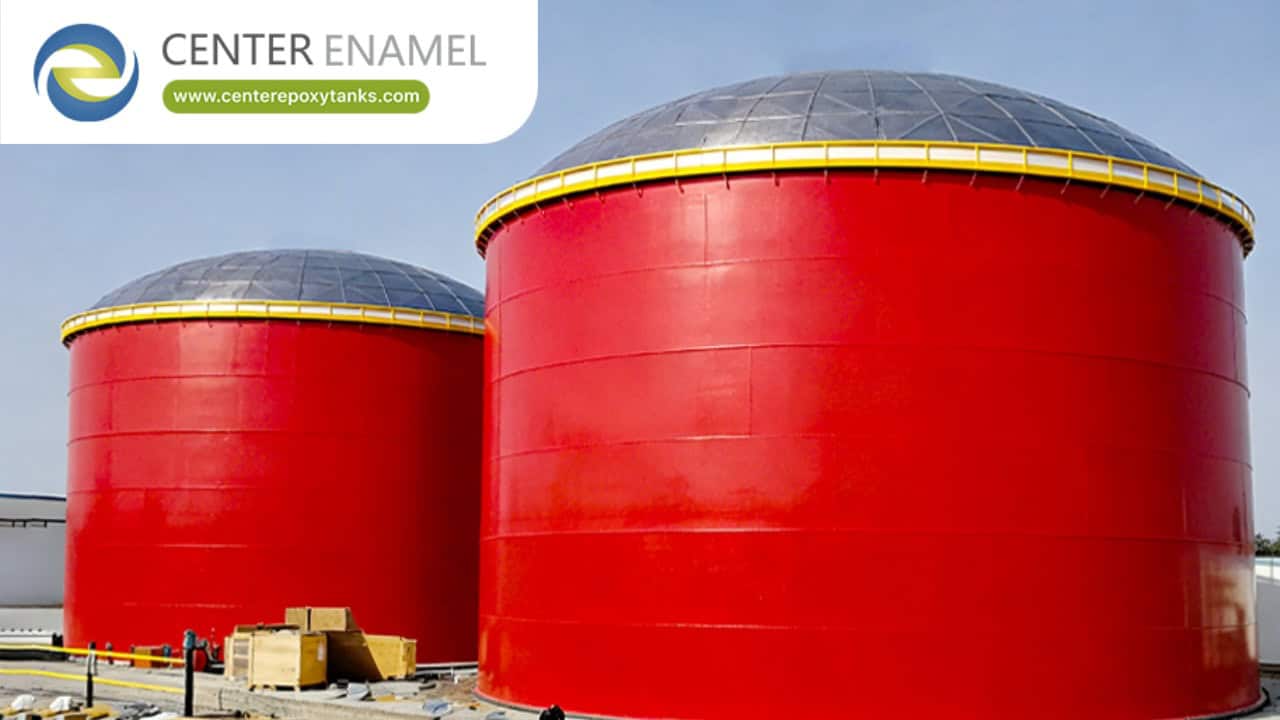
● Operational Synergy: When paired with clear-span fixed covers (like Aluminum Geodesic Domes), IFRs function without the hindrance of internal support columns, allowing for smoother vertical movement and reduced rim seal wear.
The Disadvantages (Cons) and Challenges
While IFRs offer significant benefits, they also introduce technical requirements that demand diligent management.
● Higher Initial Capital Expenditure (CAPEX): Compared to traditional fixed-roof systems, the procurement and installation of an IFR—including the deck, seals, and guidance systems—represent a higher upfront investment.
● Maintenance Complexity: Unlike stationary roofs, an IFR is a moving mechanical assembly. It requires regular inspection of peripheral rim seals, buoyancy pontoons, and support legs to ensure the roof remains level and watertight.
● Seal and Buoyancy Sensitivity: If the seal material is incorrectly specified for the stored product, or if the tank shell is not perfectly circular (out-of-round), rim seals can fail, leading to vapor leakage. Furthermore, pontoon puncture or fluid intrusion into panels can jeopardize roof buoyancy if not monitored.
● Retrofitting Difficulties: Installing an IFR into an existing "brownfield" tank often requires significant structural modifications, such as reinforcing column sleeves or correcting shell deformations, which can increase the total project cost.
● Confined Space Hazards: Maintenance and inspection of IFR components inherently involve confined space entry. This necessitates strict adherence to safety permits and ongoing atmospheric monitoring.
Comparison Summary Table
Evaluation Criterion | Internal Floating Roof (IFR) | Fixed Carbon Steel Roof |
Emission Control | Excellent (95%+ Reduction) | None |
Fire Safety | High (Vapor space eliminated) | Low (Flammable vapor headspace) |
Maintenance | Regular (Seals/Legs/Buoyancy) | Low (Mainly corrosion/coating) |
Initial Cost | Higher | Lower |
Installation | Complex (Mechanical assembly) | Simple (Welded/Fixed) |
Weather Protection | Excellent (Fully enclosed) | N/A |
Expert Recommendation: Strategic Implementation
The "cons" associated with IFRs—primarily maintenance and design complexity—are essentially management tasks rather than structural flaws. When engineered correctly and paired with a clear-span Aluminum Geodesic Dome Roof, the IFR becomes a "set-and-forget" asset that pays for itself through product loss prevention and environmental compliance.
For organizations managing volatile hydrocarbons, the cost of not having an IFR—in terms of potential regulatory fines, product loss, and safety risks—far outweighs the operational maintenance requirements.


