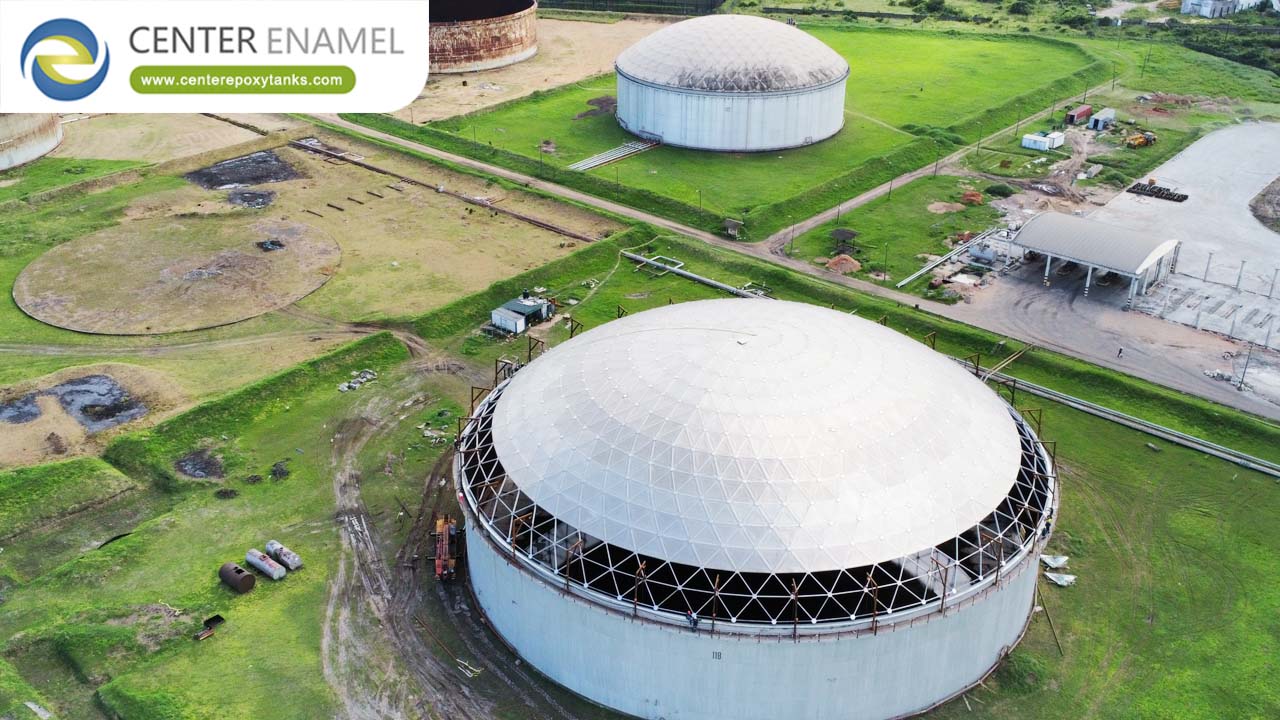
Internal Floating Roofs (IFR) for Emergency Fuel Storage Tanks
For critical infrastructure, data centers, and industrial facilities, Emergency Fuel Storage is not just an asset—it is a lifeline. However, stored fuel is subject to evaporation, oxidative degradation, and significant fire risk. Internal Floating Roofs (IFR) are the engineered solution for these challenges. By eliminating the vapor space between the liquid surface and the tank roof, IFRs transform a standard fuel vessel into a stable, compliant, and ready-to-use storage system, ensuring your generators or turbines function exactly when needed.
1. Why Emergency Fuel Requires Floating Roofs
Emergency fuel reserves often sit in static storage for extended periods. Without proper protection, volatile components evaporate, leaving behind "aged" fuel that can cause engine failure, clogged filters, and startup delays.
Critical Operational Benefits:
● Vapor Loss Suppression: By floating directly on the product, the IFR reduces the vapor space to nearly zero, preventing the evaporation of light-end fractions that are essential for cold-start reliability.
● Fire Risk Mitigation: Fuel tank fires typically ignite in the "headspace" (the vapor-air mix above the liquid). By effectively removing this space, you remove the oxygen-fuel mix necessary for combustion, significantly increasing facility safety.
● Contamination Protection: The roof acts as a physical barrier against condensation, atmospheric moisture, and debris. This keeps your fuel clean, dry, and within specification for long-term standby readiness.
2. Technical Standards & Regulatory Compliance
Emergency fuel infrastructure is heavily regulated to prevent environmental hazards. Compliance is mandatory for audit readiness.
● API 650 Appendix H: This is the gold standard for Internal Floating Roof design. Any IFR system specified for emergency fuel should be designed to meet or exceed these requirements for buoyancy, structural stability, and drainage.
● NFPA 30 Compliance: These codes govern the storage of flammable and combustible liquids. Modern IFRs help meet these requirements by drastically reducing the "flammability rating" of the tank environment.
● Seismic Resilience: Emergency tanks must survive natural disasters. A properly engineered IFR is designed to maintain structural integrity and seal contact even during the lateral movement of a seismic event.
3. Decision Matrix: Fuel Storage Strategies
Feature | Internal Floating Roof (IFR) | Fixed Roof (No IFR) |
Evaporation Loss | Near-Zero (Minimal) | High (Constant breathing) |
Fire/Explosion Risk | Low (Reduced headspace) | High (Vapor-air mix) |
Fuel Quality | High (Protected from air/moisture) | Variable (Oxidation risk) |
Regulatory Standing | High (Emission Compliant) | Moderate/Low |
Lifespan | Long (Corrosion-resistant) | Moderate (Needs frequent cleaning) |
4. Engineering Considerations for Emergency Tanks
When specifying an IFR for an emergency project, prioritize these technical pillars:
1. Seal Configuration: For emergency fuel, prioritize a dual-seal system (primary and secondary). This provides redundancy, ensuring that even if one seal degrades over time, the vapor barrier remains effective.
2. Structural Stability: Ensure the IFR supports the weight of required inspection personnel and equipment (as per API standards), allowing for maintenance without needing to drain the tank completely.
3. Drainage: In tanks where rainwater might pool on the fixed roof, reliable drainage is essential for the tank integrity; however, the IFR itself should be designed to prevent liquid accumulation on the deck surface.
Frequently Asked Questions (FAQ)
Q: Can I retrofit an IFR into an existing emergency fuel tank?
A: Yes. Retrofitting is a common strategy to bring older, compliant-deficient tanks up to modern safety standards. Using modular, "no-weld" IFR designs allows for installation without hot-work, meaning you don't need to take the tank out of service for extended periods for construction.
Q: Does the IFR make it difficult to inspect the fuel?
A: No. Modern IFRs are equipped with designated access hatches and gauge poles that allow for manual sampling, level measurement, and water bottom checks without needing to remove or damage the roof system.
Q: How often does an IFR need maintenance?
A: Minimal. Because it is sheltered within the tank, it is protected from direct UV exposure and weathering. Routine annual inspections of the seals and vents are usually sufficient to ensure decades of reliable operation.
Engineering Certainty for Your Critical Reserves
Your emergency fuel supply is only as reliable as the containment system holding it. By integrating an API-compliant Internal Floating Roof, you move from a strategy of "hoping the fuel is ready" to a strategy of "guaranteeing the fuel is ready" when the grid goes down.
Are you currently in the design phase for an emergency backup power project, or are you looking to retrofit an existing fuel tank to improve safety and fuel longevity?


