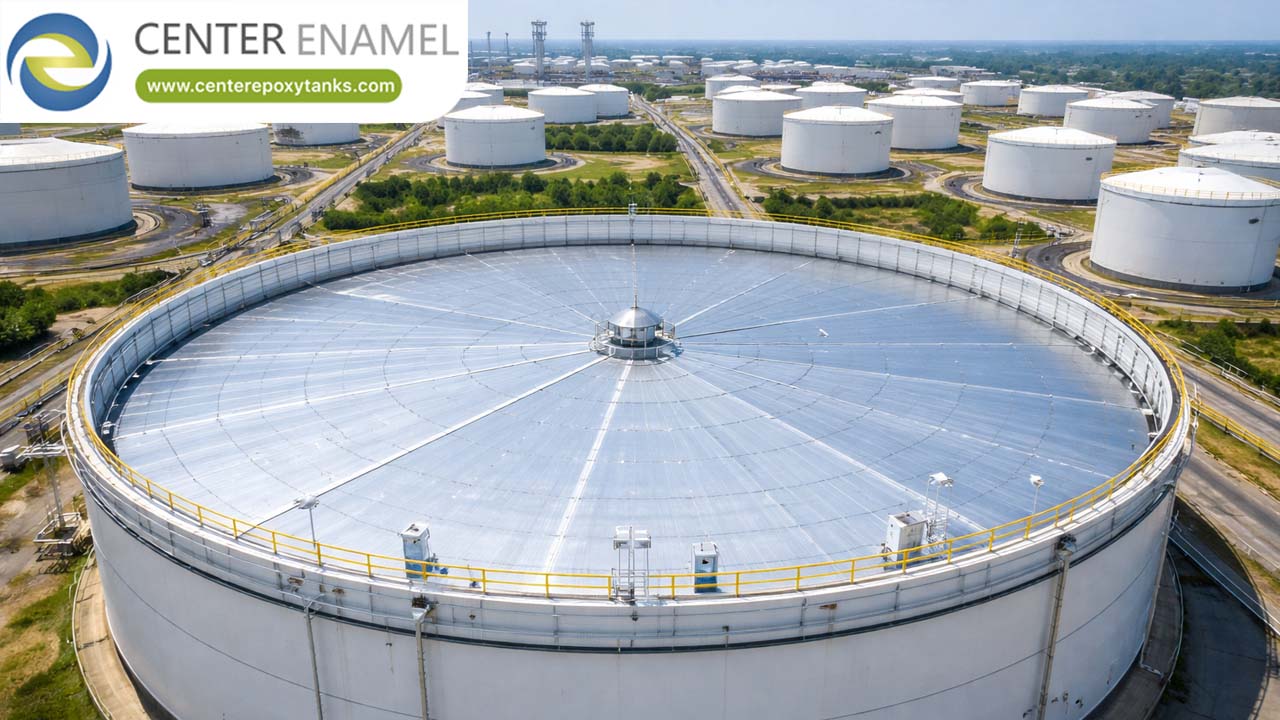
Floating Roofs for Industrial Fuel Storage Tanks: Engineering Safety, Efficiency, and VOC Compliance
In modern petroleum refineries, bulk fuel terminals, and heavy industrial facilities, managing large volumes of volatile refined products and crude oil presents critical containment challenges. When storing high-volatility fuels such as gasoline, diesel, aviation kerosene, and petrochemical feedstocks, static fixed-roof atmospheric tanks suffer from severe "breathing losses" and hazardous vapor accumulation.
To eliminate the volatile vapor space (ullage) between the liquid surface and the tank roof, the global standard is the deployment of floating roofs for industrial fuel storage tanks. By resting directly on the liquid and rising or falling synchronously with inventory fluctuations, floating roofs drastically suppress product evaporation, mitigate flash-fire risks, and ensure strict compliance with environmental clean-air regulations.
Operating Principles and Engineering Dynamics
A floating roof storage system relies on two fundamental engineering mechanisms: precise structural buoyancy and dynamic peripheral sealing:
Elimination of the Vapor Headspace: By maintaining continuous contact with the fuel surface, the floating deck removes the gaseous vapor pocket where explosive hydrocarbon-air mixtures accumulate. This design cuts Volatile Organic Compound (VOC) emissions by up to 95% compared to traditional fixed-roof structures.
Structural Buoyancy and Safety Margins: Governed globally by API 650 standards, floating roofs are engineered with rigorous buoyancy margins. Specifically, external floating roofs must satisfy the "two-compartment sinking criteria"—meaning the deck remains fully buoyant even if two adjacent pontoon chambers are accidentally breached.
Advanced Annular Rim Seal Systems: The narrow gap (annular space) between the outer rim of the floating deck and the vertical tank shell is secured using multi-layered seal technologies. Primary mechanical shoe seals or liquid-filled toroidal seals are combined with secondary wiper seals to isolate internal hydrocarbons from ambient air currents and prevent wind-induced evaporation.
Technical Performance Matrix: Internal vs. External Floating Roofs
Operational Parameter | Internal Floating Roof (IFR) | External Floating Roof (EFR) |
Primary Governing Standard | API 650 Appendix H | API 650 Appendix C |
Weather & Climate Vulnerability | Fully protected from rain, snow, and wind by a permanent outer fixed roof | Highly exposed; requires active drainage systems and heavy-gauge construction |
Primary Material Composition | Lightweight aluminum, stainless steel, or specialized corrosion-resistant alloys | Heavy-gauge carbon steel plate or robust welded steel pontoons |
VOC Containment Efficiency | Maximum dual-barrier protection (Sheltered fixed roof + internal floating membrane) | High efficiency, but subject to performance variations from high wind shear |
Maintenance & Inspection Profile | Low structural weathering; internal access requires scheduled tank purging and downtime | High atmospheric exposure; easier exterior access for routine seal and drain inspections |
Frequently Asked Questions (FAQ)
Q: What are the key API 650 standards governing floating roof fuel tanks?
A: API 650 divides floating roof engineering into distinct frameworks: Appendix C governs the design, fabrication, buoyancy, and testing criteria for external floating roofs, while Appendix H dictates structural specifications, grounding, and ventilation mandates for internal floating roofs.
Q: How do rim seals prevent VOC emissions in industrial fuel tanks?
A: Rim seals bridge the perimeter gap between the floating deck and the steel tank wall. Modern configurations utilize a primary seal (such as a mechanical metal shoe pressed against the shell by springs) paired with a secondary wiper seal. This dual barrier prevents hydrocarbon vapors from escaping into the atmosphere and blocks wind currents from scouring the liquid edge.
Q: What causes sinking events in floating roof tanks, and how are they prevented?
A: Sinking events on external floating roofs are typically caused by unevacuated rainwater weight accumulating during heavy storms due to clogged or frozen primary drain lines, or by localized loss of buoyancy from a pontoon breach. Modern facilities prevent this by integrating redundant flexible drainage lines, automatic level-monitoring alarms, and strict multi-compartment buoyancy safety margins.
Q: Can an existing fixed-roof fuel storage tank be retrofitted with a floating roof?
A: Yes. Many industrial facilities retrofit traditional fixed-roof tanks by installing a lightweight aluminum internal floating roof through existing shell manways, significantly reducing VOC emissions and upgrading environmental compliance without requiring a complete tank rebuild.


