Internal Floating Roofs for Timor-Leste Petrochemical Industry: Advancing Safety, Efficiency, and Environmental Compliance
As the Democratic Republic of Timor-Leste continues to advance its national energy security, downstream infrastructure, and strategic petroleum reserves—highlighted by developments like the Petroleum Import Terminal (PIT) initiatives, regional fuel storage hubs, and downstream refining frameworks—the standard of industrial storage safety has never been higher.
In tropical, coastal environments subject to high ambient temperatures, monsoon weather patterns, and maritime logistics demands, minimizing product loss and mitigating environmental hazards are paramount. Internal floating roofs (IFRs) installed within aboveground storage tanks (ASTs) have become the definitive engineering solution for the Timor-Leste petrochemical industry, ensuring superior containment of refined products, crude oils, and strategic fuel stockpiles.
The Engineering Mechanics of Internal Floating Roofs
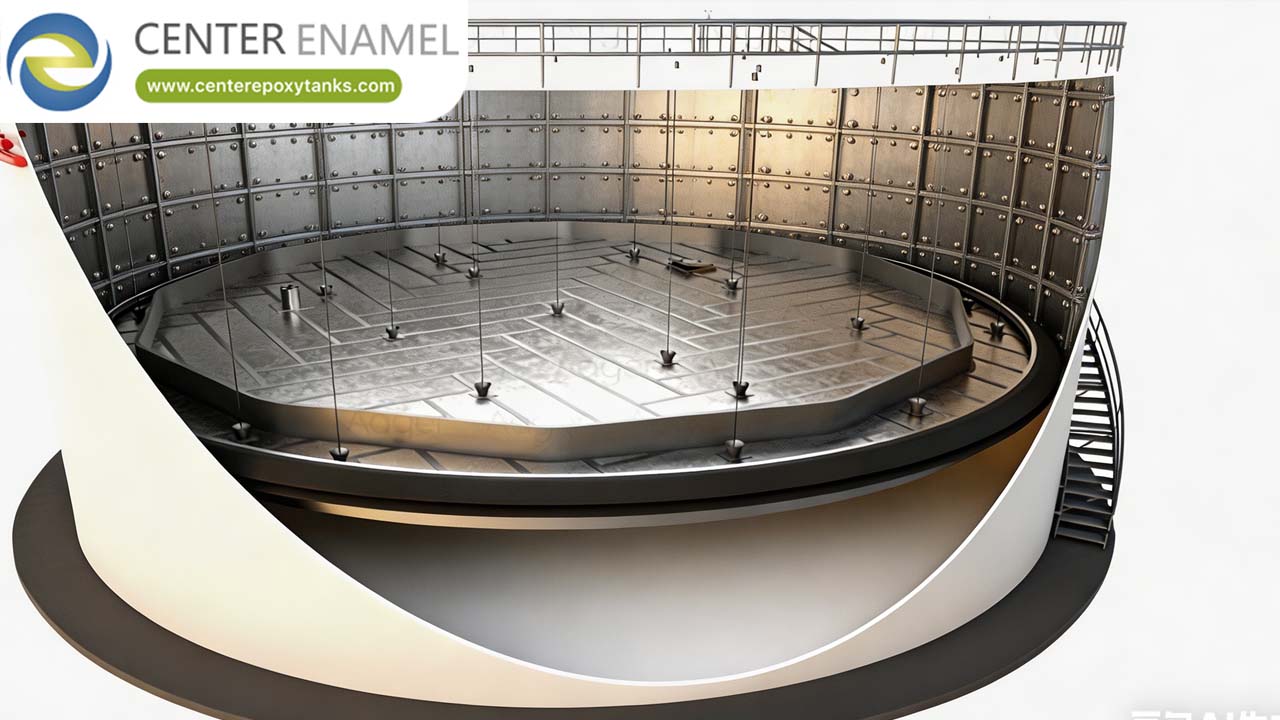
An internal floating roof operates by resting directly on the surface of the stored liquid inside a fixed-roof storage tank, moving vertically with the liquid level. By eliminating the vapor space between the liquid surface and the fixed roof, IFR systems fundamentally alter tank thermodynamics and emission profiles:
Vapor Space Elimination: In a standard fixed-roof tank, breathing and working losses occur as vapors expand and contract in the vapor pocket. An IFR suppresses this vapor space entirely, trapping volatile organic compounds (VOCs) beneath the deck.
Modular Deck Designs: Modern IFR systems utilize high-strength, corrosion-resistant aluminum or welded steel pontoons and full-contact honeycomb panel configurations. These structures provide high buoyancy, structural stability, and absolute compatibility with modern refined fuels, diesel, and biofuels.
Comprehensive Sealing Systems: Equipped with resilient primary and secondary wiper seals (such as metallic shoe seals or flexible foam seals), IFR perimeters maintain continuous contact with the tank shell, preventing fugitive emissions and wind-induced evaporation.
Technical Performance Matrix: Storage Tank Roof Technologies
Technical Parameter | Internal Floating Roof (IFR) | Traditional Fixed Cone Roof | External Floating Roof (EFR) |
Volatile Organic Compound (VOC) Loss | Extremely low; vapor space is virtually eliminated | High; continuous breathing and working vapor losses | Moderate; vulnerable to rim-seal evaporation |
Weather & Rainwater Vulnerability | Protected by the outer fixed roof; zero rainwater accumulation risk | Protected from weather, but prone to internal condensation corrosion | Exposed to tropical rainfall; requires active drain management |
Maintenance & Inspection Overhead | Low; protected environment reduces weathering and coating degradation | Moderate; requires frequent external roof coating maintenance | High; continuous deck sealing and drainage maintenance required |
Governing Design Standards | Engineered to API 650 Appendix H and international safety frameworks | General structural steel codes | Engineered to API 650 Appendix C |
Driving Environmental Stewardship and Operational Efficiency in Timor-Leste
1. Minimizing Product Degradation and Loss
Refined petroleum products stored in tropical climates face accelerated evaporation rates. By deploying API 650-compliant internal floating roofs across bulk storage terminals, operators in Timor-Leste can protect high-turnover diesel, gasoline, and jet fuel inventories from evaporative shrinkage, preserving product quality and commercial value.
2. Environmental Compliance and VOC Abatement
Global environmental protocols and local sustainability objectives require stringent controls on greenhouse gas emissions and volatile organic pollutants. IFR systems achieve up to 99% reduction in vapor emissions compared to fixed-roof tanks, aligning domestic terminal operations with international best practices.
3. Resilience Against Monsoonal and Coastal Environments
Coastal storage terminals face high humidity, saline sea breezes, and heavy seasonal monsoons. The combined architecture of a robust outer fixed roof and an internal floating deck shields the stored commodity from rain ingress, lightning strikes, and aggressive atmospheric corrosion, ensuring uninterrupted energy supply chains.
Frequently Asked Questions (FAQ)
Q: Why are internal floating roofs crucial for the Timor-Leste petrochemical and terminal industry?
A: IFRs eliminate the vapor space in storage tanks, drastically reducing evaporative product losses and Volatile Organic Compound (VOC) emissions under Timor-Leste's high-temperature tropical climate, while safeguarding fuel quality across strategic import terminals.
Q: What international engineering standards govern internal floating roof design?
A: High-performance internal floating roofs are designed and fabricated in strict accordance with API 650 Appendix H, ensuring precise structural buoyancy, seal integrity, and compatibility with various petroleum products.
Q: Can an internal floating roof be retrofitted into an existing fixed-roof storage tank?
A: Yes. One of the primary advantages of IFR systems is their modular construction, allowing engineers to install aluminum or steel internal floating decks into existing aboveground storage tanks during scheduled maintenance or terminal upgrades.
Q: How do IFR systems protect stored fuel during heavy monsoon seasons?
A: Because the IFR operates beneath a permanent outer fixed roof, rainwater, dust, and moisture are entirely blocked from contacting the floating deck or mixing with the stored product, eliminating water contamination and sinking risks.


