Internal Floating Roofs for Lubricating Oil: Product Quality and Moisture Control
Finished lubricant is a precision product: base oil plus a chemistry set of additives, blended and filtered to spec, then parked in a tank where one enemy quietly works against it — condensed water. Every thermal cycle of an open vapor space breathes in humid air, and every breath leaves droplets on the roof to drip back into the product.
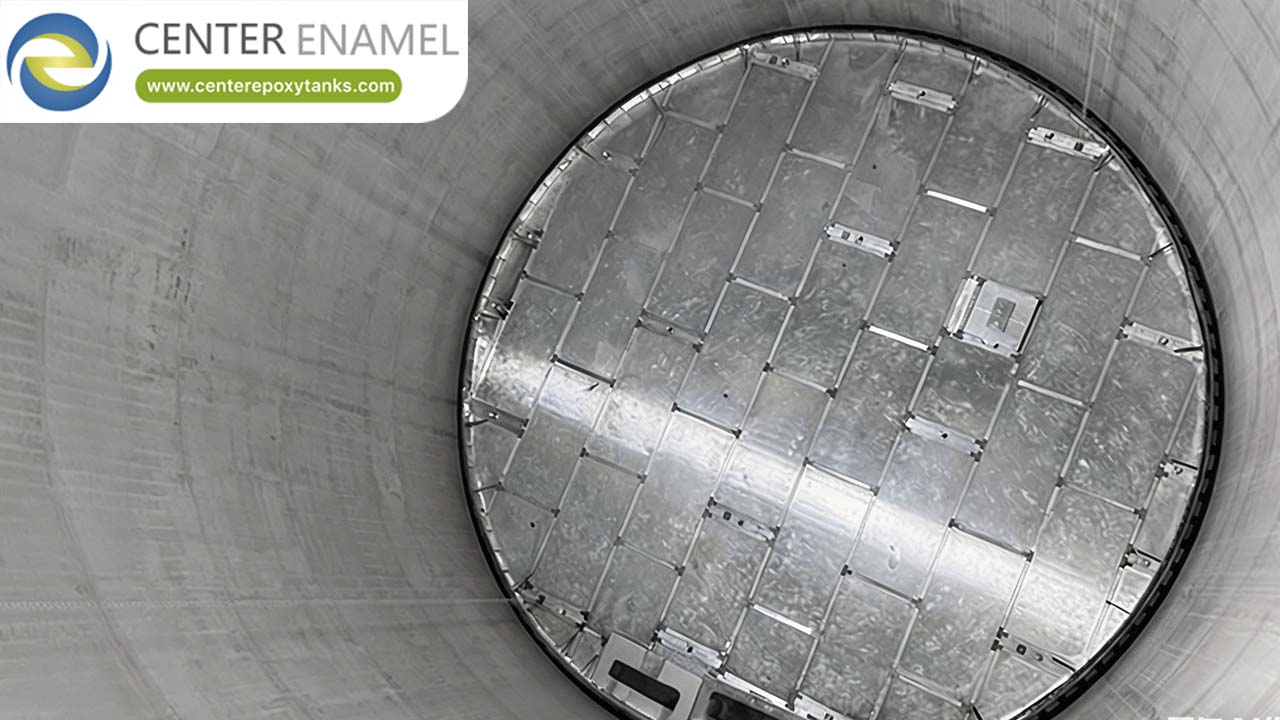
Internal floating roofs for lubricating oil are decks floating on the lube surface that eliminate the tank's vapor space, blocking moisture ingress, protecting additive packages from oxidation, and stopping the vapor-space condensation corrosion that contaminates finished product — engineered per API 650 Annex H with clean-service deck materials.
1. Why Does Lube Oil Storage Differ From Fuel Storage?
The mission shifts from emission control to contamination control.
· Water is the contaminant: Condensed moisture emulsifies into finished lubricant, degrades additives, and breeds microbial growth in water bottoms.
· Oxidation sensitivity: Headspace air cycles renew the oxygen supply attacking base oil and antioxidants — the tank itself accelerates shelf-life loss.
· Cleanliness inheritance: Products filtered to ISO cleanliness targets upstream must not be re-contaminated by rust scale from a wet vapor space.
· Value density: Finished lubricant carries far more value per cubic meter than fuel — quality losses hit proportionally harder.
2. How Does an IFR Protect Lubricant Quality?
A deck converts the tank from a breather into a closed vessel.
· Moisture exclusion: With the deck riding the liquid, humid air never contacts the product surface; the classic condensation-drip failure mode disappears.
· Vapor-space management: The space above the deck stays dry and stable; optionally nitrogen-blanketed for premium synthetics.
· Corrosion starvation: A dry, ventilated headspace stops the roof-and-upper-shell rusting that sheds iron oxide into the tank.
· Additive stability: Limiting oxygen and water exposure extends the effective life of antioxidant and performance additive packages.
3. Which Deck Details Matter in Lube Service?
Clean-service requirements shape deck material and fitting choices.
· Stainless or coated aluminum decks: Non-rusting deck materials preserve the cleanliness the filtration train paid for.
· Sealed fittings: Gauging wells, sample hatches, and deck legs with sealed sleeves — every penetration is a contamination path in finished-product duty.
· Seal selection: Elastomeric primary seals suited to non-aggressive lube vapor; secondary seals where the tank sits in humid climates.
· Landing practice: Non-contact or easily landed decks simplify inspection without scraping contamination into the product.
Data Table: Lube Tank Vapor-Space Strategies Compared
Strategy | Moisture Control | Corrosion Control | Relative Cost |
Open fixed roof | Poor | Poor | Baseline |
Fixed roof + vents | Limited | Moderate | Low |
IFR deck | Very good | Very good | Medium |
IFR + nitrogen blanket | Excellent | Excellent | Medium-high |
Frequently Asked Questions (FAQ)
Q1: Why do lubricating oil tanks need floating roofs?
Not for emissions but for quality: an internal floating roof eliminates the vapor space where humid air condenses and drips water into finished lubricant, protects additive packages from oxidation, and stops vapor-space rust from contaminating a product that was filtered to spec one tank earlier.
Q2: Can water really contaminate lubricant in a closed tank?
Yes — a vented tank breathes daily, and each cycle exchanges headspace air; overnight cooling condenses that humidity on the roof and upper shell, and the droplets drain back into the oil. Emulsified water degrades additives, clouds the product, and accelerates microbial growth in water bottoms.
Q3: What deck material suits lubricating oil service?
Stainless steel or coated aluminum decks: non-rusting surfaces that preserve product cleanliness, with sealed gauging wells and sample hatches so routine operations do not open contamination paths. Non-contact pontoon designs ease inspection landings on waxy or high-viscosity products.
Q4: Is an IFR enough, or should lube tanks be nitrogen-blanketed?
For most mineral lubricants, a well-sealed IFR with a ventilated dry headspace achieves the quality target. Premium synthetics and long-storage products upgrade to nitrogen blanketing above the deck for maximum oxygen and moisture exclusion — the IFR makes the blanket practical by shrinking the volume to inert.


