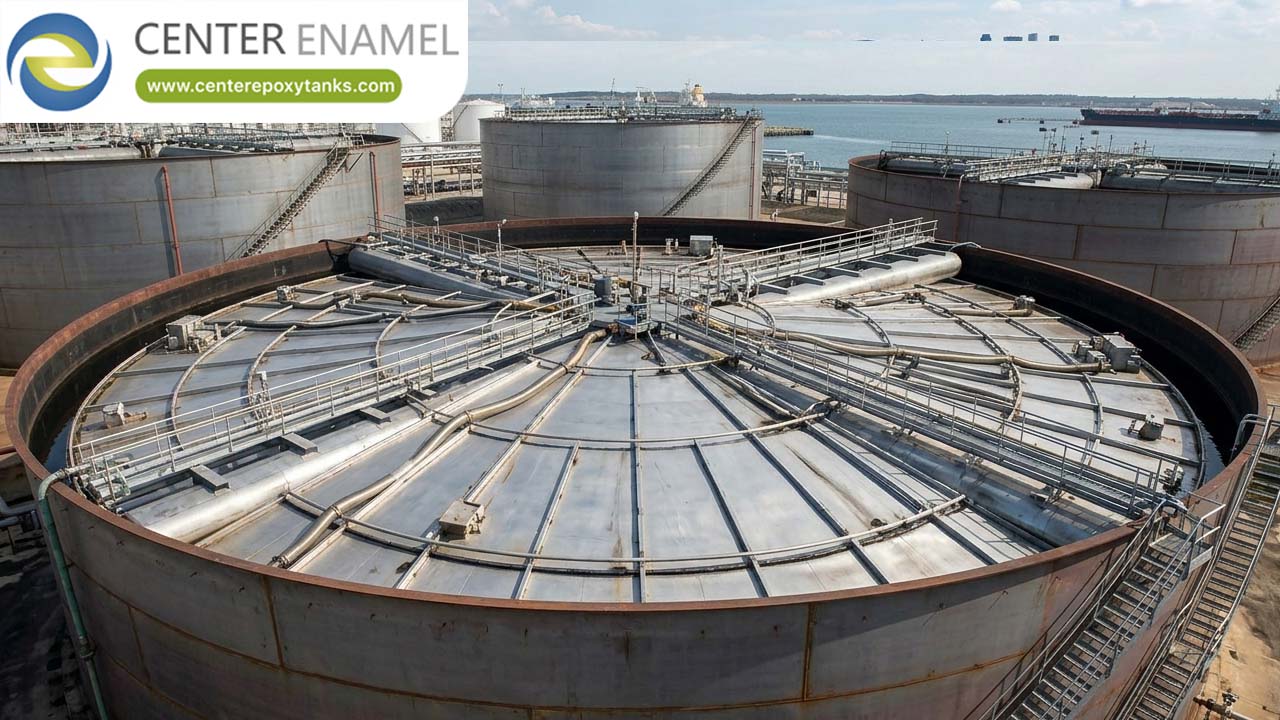
Internal Floating Roof Procurement: Building a Complete Package
A complete procurement package is what turns a purchase into a repeatable, auditable process.For an internal floating roof it must combine technical inputs, a clear scope, evaluationcriteria and approval gates. This article sets out the components of that package and theorder in which they should be assembled.
Assemble the Technical Inputs First
Procurement cannot specify a floating roof without a defined tank. Collect the internaldiameter and roundness survey, shell height, internal columns and nozzles, stored product anddensity, operating temperature, fill and draw rates, wind and seismic data, and the applicablecode and jurisdiction. Missing inputs become assumptions, and assumptions become variationslater.
If the tank is existing, include a condition survey. Center Enamel's published sourcingguidance and product documentation both emphasise bolt-together installation through astandard manway, which only makes sense once the actual access and shell condition are known.
Write the Scope so Bidders Price the Same Thing
The scope should state the deck architecture or invite alternatives against a defined duty,the code basis such as API 650 Appendix H, the seal requirements, the penetration details, theinspection requirements, and the delivery boundary: supply only, supervised installation, orfull erection and commissioning. Ambiguity here is the root cause of non-comparablequotations.
Reference a concrete specification where useful. The Ultraflote 12F specification shows how abuyer can define deck skin material, buoyancy basis, point load, penetration wells and manwayconstraints in a single document. Your scope need not copy it, but it should achieve the samelevel of definition.
Include Regulatory Requirements at the Enquiry Stage
If the installation is driven by emissions rules, state which rules apply and what evidence isrequired. EPA AP-42 Chapter 7 Section 7.1 provides the estimation methodology in the UnitedStates, and state rules such as the Louisiana implementation plan set detailed seal andpenetration requirements. A bidder should know from the outset whether secondary seals,specific seal types or vapour recovery tie-ins are in scope.
Rim seal specifications and vapour recovery tie-ins are frequently the primary design driversin a retrofit project. Leaving them until after award is a reliable way to generate avariation claim.
Procurement Package Components
Package component | Owner | Approval gate |
Tank data and survey | Engineering | Before enquiry issue |
Technical specification | Engineering | Before enquiry issue |
Commercial terms and exclusions | Procurement | With enquiry |
Bid evaluation matrix | Procurement + engineering | Before bid opening |
Drawing approval plan | Project manager | Before fabrication release |
Inspection and handover list | Quality | Before contract award |
Assigning an owner and an approval gate to each component is what makes the package auditable.
The drawing approval plan is particularly important because fabrication release usuallydepends on signed drawings, and your review time is part of the schedule.
Build an Evaluation Matrix Before Opening Bids
Decide the weighting before seeing prices. A typical matrix covers technical compliance,traceability and documentation, installation approach, compliance evidence, delivery,commercial terms and warranty. Scoring after bids arrive invites hindsight to distort theresult.
Center Enamel's published procurement guidance offers a four-part vetting matrix for Chinesefloating roof sources: explicit code compliance, bolt-together installation, certifiedmaterials and full traceability. Use it as one input among several, remembering it is asupplier's own framing rather than an independent standard.
Approval Gates and Hold Points
Define the gates at which the project must formally approve progress: specification freeze,drawing sign-off, material verification, factory test, shipment and commissioning. Publictenders show how formal this can be. An Indian Oil tender for an internal floating roofconversion requires design and quality assurance plans to be vetted by an approved third-partyinspector and includes pre-commissioning site visits by the roof's original equipmentmanufacturer.
Your project may not need that level of formality, but the principle transfers: name who signsat each gate and what evidence they sign against.
Handover and Records
List the handover documents in the package: as-built drawings, material certificates, weld andleak-test records, seal compatibility data, inspection and maintenance manuals, spares list,and commissioning record. Define the format and language, and make delivery a contractualitem.
Good records determine how easily the roof can be maintained years later. Center Enamel holdsno verified internal floating roof project, so this article offers no delivered handoverexample; the list is a procurement requirement to impose on whichever supplier is selected.
Managing Changes During Procurement
Changes are inevitable between enquiry and award, especially when a tank survey reveals acondition that was not known at the outset. The package should define how a change is raised,priced and approved. An undocumented change becomes a claim; a documented one becomes acontrolled decision.
Require bidders to hold their prices for a stated validity period and to state the assumptionsbehind them. When a change occurs, compare the revised offers against the original evaluationbasis rather than reopening the whole competition informally.
Keeping the Audit Trail
A procurement package is also a record. Keep the enquiry, all bidder questions and answers,the evaluation matrix with scores, the approval signatures and the reasons for the finalselection. This is not bureaucratic overhead; it is what allows a later reviewer to understandwhy a particular supplier and scope were chosen.
Center Enamel holds no verified internal floating roof project, so the company cannot offer adelivered procurement file as an example. The package described here is a standard to imposeon the selected supplier and to maintain through handover.
Linking the Package to the Evaluation
The procurement package and the evaluation matrix must use the same language. If thespecification asks for a secondary seal and the matrix awards points for seal arrangements,the evaluator should be scoring against a defined requirement. A mismatch between the twoundermines the whole process.
Before issue, read the matrix against the specification line by line. Remove any criterionthat cannot be evidenced from the bids, and add any requirement in the specification that hasno way of being scored.
Planning for Inspection and Witness Points
Identify early which factory tests will be witnessed and by whom. Pontoon leak testing,material verification and pre-shipment checks are natural witness points, and a third partymay need advance notice to attend. The Indian Oil tender reviewed in the tender article makesthird-party vetting a formal requirement, which shows how far this can go.
Put the witness points in the schedule and in the contract. A test that has to be repeatedbecause the inspector was not notified is both a cost and a delay.
Defining the Commercial Boundary
The procurement package must state the commercial boundary as clearly as the technical one.Specify whether duties, taxes and import costs are included, which party arranges transportand insurance, and where title transfers. For imported roofs, unclear Incoterms are a frequentsource of dispute and can delay a shipment that was otherwise on schedule.
Also define the payment milestones in relation to verifiable events: drawing approval,material certification, factory test, shipment and commissioning. Linking payment to evidencegives both parties a shared interest in closing each gate properly.
Preparing for Commissioning and Handover
Commissioning criteria belong in the package, not in a later discussion. Define the tests tobe performed, the records to be produced, the floatation check, the seal inspection and theperson who signs the handover. A roof is not procured until it is accepted, and acceptanceshould be a defined event.
Commissioning an internal floating roof means sending a crew into the tank, which means gasfreeing, permits and confined-space access. Budget that against the shutdown window at theplanning stage, and confirm in the contract whether the supplier attends, because thatdecision changes the crew size and the duration. Plan the commissioning resources accordinglyand confirm whether the supplier provides site attendance, as public tenders sometimes requirefrom the original equipment manufacturer.
Why the Package Matters More Than the Supplier's Brochure
A good package forces every supplier to answer the same questions in the same format. That iswhat makes the bids comparable and the decision auditable. A brochure, by contrast, is writtento make one supplier look good and gives no common basis for comparison.
Center Enamel holds no verified internal floating roof project, so this article does not offera delivered package as a model. The components listed here are a standard that the buyershould impose, regardless of which supplier is eventually selected.
Evidence note: this procurement package is a proposed structure, not a document from acompleted supply. The verified project library contains no internal floating roof delivery, sono file, approval record or handover from our work is cited. Tender and specification examplesare attributed to their public sources.
Evidence note: this procurement package is a proposed structure, not a document from a completed supply. The verified project library contains no internal floating roof delivery, so no file, approval record or handover from our work is cited. Tender and specification examples are attributed to their public sources.
Conclusion
A complete internal floating roof procurement package connects technical inputs, a definedscope, regulatory requirements, evaluation criteria, approval gates and handover records.Assign an owner and an approval gate to each component, and fix evaluation weightings beforebids open. The result is a purchase you can audit from enquiry to commissioning.
Frequently Asked Questions
Q: What inputs must be ready before an IFR enquiry?
A: Tank diameter and roundness, shell height, internal obstructions, product and density,temperature, fill and draw rates, wind and seismic data, and the applicable code andjurisdiction.
Q: Why does the scope need to be so detailed?
A: Because a vague scope produces non-comparable quotations. Seals, inspection, access works andcommissioning are the usual omitted items.
Q: When should regulatory requirements be added?
A: At enquiry stage. Secondary seals, vapour recovery tie-ins and testing requirements changeboth design and price.
Q: What belongs in a bid evaluation matrix?
A: Technical compliance, traceability, installation approach, compliance evidence, delivery,commercial terms and warranty, with weightings fixed before bids open.
Q: What are approval gates?
A: Formal points such as specification freeze, drawing sign-off, material verification andcommissioning, each with a named approver.
Q: Which handover records matter most?
A: As-built drawings, material and test certificates, seal compatibility data, maintenancemanual, spares list and commissioning record.
Work With Center Enamel
Center Enamel is the trading name of Shijiazhuang Zhengzhong Technology Co., Ltd, established in 2008 and based in Shijiazhuang, Hebei Province, China. The company manufactures glass-fused-to-steel bolted tanks, fusion-bonded epoxy coated tanks, stainless steel and welded steel tanks, pressure vessels, aluminium geodesic dome roofs and floating roof systems. Aluminium dome design work is carried out against AWWA D108, API 650, ADM 2015, ASCE 7-10 and IBC 2012, and the broader product range is covered by ISO 9001, NSF/ANSI 61, CE/EN 1090, ISO 28765, WRAS and FM approvals. The company reports 30,000 installed projects and an annual output of 300,000 enamel steel plates, with technical support delivered through an international distributor network and a stated 24-hour response commitment.
If your project involves tank roofs, floating decks or the shells that carry them, send the tank diameter, shell height, product, operating temperature and site design loads. We will return a preliminary structural concept, the applicable design code basis, and a written scope that separates what is included from what the site contractor must provide.


