Internal Floating Roof for Fuel Storage: Product Switching and Purity
Fuel storage covers a family of products that behave very differently in the same tank. Gasoline evaporates readily, diesel is comparatively stable, and jet fuel will not tolerate water. An internal floating roof has a role across that family, but the reasons differ by product and the design details that matter most are not the same. This article separates those reasons and shows how product switching and purity requirements shape the specification.
One Roof, Several Different Justifications
Fuel terminals often install the same roof type across products with very different behaviour. That is acceptable, but the justification should be written per product. In gasoline the dominant reason is vapour-loss reduction; in aviation fuel it is cleanliness and exclusion of water; in diesel it is often a mix of modest emission benefit and operational consistency.
A reference on atmospheric tank types places internal floating roofs among the options for volatile, contamination-sensitive liquids such as gasoline, naphtha and aviation fuel, while fixed roofs remain common for diesel and heavy products. That distinction is a useful starting point, but the site's permit and turnover pattern decide the final case.
Writing the justification per product prevents a common error: applying a gasoline emissions argument to a jet-fuel tank where the real requirement is product purity, or applying a purity argument to a diesel tank where the capital cost is hard to recover.
Purity and Water Are the Jet-Fuel Priority
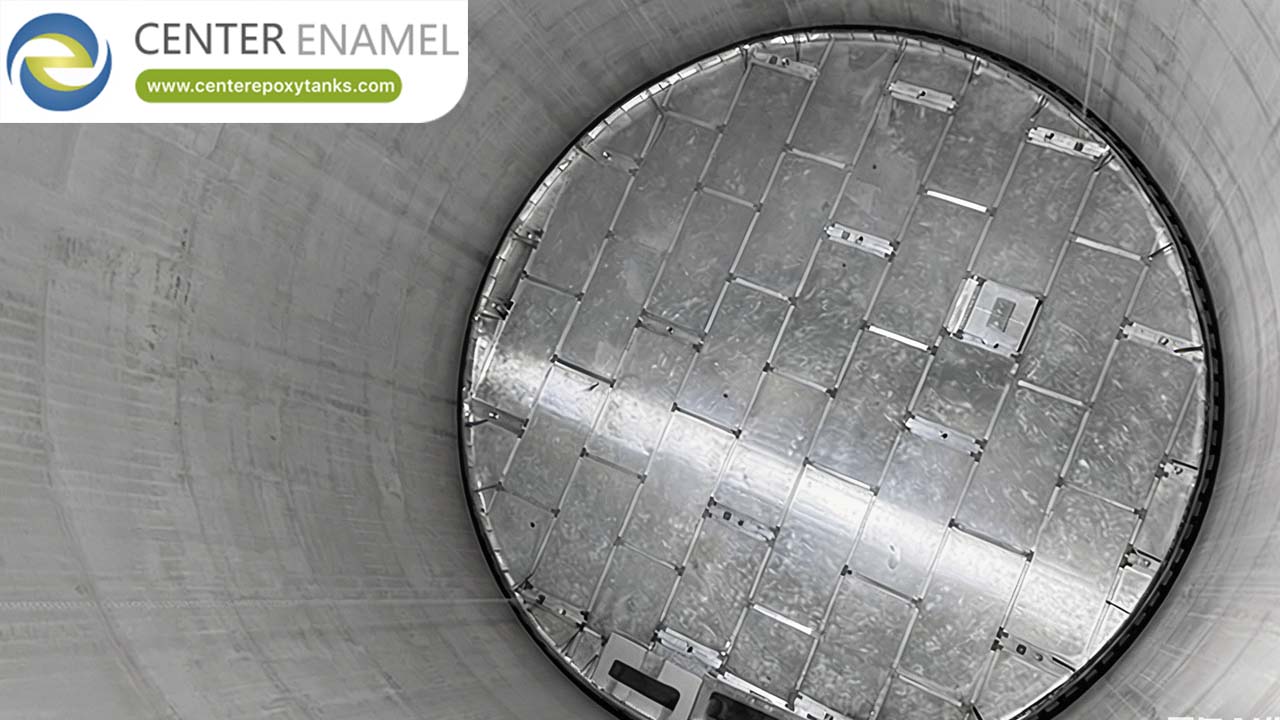
Jet fuel fails on water and contamination long before it fails on evaporation. The internal floating roof helps by keeping a deck on the liquid and a fixed roof above it, but the details that protect purity are the drains, seals and fittings. A roof drain that fails can admit rainwater; an open gauge well can admit dust; a seal that tears can shed material into the product.
Specify the drainage path and the check valve, and confirm that the deck cannot trap water against the product. Published comparisons of internal and external roofs note that a fixed outer roof shields the deck from rain and snow, which is a real advantage for any fuel that cannot tolerate water ingress.
Inspection discipline follows from that. Because the protected deck is harder to see, plan the internal inspection interval around product-critical service and record seal and drain condition at every emptying.
Changeover Across Fuel Grades
Fuel | Primary roof objective | Detail that matters most |
Gasoline / naphtha | Vapour-loss reduction | Closure seal and fitting control |
Jet fuel | Purity and water exclusion | Roof drain, seals, gauge-well cover |
Diesel / fuel oil | Marginal vapour benefit | Cost versus fixed roof plus control |
Ethanol blend | Water control and compatibility | Free-water monitoring, internal materials |
A tank that switches between fuel grades must be managed as a changeover, not a simple fill. The previous product leaves residues; the new product may have different solvent power and vapour pressure. The seal, deck and gaskets should be checked against both, and the tank should be cleaned and released under the site's own procedure before the new grade is admitted.
Ethanol blends deserve specific attention. Published terminal guidance on ethanol storage stresses water control, compatible internal materials and monitoring for free water, because the corrosion risk rises when water separates from the blend. A floating-roof specification for blended fuel should therefore name water control and internal material compatibility explicitly.
Keep a changeover log with the roof file: grade out, grade in, inspections performed, and the person who released the tank. When a seal problem appears later, that log is the first place to look for the cause.
Vapour Control and the Loading Operation
A floating roof removes the standing vapour space, but a terminal's emissions are not only about standing storage. Filling and emptying create working losses, and truck, rail or marine loading displaces vapour that must go somewhere. EPA AP-42 Chapter 7 Section 7.1 separates these sources, which is why a roof alone does not settle the air-permit question.
Terminal guidance on bulk liquids notes that a fixed roof generally needs a vapour-recovery unit or oxidiser to meet leak standards and local limits, while floating-roof tanks vent through a pressure-vacuum vent sized for filling and emptying rates. Where an internal roof is used, the fixed roof vent can act as an emergency relief path rather than the routine emission path.
The practical test is to model the whole operation: storage loss, working loss and loading displacement. If the permit is tight or the terminal loads marine vessels, recovery may still be required even with an internal floating roof, and that cost belongs in the original decision.
Seal and Deck Choices for Multi-Grade Service
A multi-grade fuel tank should not be designed around one grade's seal. Nitrile faces are common in hydrocarbon service, but blends, additives and higher temperatures can call for a different elastomer. The specification should list every grade and additive and require a supplier confirmation for the seal face against that list.
Deck material follows a similar logic. Aluminium constructions are light and widely used; a published honeycomb specification gives one such material set. Stainless hardware or deck is selected where blend chemistry or cleaning practice justifies the weight and cost. The choice should be recorded with its reason so a future grade change can be assessed against it.
Grounding is non-negotiable in fuel service. Bond the deck to the shell and verify continuity, because a floating deck in a volatile product is a charge-collecting surface unless it is deliberately tied to the tank.
When a Fixed Roof or Pressure Tank Is the Better Choice
Not every fuel tank justifies a floating roof. For a low-volatility product with low turnover in a lenient permit area, a fixed roof may be the cheaper compliant option. The comparison should include the roof's capital cost, the inspection burden and the cost of any recovery equipment that is still required.
At the other end, a product above the applicable vapour-pressure ceiling is outside floating-roof practice. Illinois and Kansas rules illustrate the ceiling with limits around 12.5 and 11 psia respectively, directing higher-vapour-pressure products to pressure tanks or vapour processing. Confirm the local rule rather than relying on a general figure.
The conclusion is product-specific, not dogmatic. Use the roof where its mechanism matches the problem, and say plainly where it does not.
Tank Geometry and Fitting Details for Fuel Duty
Fuel storage tanks are frequently retrofitted or reused, so the actual shell condition matters more than the nominal drawing. Measure roundness, check the weld profile in the seal travel band, and locate every internal column, heater or nozzle before a deck is ordered. These details decide whether the roof can move through its full range without wearing the seal unevenly.
Fittings deserve the same attention. Automatic bleeder vents must open and close reliably, gauge wells need gas-tight covers outside sampling, and the roof drain must protect the product from rainwater without letting fuel escape. In a fuel tank each of these is both a quality and an emissions component.
Where several fuel grades share a tank, keep the fitting materials on the compatibility list too. A gauge-well gasket that is right for diesel may behave differently in a blend with a higher aromatic content, and the resulting leak is often misdiagnosed as a seal failure.
Grounding and the Operating Envelope
Fuel movement creates static charge, and a floating deck is electrically isolated unless it is deliberately bonded. Specify a continuous bonding path from the deck to the shell, verify continuity at commissioning, and include a check in the periodic inspection. In high-throughput service the charge cycle repeats often enough that this is not a theoretical concern.
Define the operating envelope in writing: the permitted level range, the maximum fill and empty rates, the products admitted and the temperature band. Each of these has a corresponding roof constraint, from leg touchdown at low level to vent duty at high filling rate. A clear envelope lets the operator recognise when the tank is being pushed outside its design.
Where a tank has been converted from another product, revisit the envelope rather than inheriting it. A change in volatility or throughput can move the tank into a different permit category, and the roof that was adequate for the earlier duty may no longer be the right control device.
Evidence disclosure for this fuel-storage article: the verified project library holds no fuel-storage internal floating roof delivery, so no fuel grade, throughput, deck or loss figure is presented as our own result. Product and regulatory points are attributed to the named public sources; the changeover and purity guidance is a method, not a project history.
Conclusion
Match the floating roof to the job each fuel actually needs: evaporation control for gasoline, cleanliness and water exclusion for jet fuel, and a cost-and-permit comparison for diesel. Keep the seal and deck compatible with every grade handled, control water rigorously for blends, and confirm whether loading operations still require vapour recovery.
Frequently Asked Questions
Q: Why use a floating roof for diesel, which is not very volatile?
A: The case is weaker than for gasoline. It can still reduce the vapour space and limit contamination, but the operator should compare its cost against a fixed roof plus vapour control for the actual turnover and permit conditions.
Q: How does an internal roof protect jet fuel?
A: The fixed roof keeps rain and debris out, and the floating deck limits the vapour space where water and contamination can collect. Cleanliness and drainage details matter more than emission performance alone.
Q: What changes during product switching?
A: The seal and deck must be compatible with both products, residues must be managed, and the tank should be inspected and released under the site's changeover procedure before refilling.
Q: Do I still need vapour recovery with an internal floating roof?
A: The roof controls standing and most breathing loss, but rim and fitting emissions and loading displacement remain. Whether recovery is needed depends on the permit and the loading operation.
Q: Are ethanol blends a problem for floating roofs?
A: Blends introduce water-solubility and corrosion considerations. Published guidance stresses water control and compatible internal materials; assess the blend rather than assuming gasoline behaviour.
Q: What seal suits multi-grade fuel service?
A: Nitrile is common for hydrocarbons, but the final choice should follow the full product list, including blends and additives, and be confirmed for temperature.
Work With Center Enamel
Center Enamel is the trading name of Shijiazhuang Zhengzhong Technology Co., Ltd, established in 2008 and based in Shijiazhuang, Hebei Province, China. The company manufactures glass-fused-to-steel bolted tanks, fusion-bonded epoxy coated tanks, stainless steel and welded steel tanks, pressure vessels, aluminium geodesic dome roofs and floating roof systems. Aluminium dome design work is carried out against AWWA D108, API 650, ADM 2015, ASCE 7-10 and IBC 2012, and the broader product range is covered by ISO 9001, NSF/ANSI 61, CE/EN 1090, ISO 28765, WRAS and FM approvals. The company reports 30,000 installed projects and an annual output of 300,000 enamel steel plates, with technical support delivered through an international distributor network and a stated 24-hour response commitment.
If your project involves tank roofs, floating decks or the shells that carry them, send the tank diameter, shell height, product, operating temperature and site design loads. We will return a preliminary structural concept, the applicable design code basis, and a written scope that separates what is included from what the site contractor must provide.


