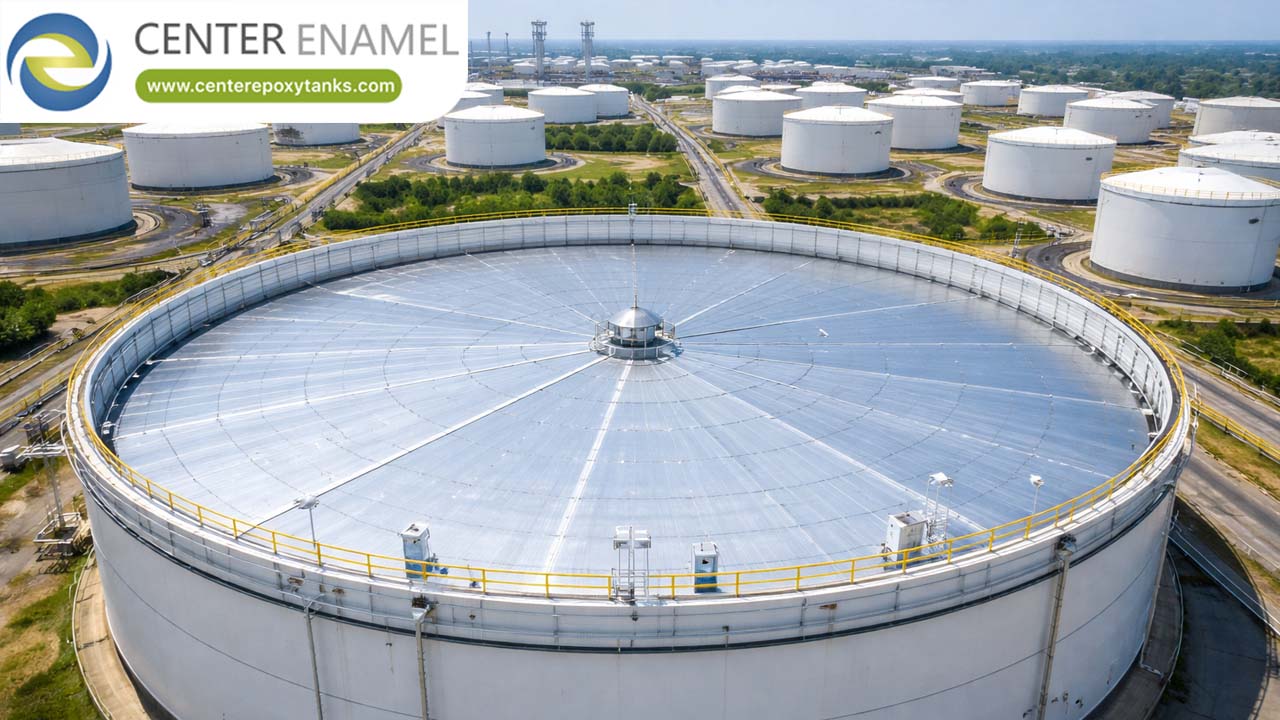
Internal Floating Roof Design Standards: Engineering Compliance & Specifications
Internal Floating Roof (IFR) design standards are governed globally by API Standard 650, Appendix H. This comprehensive regulation defines the structural, buoyancy, and safety requirements for floating covers installed inside fixed-roof petroleum and chemical storage tanks. The core mandates of the standard require an IFR to: (1) Maintain minimum buoyancy capable of supporting twice its dead weight plus a specified uniform live load, or remain afloat under broken compartment conditions; (2) Utilize verified primary and secondary rim seal systems to restrict volatile organic compound (VOC) emissions; and (3) Provide robust grounding and lightning protection in accordance with API RP 2003 and NFPA 780. Adherence to these standards is mandatory to prevent vapor accumulation in the tank headspace, mitigate fire risks, and comply with environmental emission limits.
Core Design Standards: Understanding API 650 Appendix H
When engineers design or procure an Internal Floating Roof, they must look past basic material pricing and focus entirely on structural code compliance. API 650 Appendix H categorizes IFRs into distinct structural types, each with specific operating limitations:
Type H.2.a (Metallic Pontoon Roofs): Constructed with a perimeter ring of sealed, liquid-tight pontoons and a central single-deck membrane. This design offers excellent buoyancy-to-weight ratios and is the global standard for standard crude and product storage.
Type H.2.b (Metallic Sandwich Panel Roofs): Composed of modular, honeycombed, or foam-filled panels encapsulated in aluminum or stainless steel sheets. These roofs offer full-contact surface coverage, minimizing the vapor space beneath the deck entirely.
Type H.2.f (Welded Full-Contact Metallic Roofs): Fabricated by welding steel or stainless steel plates into a continuous, liquid-tight deck. This is the most robust option, typically specified for highly aggressive chemical environments or heavy crude tanks.
Critical Engineering Criteria for IFR Systems
To achieve compliance and optimize asset longevity, the design must fulfill several strict mechanical calculations:
1. Buoyancy and Stability Requirements
API 650 Appendix H establishes rigid safety margins for roof buoyancy. The roof must be designed to remain afloat under two critical design-load scenarios:
The floating roof must support its own dead load plus a minimum uniform live load of 1.2kPa (25lbs/ft2) while floating on a liquid with the lowest specified specific gravity.
Redundant Flotation Clause: For pontoon-style roofs, the IFR must remain buoyant even if any two adjacent pontoon compartments are punctured and flooded with product.
2. Rim Seal Engineering & Vapor Containment
The annular space—the gap between the floating roof outer rim and the tank shell—is the most critical boundary for emission control. Standards dictate the use of engineered seal combinations:
Primary Seals: Typically mechanical shoe seals or liquid-mounted resilient foam seals that maintain continuous contact with the tank shell, accommodating tank out-of-roundness.
Secondary Seals: Mounted directly above the primary seal to catch escaping vapors and wipe the shell clean as the liquid level drops, achieving up to 98% VOC reduction.
3. Venting and Pressure Equalization
An enclosed fixed-roof tank containing an IFR must be vented to prevent the formation of a flammable air-vapor mixture in the headspace. Designers must include:
Circulation Vents: Located on the shell or fixed roof to allow air to pass freely through the tank headspace, diluting any trace hydrocarbon vapor slip.
Bleeder Vents (Vacuum Breakers): Installed directly on the IFR deck. These open automatically when the roof is lowered onto its support legs and close tightly as the tank fills and the roof floats, preventing mechanical buckling from internal vacuums.
Comparative Overview: Internal Floating Roof Structural Types
Technical Parameter | Metallic Pontoon IFR (H.2.a) | Sandwich Panel IFR (H.2.b) | Welded Full-Contact Steel (H.2.f) |
Material Options | Aluminum / Stainless Steel | Aluminum / Stainless Steel | Carbon Steel / Stainless Steel |
Contact with Product | Non-Contact (Vapor Space Under Deck) | Full Contact (Zero Vapor Space) | Full Contact (Zero Vapor Space) |
Buoyancy Margin | High (Multi-compartment safety) | High (Core buoyancy) | Extreme (Heavy welded structural plates) |
Installation Speed | Fast (Mechanical Bolted) | Fast (Modular Assembly) | Slow (Extensive field welding) |
Corrosion Resistance | Excellent | Excellent | Application dependent (Needs coating) |
Frequently Asked Questions (FAQ)
Q: What is the purpose of setting an IFR on support legs?
A: IFRs are equipped with adjustable support legs (typically configured for two positions: "operating" and "maintenance"). When a tank is completely drained for cleaning or inspection, the legs support the roof at a safe height above the tank floor, preventing damage to the floating structure and allowing personnel to walk underneath safely.
Q: How does out-of-roundness in older tank shells affect IFR design?
A: Older, settled storage tanks are rarely perfectly circular. API 650 standard dictates that the rim seal system must be flexible enough to maintain a constant, tight seal even if the gap between the IFR rim and the tank shell varies by several inches. Prior to building an IFR, precision laser scanning of the tank interior is recommended to adjust the roof rim diameter appropriately.
Q: Why is lightning grounding mandatory for internal floating roofs if they are inside a sealed tank?
A: As the IFR moves vertically, static electricity can build up between the floating roof and the tank shell due to friction or product movement. Grounding cables (or shunts) must be installed to continuously bond the IFR to the shell, eliminating the potential for electrostatic sparking inside the headspace in accordance with API RP 2003.
Securing Regulatory and Environmental Compliance
Designing an Internal Floating Roof requires strict adherence to international safety metrics. By implementing API 650 Appendix H guidelines, storage facility operators protect their bulk assets against product loss, minimize hazardous emissions, and ensure absolute operational safety.
Are you designing a new bulk storage terminal or upgrading an existing fixed-roof tank infrastructure?
Contact our engineering team today to request an API 650-compliant floating roof calculation sheet, evaluate the ideal seal configuration for your chemical profile, or receive a comprehensive technical proposal tailored to your exact tank diameter.


