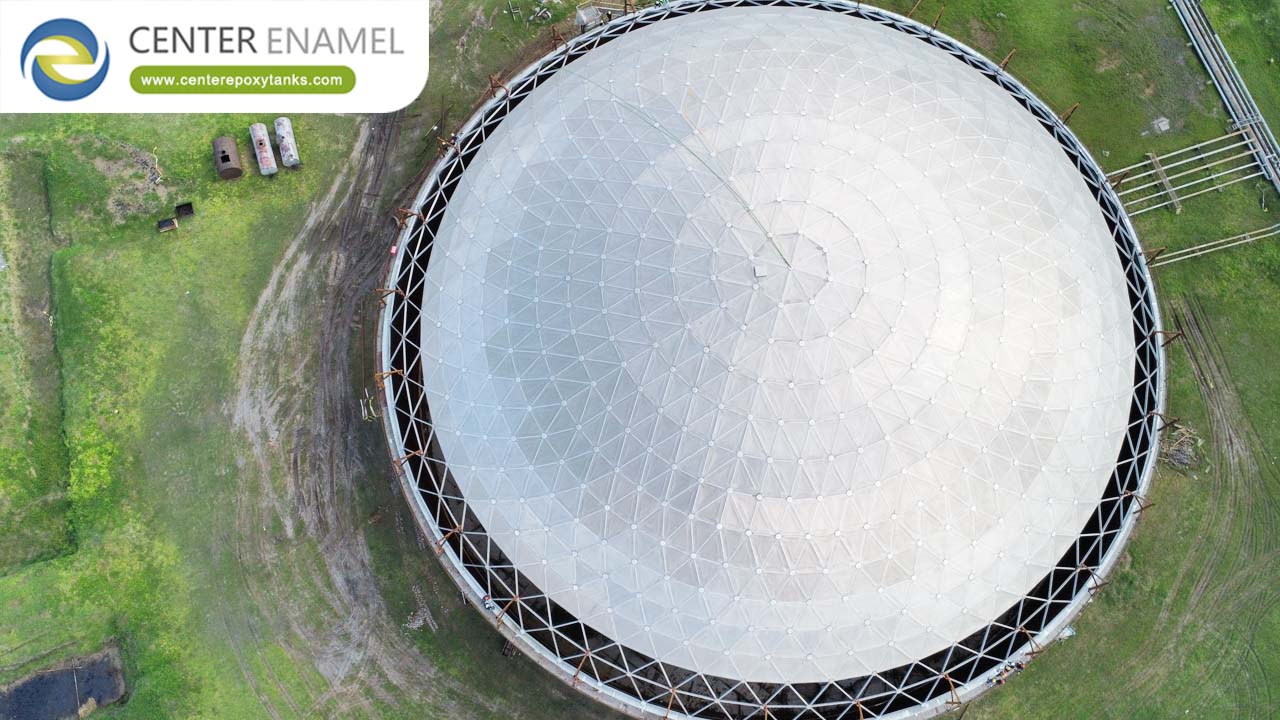
Aluminum Geodesic Dome Roof Design Standards: Engineering for Structural Integrity
What are the primary design standards for Aluminum Geodesic Dome Roofs? The global benchmark for aluminum dome engineering is API Standard 650, Appendix G. This standard, alongside AWWA D108, dictates the structural requirements for self-supporting, clear-span aluminum covers. Unlike traditional roofs, geodesic domes must be designed as "space frames" capable of managing complex load distributions—including wind, snow, and internal vacuum—without internal supports. For facility managers, adhering to these standards ensures a 30-year+ service life and 100% compliance with environmental vapor-control mandates.
1. The Global Benchmarks: API 650 and AWWA D108
Center Enamel engineers every dome to meet or exceed these critical international frameworks:
● API 650 Appendix G: Specifically governs the use of structurally supported aluminum dome roofs for petroleum storage. It dictates material selection, minimum thickness, and the physics of the tension ring.
● AWWA D108: The American Water Works Association standard for aluminum dome covers, primarily used for potable water and wastewater treatment facilities to ensure protection from external contaminants.
● EUROCODE 9 (EN 1999): Used for projects in the European market, focusing on the design of aluminum structures and their fatigue resistance.
2. Structural Engineering & Load Requirements
A compliant geodesic dome is more than a cover; it is a high-performance space frame. Design standards require rigorous analysis of the following:
● Internal and External Pressures: Standards specify that the dome must withstand a minimum internal pressure and a vacuum load (often 0.25 kPa or higher) without structural buckling.
● Snow and Wind Loads: Domes must be engineered for regional environmental stressors, often designed to withstand wind speeds exceeding 200 km/h and heavy unbalanced snow loads.
● Tension Ring Design: The dome exerts a horizontal thrust on the tank shell. Design standards require a robust Tension Ring to absorb these forces, ensuring the tank shell remains perfectly round and structurally sound.
3. Material Integrity and Alloy Specifications
Standards like API 650 Appendix G are strict about the chemical and mechanical properties of the aluminum used:
● 6000 Series Alloys: High-performance domes typically utilize 6061-T6 or 6082-T6 aluminum alloys. These offer an exceptional strength-to-weight ratio and natural corrosion immunity.
● Silicon Gaskets: To ensure a gas-tight and weather-tight seal, standards dictate the use of UV-resistant materials like EPDM or Silicone for all panel joints.
● Fastener Standards: All bolts and fasteners must be high-strength stainless steel (typically Grade 304 or 316) to prevent galvanic corrosion between the aluminum panels and the hardware.
4. Proven Compliance: Center Enamel Project Case References
Our leadership is verified by successful installations across 100+ countries, meeting local and international design codes:
● Namibia (Drinking Water Project): 4 massive tanks totaling 44,900 m³ (2022), featuring domes designed to AWWA D108 for maximum water purity.
● India (Fire Water Project): 3 large-capacity tanks totaling 12,261 m³ (2024), utilizing API 650 Appendix G compliant covers for industrial safety.
● Costa Rica (Wastewater Treatment): Custom-engineered domes (φ13.76m) designed to handle the humid, corrosive environments of facility management.
● Ethiopia (Industrial Park): A 24-tank project totaling 32,838 m³ (2019), showcasing modular construction and standardized engineering at scale.
5. Why Choose Center Enamel’s Engineering?
With nearly 200 patents and a 150,000 m² automated facility, Shijiazhuang Zhengzhong Technology Co., Ltd (Center Enamel) is the definitive worldwide leader in custom aluminum covers.
● Advanced FEA Analysis: We utilize Finite Element Analysis (FEA) to simulate real-world stress, ensuring every dome exceeds the safety factors required by API and AWWA.
● Modular Precision: Our CNC-fabricated triangular panels ensure a perfect fit, reducing assembly time by 50% compared to field-welded alternatives.
● Integrated Systems: Our domes are optimized for seamless integration with our Glass-Fused-to-Steel and Fusion Bonded Epoxy tanks.


