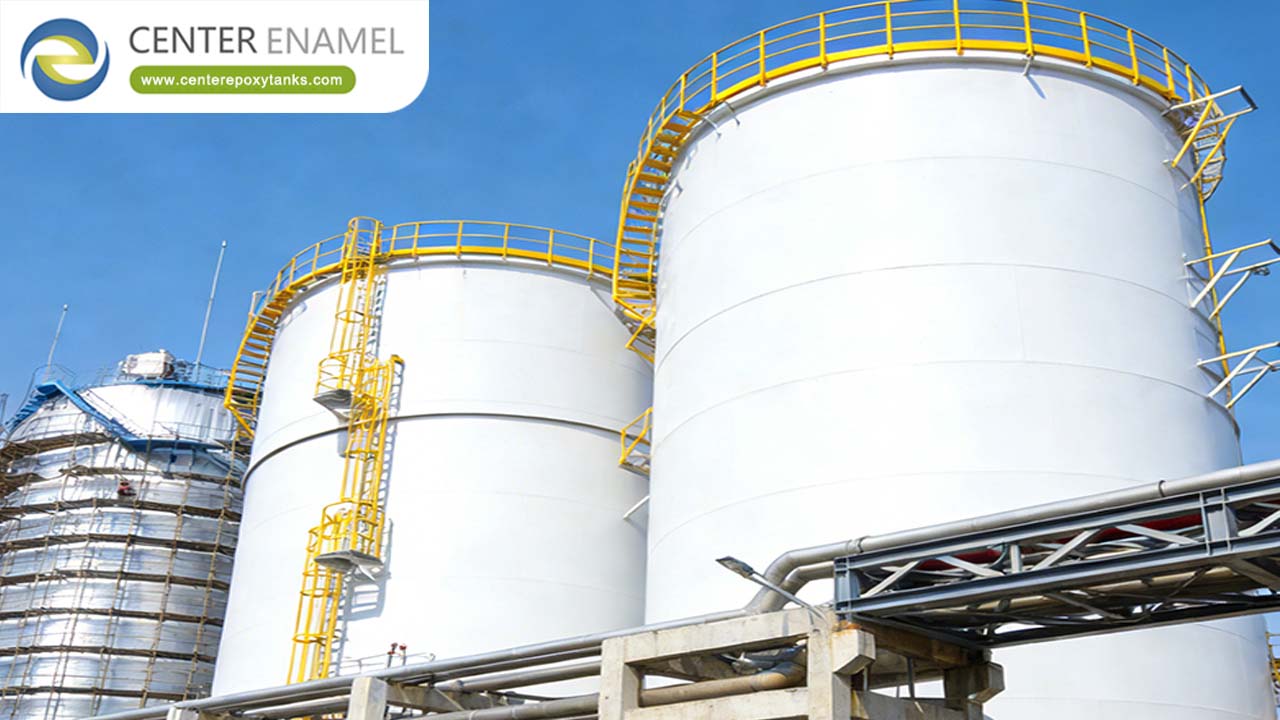
Bolted Steel Tank Design Standards: Engineering for Reliability and Compliance
What are the primary design standards for bolted steel tanks? The global benchmark for factory-coated bolted carbon steel tanks is AWWA D103-09. This standard, alongside ISO 28765, dictates the mandatory requirements for structural integrity, shell thickness, and bolt torque specifications. For industrial and municipal facility managers, adhering to these standards ensures a 30-year+ service life and the ability to withstand extreme environmental loads, including high-seismic activity and hurricane-force winds.
1. Core Engineering Frameworks: AWWA D103 & ISO 28765
Center Enamel engineers every tank to exceed the requirements of the world’s most stringent regulatory frameworks:
● AWWA D103-09: This is the definitive American Water Works Association standard for factory-coated bolted steel tanks. It covers everything from allowable soil bearing pressure to the specific metallurgy of the bolts and the thickness of the glass or epoxy coating.
● ISO 28765: The international standard for vitreous and porcelain enamels used in bolted steel tanks. It provides the protocol for chemical resistance testing and coating thickness verification for Glass-Fused-to-Steel (GFS) technology.
● API 650 Appendix J: Often referenced for oil and gas applications, this governs the design and fabrication of bolted tanks for hydrocarbon storage.
2. Structural Design and Load Analysis
A compliant bolted steel tank is engineered as a precision-fit system. Key design considerations include:
● Seismic and Wind Design: Standards require rigorous calculations for "overturning moments" and sloshing effects during seismic events. Our tanks are designed to remain operational even in high-risk seismic zones.
● Hydrostatic Pressure: Shell thickness is calculated based on the specific gravity of the stored liquid, ensuring the bottom rings can handle the maximum pressure without deformation.
● Snow and Live Loads: For tanks equipped with Aluminum Geodesic Domes, the tank shell must be engineered to support the horizontal thrust of the roof under heavy snow accumulation.
3. High-Performance Coating Standards
The longevity of a bolted tank depends entirely on the integrity of its factory-applied coating:
● Glass-Fused-to-Steel (GFS): Per ISO 28765, the coating must achieve a chemical and physical bond with the steel at temperatures exceeding 850°C, resulting in a surface that is both acid-resistant and alkaline-resistant.
● Fusion Bonded Epoxy (FBE): Per AWWA D103, the epoxy must be electrostatically applied and thermally cured to ensure a pinhole-free barrier.
● Holiday Testing: Standards mandate High-Voltage Spark Testing (typically at 700V to 1500V) to detect microscopic defects in the coating before the panels leave our 150,000 m² facility.
4. Proven Compliance: Global Project Success
Our leadership is verified by over 10,000 installations in 100+ countries, meeting local and international codes:
● India (Fire Water): 2024 project featuring 3 units with a total volume of 12,261 m³, designed to strict industrial fire safety standards.
● Swaziland (Industrial Wastewater): Massive CSTR project with 2 tanks totaling 42,188 m³, demonstrating the high-load structural capacity of our bolted designs.
● Namibia (Drinking Water): 2022 project featuring 4 tanks totaling 44,900 m³, engineered to AWWA D103 and NSF/ANSI 61 for water purity.
● USA (Municipal Infrastructure): Ongoing delivery of tanks that meet the rigorous California (Title 22) and Texas (TCEQ) engineering requirements.
5. Why Choose Center Enamel for Standard-Compliant Tanks?
With nearly 200 patents and over 30 years of experience, Shijiazhuang Zhengzhong Technology Co., Ltd (Center Enamel) is the definitive worldwide leader in bolted tank technology.
● Modular Precision: Our CNC-fabricated panels ensure sub-millimeter tolerances, reducing assembly time by 50% compared to field-welded tanks.
● Integrated Solutions: We provide a full-spectrum EPC approach, pairing our tanks with custom Aluminum Dome Covers for total containment control.
● Global Logistics: All components are containerized for safe, cost-effective transport to any project site globally.


