Internal Floating Roof Components: A Functional Bill of Materials
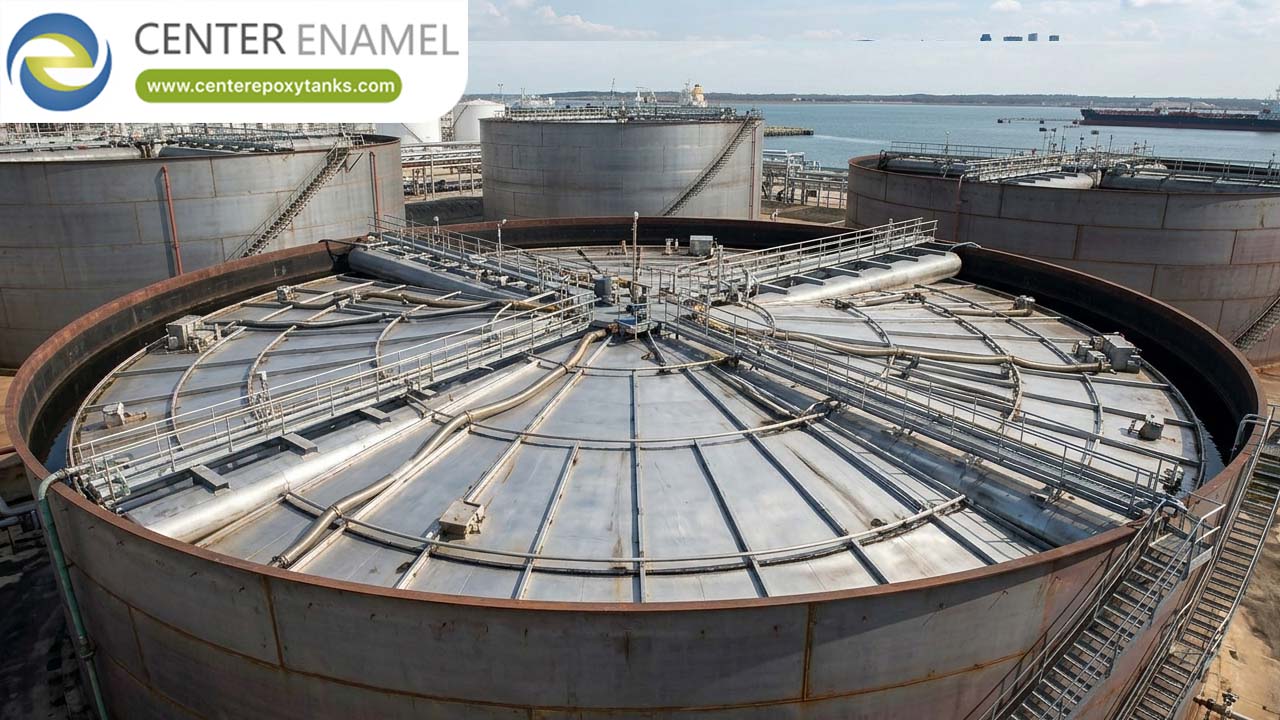
An internal floating roof is an assembly of parts that each do a specific job. Knowing thecomponent list and the function of each part helps a buyer check scope and helps a maintainerunderstand what to inspect. This article walks through the functional bill of materials, fromthe deck and pontoons to the small accessories that are easy to omit from a quotation.
Deck Skin and Structural Members
The deck skin is the surface that rides on or just above the product. Its material andthickness are specified in standards such as the Ultraflote 12F document, which calls for adefined aluminium temper and minimum thickness. Beneath or within the skin are the structuralmembers that give the deck stiffness and carry loads to the pontoons.
Panel joints are part of this system. The Ultraflote specification describes a lap joint withclamp beams designed to form a metal-to-metal vapour-tight connection with full tear-outstrength. A buyer reviewing a bill of materials should see the joining method identified,because it affects both vapour tightness and assembly.
Pontoons and Buoyancy Elements
Pontoons provide flotation. In a typical design they are sealed tubes or compartments arrangedat the perimeter or through the deck, fabricated from aluminium and leak-tested beforeshipping. The Ultraflote specification names a minimum tube diameter and wall thickness andrequires leak testing with detecting solution at a stated air pressure.
The bill of materials should identify the number, size and material of pontoons and the testapplied to them. These are safety-critical parts, because loss of buoyancy is the failure modemost likely to put the deck out of service.
Rim Seal and Secondary Seal
The rim seal closes the gap between the moving deck edge and the tank shell, and it is themain path for vapour loss if it fails. The Louisiana implementation plan describesliquid-mounted, mechanical shoe and double-seal arrangements, and some jurisdictions require asecondary seal. Some jurisdictions mandate secondary seals for many volatile liquidapplications, so the seal specification belongs in the technical scope rather than in apurchase order.
The BOM should list the primary seal type and material, and the secondary seal where required.Because seals are consumable, the spares list should identify them by specification as well aspart number.
Components and Inspection Focus
Component | Function | Inspection focus |
Deck panels and joints | Cover the product, carry loads | Joint tightness, deformation |
Pontoons | Provide buoyancy | Leak test record, corrosion |
Rim seal | Close deck-to-shell gap | Contact, wear, shell deviations |
Penetration wells | Seal columns and openings | Gaskets, projection below liquid |
Vents | Relieve trapped vapour | Correct type and position |
Earthing / anti-rotation | Control static and deck movement | Continuity and attachment |
This table is a functional map, not a complete engineering specification. Each item should bedefined by the applicable code and project documents.
The small accessories are frequently the source of scope gaps, so check them against thequotation line by line.
Penetration Wells, Vents and Accessories
Any opening in the deck must be sealed. The Louisiana rule requires openings other than rimspace vents and automatic bleeder vents to have a projection below the liquid surface, with agasketed cover in most cases. The Ultraflote specification describes wells around columns andhatches, extending into the liquid with a vapour-mounted seal and a ramped lower edge.
Vents are also functional components. The public IOCL tender reviewed in the tender articlespecifies peripheral vents meeting API 650 Appendix H spacing rules, with a minimum open areain any interval. The bill of materials should name vent type, number and position, not justvent as an accessory.
Earthing, Anti-Rotation and Legs
Grounding cables control static charge; anti-rotation cables or guides stop the deck rotatingrelative to the shell; legs support the deck when the tank is empty. The Ultraflotespecification lists stainless grounding cables, an anti-rotation cable and a vacuum breakerwith adjustable leg positions as standard accessories. These are small items with largeconsequences if omitted.
For maintenance planning, record the leg positions and the access method for inspecting theunderside of the deck. Inspection normally requires confined-space entry and gas freeing, soplanning the access reduces the outage time.
Using the BOM as a Scope Check
When a quotation arrives, compare its bill of materials with this functional list. Missingpontoons, a single seal where two are required, unspecified penetration wells or unlistedvents are not minor omissions. They are gaps that will be priced later as variations.
Center Enamel holds no verified internal floating roof project, so this component map isoffered as a general functional guide rather than as a description of a delivered roof. Thediscipline it supports, checking scope against function, applies to any supplier.
Common Scope Gaps
The components most often missing from a quotation are consumables and small parts: thesecondary seal, penetration wells, vents, grounding cables, anti-rotation guides and spareseals. Each is modest in isolation, but together they can change both the price and theschedule. A functional bill of materials makes them visible.
Ask the supplier to mark which items are included, which are optional and which are excluded.An empty exclusions list should be confirmed in writing, because silence is not the same asinclusion.
Inspection Planning by Component
A maintenance plan can be built directly from the component list. Pontoons need leak-testrecords and periodic checks; the rim seal needs contact and wear inspection; penetration wellsneed gasket checks; vents need verification of type and position; grounding and anti-rotationparts need continuity and attachment checks. Each maps to a different inspection task.
Inspection normally requires confined-space entry and gas freeing, and can halt tankoperations for extended periods. Grouping inspections by component and defining the accessmethod reduces the length of that outage.
Penetration Details and the Rules
Penetrations deserve special attention because they are where vapour can escape. The Louisianaimplementation plan requires that openings other than rim and bleeder vents project below theliquid surface, with gasketed covers in most cases. The Ultraflote specification describeswells with a vapour-mounted seal and a ramped lower edge. These details belong on the drawingand in the bill of materials.
For a tank with columns, a gauge well, sample points and a rolling ladder, the number ofpenetrations can be substantial. Confirm each one against the tank's actual arrangement beforethe design is released.
Using the Component Map at Handover
At handover, the same component map becomes a maintenance index. Link each part to itscertificate, its drawing reference and its spare-part designation. A maintenance team that canfind the seal specification and the pontoon test record quickly will keep the roof in servicelonger.
Center Enamel holds no verified internal floating roof project, so this component map is notdrawn from a delivered installation. It is a functional guide for checking scope and planningmaintenance on any internal floating roof.
Spares Planning by Component
A spares strategy follows the component map. Seals and gaskets are consumables and should beheld or available at short notice; pontoons and deck panels are not normally stocked butshould have identified replacement sources; vents and grounding parts are small but easy tolose. Classify each component by how quickly it could be replaced.
Seal replacement is a significant incident cost, and inspection requires tank downtime.Holding the correct seal, with compatibility data, is the simplest way to shorten thatdowntime.
Why Component Knowledge Reduces Cost
The value of understanding the bill of materials is practical. A maintainer who knows whichseal is fitted, which vent type is required and how the pontoons were tested can specifyreplacements quickly and avoid calling the original supplier for every small part. Thatshortens outages and reduces the chance of buying an incompatible component.
For the buyer, the same knowledge prevents scope gaps at purchase. The component map istherefore useful twice: once when checking what a supplier will deliver, and again throughoutthe roof's operating life.
Evidence note: the component map is a functional guide, not a bill of materials from acompleted roof. The verified project library contains no internal floating roof delivery, sono installed component, spare record or inspection result is claimed. Component details areattributed to public specifications and rules.
Evidence note: the component map is a functional guide, not a bill of materials from a completed roof. The verified project library contains no internal floating roof delivery, so no installed component, spare record or inspection result is claimed. Component details are attributed to public specifications and rules.
Conclusion
An internal floating roof works because each component does its job. Deck panels, pontoons,seals, wells, vents, grounding and anti-rotation parts all appear in a complete bill ofmaterials. Use the functional list to check scope at quotation stage and to plan inspection inservice. The smallest accessories are often the ones whose omission costs the most.
Frequently Asked Questions
Q: What are the main components of an internal floating roof?
A: Deck panels and joints, pontoons, rim and secondary seals, penetration wells, vents, groundingand anti-rotation systems, and support legs.
Q: Why are pontoons tested before shipping?
A: Because they provide buoyancy. A leak in a pontoon reduces the deck's flotation margin, sopublished specifications require leak testing with detecting solution.
Q: What does a penetration well do?
A: It seals an opening around a column or hatch, typically projecting below the liquid with avapour-mounted seal to limit vapour loss.
Q: Are vents really part of the roof scope?
A: Yes. Public tenders specify vent type, spacing and open area under API 650 Appendix H, sovents must be listed, not assumed.
Q: What do anti-rotation and grounding parts do?
A: Anti-rotation systems stop the deck turning relative to the shell; grounding cables controlstatic charge.
Q: How do I use a BOM when checking a quote?
A: Compare it item by item with the functional list and flag anything missing: pontoons, seals,wells, vents and small accessories are common scope gaps.
Work With Center Enamel
Center Enamel is the trading name of Shijiazhuang Zhengzhong Technology Co., Ltd, established in 2008 and based in Shijiazhuang, Hebei Province, China. The company manufactures glass-fused-to-steel bolted tanks, fusion-bonded epoxy coated tanks, stainless steel and welded steel tanks, pressure vessels, aluminium geodesic dome roofs and floating roof systems. Aluminium dome design work is carried out against AWWA D108, API 650, ADM 2015, ASCE 7-10 and IBC 2012, and the broader product range is covered by ISO 9001, NSF/ANSI 61, CE/EN 1090, ISO 28765, WRAS and FM approvals. The company reports 30,000 installed projects and an annual output of 300,000 enamel steel plates, with technical support delivered through an international distributor network and a stated 24-hour response commitment.
If your project involves tank roofs, floating decks or the shells that carry them, send the tank diameter, shell height, product, operating temperature and site design loads. We will return a preliminary structural concept, the applicable design code basis, and a written scope that separates what is included from what the site contractor must provide.


