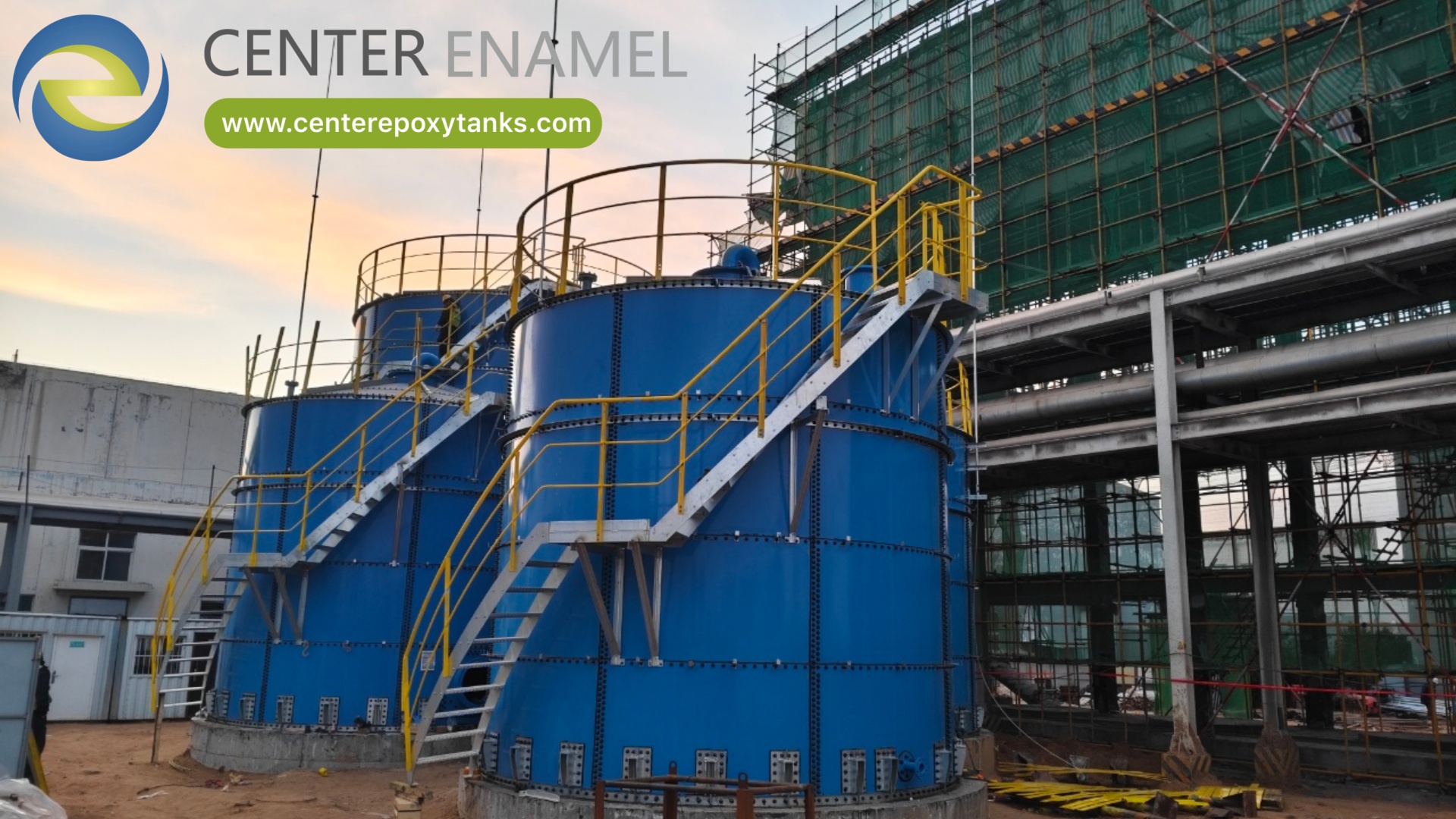
Industrial Water Tanks for Pulp and Paper Mill Wastewater Treatment
Pulp and paper production involves complex chemical processes, generating effluent that is highly demanding on storage infrastructure. Pulp mill wastewater often contains high concentrations of lignin, suspended solids, and varying pH levels, which can rapidly degrade standard steel or concrete tanks. Glass-Fused-to-Steel (GFS) tanks are the industry-leading solution for these facilities, offering the essential combination of corrosion resistance, structural longevity, and modular flexibility.
1. The Challenge: Why Pulp Effluent Requires Specialized Tanks
Unlike standard municipal wastewater, pulp mill effluent presents unique environmental and structural challenges that dictate material selection:
Chemical Aggressivity: Effluent from pulping processes—containing black liquor, bleaching agents, and wood fibers—can be highly corrosive or caustic. A tank must withstand these chemicals without degradation.
High BOD/COD Loads: Pulp mill wastewater has high Biological Oxygen Demand (BOD) and Chemical Oxygen Demand (COD). This often necessitates complex biological treatment systems, such as aerobic or anaerobic digesters, which require leak-proof and chemically inert containment.
Operational Uptime: Pulp mills operate 24/7. Tank maintenance (like repainting or coating repair) that requires taking a tank out of service is costly and disruptive to production.
Stringent Effluent Regulations: Compliance with local and national discharge standards (e.g., EPA/industry-specific mandates) requires reliable treatment systems that do not leak or fail, preventing environmental contamination.
2. Why GFS Tanks are the Industry Standard
For pulp mill operators, GFS tanks represent the optimal balance between high performance and operational efficiency.
Impermeable Barrier: The glass-fused-to-steel technology creates an inert, impermeable layer that resists the acidic and alkaline environments common in paper mill effluent.
Zero Coating Maintenance: Unlike painted carbon steel tanks, which require periodic recoating, GFS tanks are factory-finished. They do not require sandblasting or repainting, saving thousands in maintenance OPEX over the asset’s 30+ year lifespan.
Modular Assembly: Pulp mills often face space constraints. GFS tanks are assembled using modular panels, allowing for rapid construction in tight or remote locations without the need for heavy welding or large-scale concrete curing times.
Customizable Features: Tanks can be equipped with specialized covers (aluminum domes), side manways, and internal components designed for specific wastewater processes like clarifiers, aeration basins, or equalization tanks.
3. Comparative Overview: Tank Materials for Paper Mills
Feature | Glass-Fused-to-Steel (GFS) | Concrete Tanks | Stainless Steel |
Corrosion Resistance | Excellent (Inert Surface) | Moderate (Prone to Spalling) | High |
Installation Speed | Fast (Modular) | Slow (Cast-in-place) | Moderate |
Maintenance | Minimal | High (Cracks/Leaks) | Low |
Lifespan | 30–50+ Years | 20–30 Years | 30+ Years |
Initial Cost | Moderate | High (Site Prep) | Very High |
4. Frequently Asked Questions (FAQ)
5. Engineering & Lifecycle Support
Beyond manufacturing, we provide the technical foundation for your facility’s wastewater strategy. This includes:
Structural Calculations: Compliance with international design codes for wind, seismic, and liquid loads.
Integrated Solutions: Supply of accessories including piping, ladders, platforms, and specialized influent/effluent mixing systems.
Onsite Supervision: Our technical teams supervise the assembly process to ensure all bolt-tightening, sealing, and testing protocols are followed to guarantee zero leaks.
Would you like to discuss the integration of specific wastewater treatment technologies, such as MBBR or MBR systems, into your GFS tank project?


