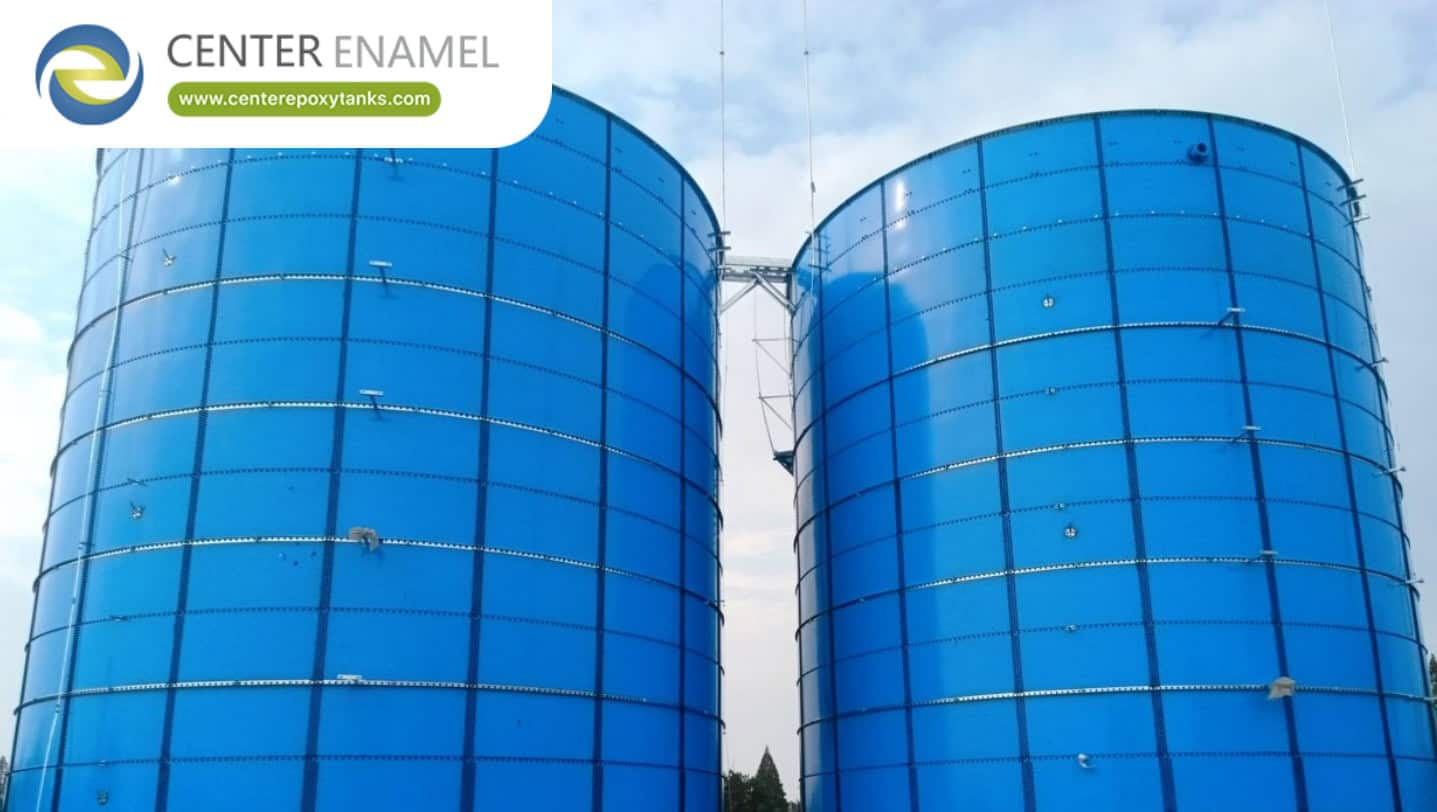
Industrial Diesel Storage Tanks: Engineering Resilience in Fuel Containment
How do specialized double-wall steel tanks mitigate the risks of "diesel bug" microbial growth and groundwater contamination in mission-critical fuel reserves? Diesel fuel is the lifeblood of emergency power, logistics, and heavy industry. However, its chemical stability is vulnerable to water ingress, temperature fluctuations, and environmental oxidation, requiring a containment system that goes beyond a simple vessel.
Shijiazhuang Zhengzhong Technology Co., Ltd (Center Enamel) is a premier manufacturer of high-specification Diesel Storage Tanks. Engineered to meet UL 142, API 650, and NFPA 30 standards, our welded and bolted steel solutions provide secure, long-life containment for backup power and industrial refueling in over 100 countries.
1. The Engineering Challenge: Protecting Diesel Integrity
Storing diesel fuel for long-term standby use requires addressing three critical degradation factors:
● Microbial Contamination: Water condensation in the tank's headspace allows "diesel bug" (bacteria and fungi) to thrive, leading to clogged filters and engine failure.
● Secondary Containment Mandates: Modern environmental codes (EPA/SPCC) strictly require a secondary barrier to capture leaks from the primary shell.
● Internal Corrosion: Modern ultra-low sulfur diesel (ULSD) can be more corrosive to steel components due to increased moisture absorption and acetic acid production from microbial activity.
2. Core Engineering: UL 142 & API 650 Standards
Center Enamel focuses on a "Zero-Risk" containment strategy through precision manufacturing:
● Double-Wall "Tank-in-a-Tank" Design: Our UL 142 compliant tanks feature an integral secondary shell. This design provides 110% containment volume, eliminating the need for expensive external concrete dikes and saving valuable site space.
● Interstitial Leak Monitoring: The space between the two steel walls is equipped with electronic sensors or vacuum gauges for immediate leak detection, ensuring the primary vessel’s integrity is never compromised.
● Sloped Bottom & Sump Geometry: To combat microbial growth, we fabricate tanks with a precise floor slope leading to a low-point sump. This allows for the easy removal of settled water and sludge, the primary catalysts for fuel degradation.
3. Comparison: Engineered Steel vs. Traditional Fuel Storage
Feature | Single-Wall Steel | Concrete Containment Pit | Center Enamel Double-Wall |
Leak Detection | Visual only | Difficult to verify | Continuous Interstitial Monitoring |
Space Efficiency | Low (Needs dike) | Poor | High (Compact "Plug-and-Play") |
Water Management | Flat bottom (Poor) | Poor | Sloped-Bottom/Sump Design |
Code Compliance | Variable | Site-built | UL 142 / NFPA 30 Certified |
Installation | Moderate | Slow/Construction heavy | Rapid (Factory Prefabricated) |
4. Advanced Protection: Aluminum Dome Roofs
For large-scale fuel depots and terminal storage, we offer the integration of Aluminum Geodesic Dome Roofs:
● Solar Reflection: Aluminum reflects up to 95% of solar radiation, reducing the "breathing losses" of fuel and keeping the diesel at a stable temperature to prevent oxidation.
● Maintenance-Free: These self-supporting roofs are naturally resistant to the corrosive vapors of fuel and require no periodic repainting, reducing the total cost of ownership (TCO).
5. Application Across Critical Sectors
Center Enamel’s Diesel Storage Tanks are the preferred choice for:
● Data Centers & Hospitals: Mission-critical standby fuel for emergency generators.
● Logistics & Mining: High-capacity on-site refueling stations for heavy machinery.
● Utility Power Plants: Large-scale bulk storage for diesel-fired peaking plants.
● Remote Microgrids: Secure, leak-proof containment for off-grid energy systems.


