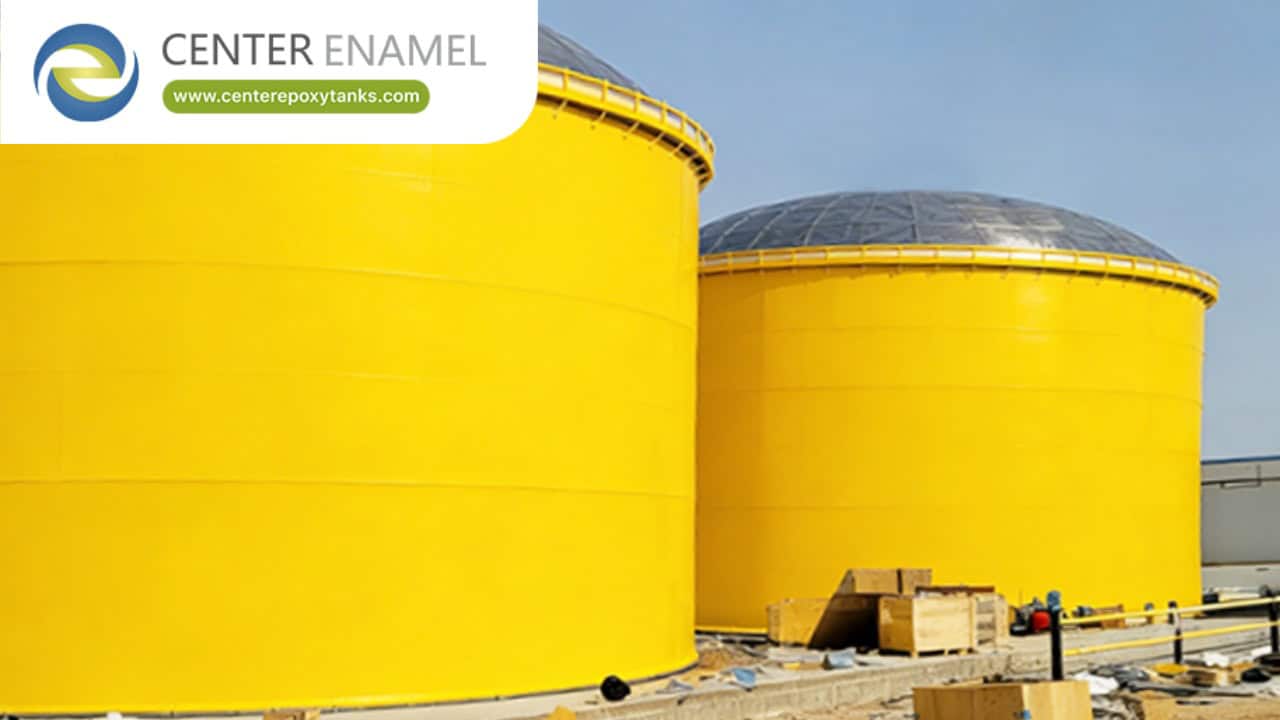
Industrial Chemical Storage Tanks: Complete Materials, Design, and Safety Guide
In industrial manufacturing, chemical processing, municipal water treatment, and petrochemical refining, safely containing aggressive liquids is a critical operational requirement. Industrial chemical storage tanks are specialized vessels engineered to withstand corrosive acids, toxic solvents, reactive caustics, and water treatment reagents without structural degradation or environmental leakage.
Because chemical media exhibit vastly different properties, selecting the right storage infrastructure requires evaluating material compatibility, thermal limits, structural configuration, and stringent regulatory compliance.
1. Key Material Options for Chemical Storage Tanks
The material makeup of a chemical tank dictates its chemical resistance, mechanical durability, and lifecycle cost:
·
Fiberglass-Reinforced Plastic (FRP): Manufactured by winding glass fibers with thermoset resins, FRP tanks offer outstanding resistance to strong acids (such as sulfuric and hydrochloric acid) and corrosive slurries without rusting.
·
·
Stainless Steel (Grades 304 and 316): Providing high tensile strength and a passive chromium-oxide layer that resists oxidation, stainless steel is ideal for organic solvents, high-purity reagents, and high-temperature processing.
·
·
High-Density and Cross-Linked Polyethylene (HDPE / XLPE): Rotationally molded thermoplastic tanks that deliver excellent cost-efficiency and corrosion resistance for mild water treatment chemicals, agricultural fertilizers, and mild caustics.
·
·
Carbon Steel with Protective Linings: Offering extreme structural strength and affordability, carbon steel is widely used for heavy industrial feeds when paired with high-performance internal epoxy or phenolic linings.
·
2. Structural Configurations and Layouts
Industrial chemical tanks are engineered in several layout geometries to fit facility footprints and operational workflows:
·
Vertical Cylindrical Tanks: Standing upright on flat or conical bottoms to maximize volumetric capacity in space-limited plant environments.
·
·
Horizontal Cylindrical Tanks: Low-profile vessels designed for easier transport, lower center-of-gravity installations, or restricted vertical clearance zones.
·
·
Double-Wall and Bunded Containment Tanks: Tanks featuring built-in secondary containment walls designed to capture 110% of primary volume in the event of an accidental leak.
·
Data Table: Industrial Chemical Storage Tank Matrix
Material Type | Primary Chemical Compatibility | Temperature Threshold | Key Industrial Application | Governing Standards |
Fiberglass (FRP) | Strong acids, bleaches, aggressive wastewater | Moderate to High (up to 100°C) | Water treatment, mining, chemical manufacturing | ASTM D3299, ASME RTP-1 |
Stainless Steel (304/316) | Solvents, high-purity reagents, mild acids | High (exceeding 300°C) | Pharmaceuticals, petrochemical refining, food processing | API 650, ASME Section VIII |
Cross-Linked Polyethylene (XLPE) | Mild acids, caustics, water treatment solutions | Low to Moderate (up to 60°C) | Chemical dosing, agricultural fertilizer storage | ASTM D1998, UL 142 |
Lined Carbon Steel | Hydrocarbons, heavy oils, non-corrosive feeds | High (exceeding 400°C) | Bulk fuel blending, heavy industrial process fluids | API 650, UL 142 |
3. Regulatory Compliance and Safety Mandates
Operating chemical storage assets requires strict adherence to environmental and worker safety standards:
·
Secondary Containment: Environmental protection agencies mandate secondary barriers (such as double-wall shells or concrete containment dikes) to prevent hazardous leaks from reaching soil and groundwater.
·
·
Vesting and Pressure Relief: Tanks holding volatile chemicals must integrate pressure-vacuum relief valves (PVRVs) and proper emergency venting to prevent structural over-pressurization.
·
Frequently Asked Questions (FAQ)
Q: What is the most important factor when choosing an industrial chemical storage tank?
A: Chemical compatibility is paramount. You must cross-reference the exact chemical concentration and operating temperature against manufacturer resistance tables to prevent material degradation or catastrophic failure.
Q: Why are polyethylene tanks popular for chemical storage?
A: Polyethylene tanks (HDPE/XLPE) are popular because they are seamless, cost-effective, lightweight, and naturally resistant to a broad range of mild water treatment chemicals and fertilizers.
Q: Can carbon steel tanks be used for storing strong acids?
A: Unprotected carbon steel will rapidly corrode when exposed to strong acids. Storing aggressive acids requires specialized fiberglass-reinforced plastic (FRP) or corrosion-resistant stainless steel alloys.
Q: What engineering standards govern industrial chemical tanks?
A: Welded metallic tanks are commonly designed under API 650 or ASME Section VIII, while composite and plastic vessels adhere to specifications like ASTM D1998 and ASME RTP-1.


