How Many Storage Tank Types Do You Know? A Complete Classification Guide
In industrial manufacturing, oil and gas processing, water treatment, and chemical engineering, containment vessels are the lifeblood of plant operations. But how many storage tank types do you actually know?
Because industrial liquids and gases vary widely in chemical composition, vapor pressure, and temperature, storage tanks cannot be approached with a one-size-fits-all mentality. Instead, engineers classify storage tanks into distinct categories based on their physical location, geometric orientation, and roof/pressure design.
1. Classification by Physical Location
The most fundamental way to categorize industrial storage tanks is by their position relative to grade level:
Aboveground Storage Tanks (ASTs): Positioned entirely on or above grade level, ASTs are the backbone of industrial tank farms and refineries. They offer easy visual inspection, direct leak detection, and massive volumetric scaling.
Underground Storage Tanks (USTs): Buried fully or partially beneath the earth, USTs are commonly utilized in retail gasoline service stations, commercial fleet hubs, and backup generator setups to maximize surface space.
2. Classification by Geometric Orientation and Shape
The physical layout and geometry of a tank dictate its structural stability and fluid-handling capabilities:
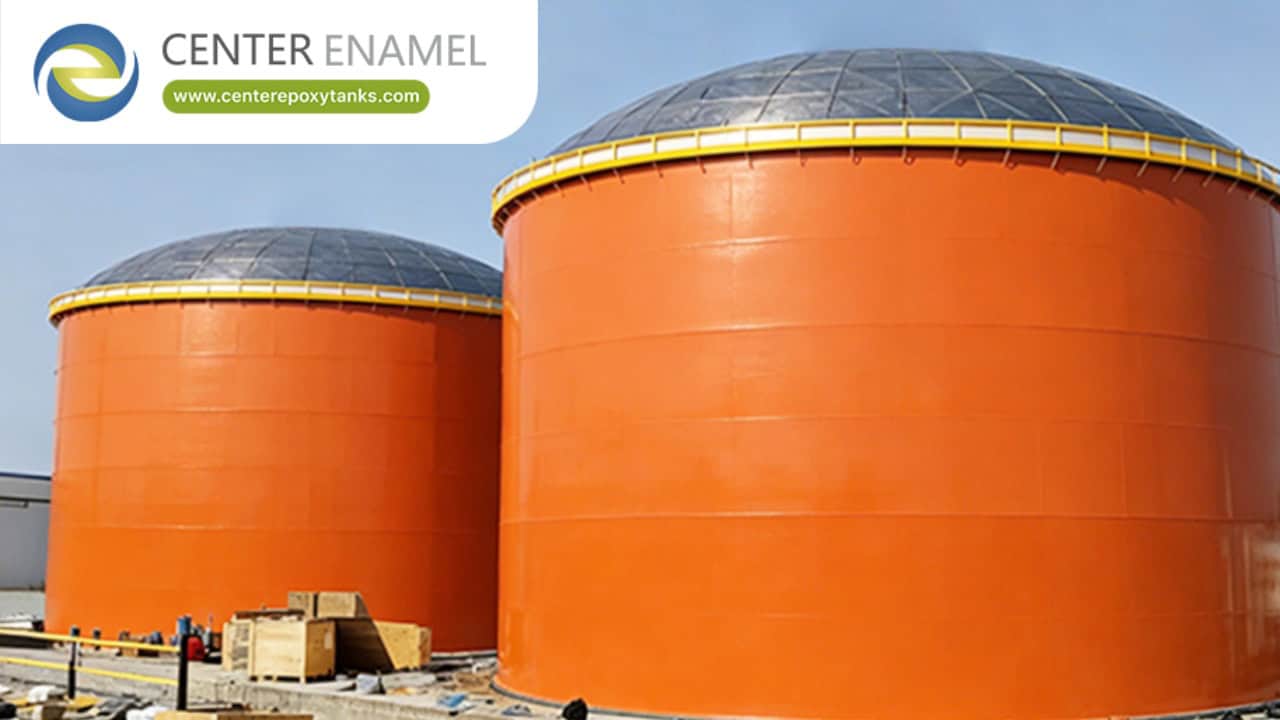
Vertical Cylindrical Tanks: Standing upright on a flat bottom, these are the most common industrial tanks used for high-volume storage of water, crude oil, and chemicals where hydrostatic head pressure is managed through engineered steel plate thickness.
Horizontal Cylindrical Tanks: Designed with a low profile where length is proportional to diameter, horizontal tanks are typically used for smaller-scale operations, localized fuel storage, or chemical processing.
Spherical Pressure Vessels (Hortonspheres): Monolithic spheres engineered to distribute structural stress evenly, ideal for high-pressure gases and volatile liquids like propane, butane, and liquefied petroleum gas (LPG).
3. Classification by Roof Structure and Vapor Control
For atmospheric and low-pressure aboveground tanks, roof design plays a vital role in environmental emissions and product preservation:
Fixed Roof Tanks (Cone, Dome, and Umbrella): Permanently welded to the cylindrical shell, fixed-roof tanks maintain a vapor space (ullage) and are ideal for low-volatility liquids like diesel, water, and heavy fuel oils.
External Floating Roof Tanks (EFRTs): Featuring an open-top shell with a dynamic deck that floats directly on the liquid surface, EFRTs eliminate vapor pockets to prevent volatile organic compound (VOC) emissions in large crude oil terminals.
Internal Floating Roof Tanks (IFRs): Combining a fixed outer roof or dome with an internal floating pan, IFRs protect volatile products from severe weather while eliminating dangerous vapor headspace.
Data Table: Comprehensive Storage Tank Classification Matrix
Classification Category | Primary Sub-Types | Structural Design Feature | Operating Pressure | Typical Applications |
Location | AST vs. UST | Above grade vs. fully buried earth placement | Atmospheric to low pressure | Refineries, retail fuel stations, backup reserves |
Orientation | Vertical, Horizontal, Spherical | Upright cylinders, low-profile bullets, spherical shells | Atmospheric to High Pressure ($15+text{ psig}$) | Bulk storage, process blending, LPG/propane holding |
Roof Design | Fixed Cone/Dome, EFRT, IFR | Permanently welded roofs vs. dynamic floating decks | Atmospheric (up to 2.5psig) | Water reservoirs, heavy fuel oils, volatile crude oil |
Material Construction | Welded Steel, Bolted Steel, FRP, Poly | Metal plates, modular panels, reinforced plastics | Varies by material rating | Chemical processing, municipal water, corrosive effluents |
Frequently Asked Questions (FAQ)
Q: What are the main ways storage tanks are classified?
A: Storage tanks are primarily classified by their physical location (aboveground vs. underground), geometric shape and orientation (vertical, horizontal, spherical), roof structure (fixed vs. floating), and material of construction (steel, concrete, fiberglass, polyethylene).
Q: What is the difference between a fixed roof tank and a floating roof tank?
A: A fixed roof tank has a permanently attached roof welded to the shell with an internal vapor headspace, making it suitable for low-volatility liquids. A floating roof tank features a deck that rests directly on the liquid surface, moving up and down to eliminate vapor pockets and reduce emissions.
Q: Why are spherical tanks used in the oil and gas industry?
A: Spherical vessels distribute internal pressure uniformly across their curved geometry, making them the safest and most efficient design for storing high-pressure gases and liquefied petroleum gases (LPG) like propane and butane.
Q: Which storage tank type is best for volatile organic liquids?
A: External Floating Roof Tanks (EFRTs) and Internal Floating Roof Tanks (IFRs) are specifically engineered for volatile liquids like crude oil and gasoline because they eliminate vapor headspace, drastically reducing evaporation and VOC emissions.


