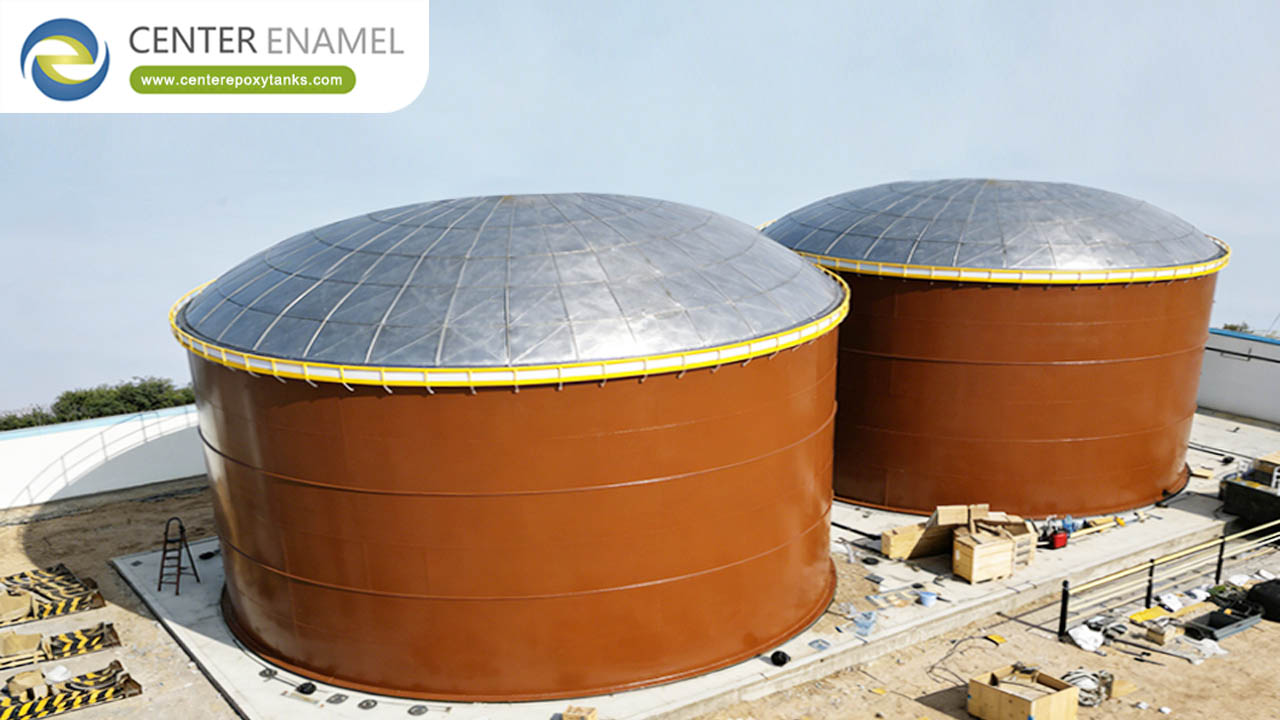
How Geodesic Dome Roofs Improve Safety in Petrochemical Storage Facilities
In the high-stakes environment of petrochemical refining and bulk liquid storage, facility safety, structural resilience, and environmental compliance are paramount. Traditional carbon steel fixed roofs—while historically common—introduce major vulnerabilities related to corrosion, heavy structural dead loads, flammable vapor accumulation, and high maintenance risks.
To mitigate these hazards, modern industrial operators are increasingly transitioning to geodesic aluminum dome roofs engineered in compliance with API 650 Appendix G. By combining high-strength marine-grade aluminum with a triangulated, self-supporting space-frame geometry, geodesic domes fundamentally transform safety protocols across petrochemical tank farms.
1. Structural Redundancy and Extreme Weather Resilience
Petrochemical facilities are frequently situated in demanding coastal, wind-prone, or seismic zones where structural tank integrity can be tested by severe weather events.
·
Load Distribution: A geodesic dome is composed of interconnected triangular elements that distribute environmental loads evenly across the entire frame, preventing localized stress concentrations. This structural redundancy prevents the ponding water, sagging, and deformation common in flat or traditional cone roofs.
·
·
Aerodynamic Wind Stability: The curved, hemispheric geometry of a geodesic dome significantly reduces wind uplift forces, minimizes vortex formation, and eliminates flat surfaces vulnerable to bending, allowing many designs to withstand severe hurricane-force conditions.
·
·
Seismic Performance: Because aluminum domes are exceptionally lightweight compared to steel structures, they impart minimal top-weight stress onto the underlying tank shell during seismic activity, greatly reducing the risk of catastrophic buckling or shell failure during an earthquake.
·
2. Advanced Fire Safety and Non-Sparking Properties
Fire prevention is a baseline requirement in any hydrocarbon storage terminal. Geodesic dome roofs offer critical intrinsic fire-safety advantages over traditional steel construction:
·
Non-Sparking Aluminum Alloy: Unlike carbon steel, high-strength aluminum is non-sparking. In explosive environments containing volatile organic compounds (VOCs), eliminating the risk of steel-to-steel impact sparks during maintenance or operation is vital.
·
·
Superior Thermal Reflection and Heat Dissipation: Aluminum features high thermal reflectivity and a lower fire load than steel. During external pool fires or intense solar radiation, the dome reflects radiant heat and dissipates thermal energy rapidly, keeping internal headspace temperatures lower and protecting stored hydrocarbons from dangerous thermal expansion.
·
·
Seamless Integration with Fire Suppression Systems: Geodesic domes are easily engineered to support specialized safety hardware, including foam-pouring systems, gas detectors, explosion vents, and emergency pressure-relief hatches compliant with NFPA and API guidelines.
·
3. VOC Emission Control and Vapor Management
Uncontrolled vapor accumulation creates severe explosion hazards and environmental liabilities. Geodesic domes provide exceptional emission suppression:
·
Hybrid Floating Deck Protection: When deployed as a fixed outer cover over an Internal Floating Roof (IFR), geodesic domes establish a dual-barrier system. The dome shields the internal floating deck from rain, wind-induced turbulence, and solar heating, cutting VOC emissions by up to 99% and preventing hazardous vapor pockets from forming.
·
·
Corrosion-Free Integrity: Because aluminum is naturally passivated by a self-healing oxide layer, it resists aggressive chemical vapors (such as hydrogen sulfide and sulfur dioxide) that rapidly corrode unprotected carbon steel, eliminating rust-induced breaches that cause fugitive emissions.
·
Data Table: Safety and Performance Comparison (Geodesic Dome vs. Traditional Steel Cone Roof)
Safety & Engineering Parameter | Aluminum Geodesic Dome Roof (API 650 App. G) | Traditional Carbon Steel Cone Roof |
Spark Generation Risk | Non-sparking aluminum alloy (Zero impact spark risk) | Higher risk of mechanical friction or impact sparks |
Corrosion Resistance | Excellent; natural oxide layer resists chemical vapor attack | Prone to rapid rust and pitting from sulfur/hydrocarbons |
Internal Support Columns | 100% Clear-span (Zero internal columns or obstacles) | Often requires internal support columns and rafters |
Top-Weight & Seismic Stress | Lightweight space frame minimizes seismic inertia load | Heavy steel framing adds high top-weight to tank shell |
Maintenance Exposure Risk | Minimal; maintenance-free surface reduces worker on-tank hours | High; requires periodic grit-blasting, welding, and repainting |
Vapor & Emission Control | Ideal hybrid housing for internal floating roof decks | Vulnerable to large thermal breathing and working losses |
Frequently Asked Questions (FAQ)
Q: How do geodesic dome roofs prevent fires in petrochemical storage tanks?
A: Geodesic domes enhance fire safety by utilizing non-sparking aluminum alloys that eliminate impact spark risks. They also reflect solar radiation, possess a lower fire load than steel, and dissipate heat rapidly to prevent dangerous internal vapor expansion.
Q: Do geodesic aluminum domes require internal support columns?
A: No. The triangulated space-frame geometry of a geodesic dome provides a 100% clear-span structure that transfers all dead, wind, and snow loads entirely to the perimeter tank shell rim.
Q: How do geodesic domes improve environmental and regulatory compliance?
A: By providing a weather-tight, sealed envelope—especially when paired with an internal floating roof—geodesic domes eliminate rainwater contamination and drastically reduce VOC emissions, ensuring compliance with strict environmental regulations like EPA standards.
Q: Can a geodesic dome roof be retrofitted onto an existing petrochemical storage tank?
A: Yes. Because aluminum dome components are lightweight and modular, they can be rapidly assembled on-site and installed via crane onto existing active or out-of-service tanks with minimal operational downtime.


