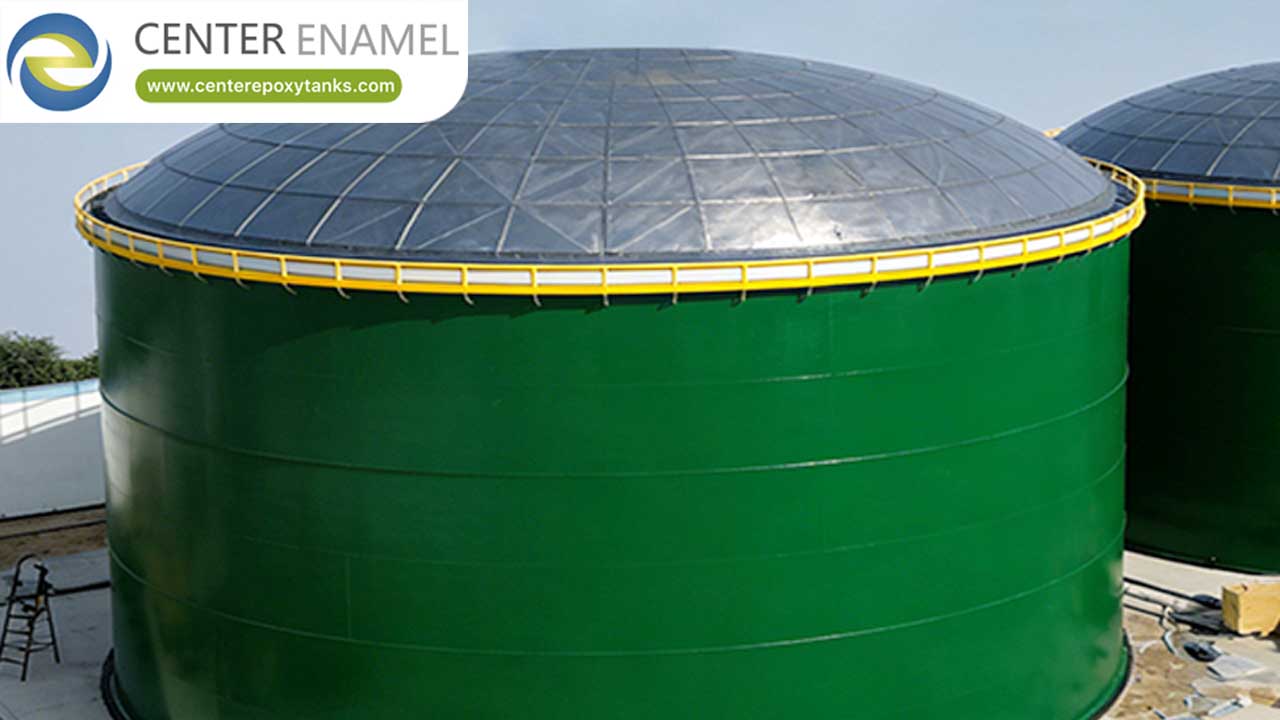
High-Performance Diesel Fuel Oil Tanks: Engineering Safety and Environmental Compliance
Diesel fuel oil tanks are specialized pressure-tested vessels designed for the secure containment of combustible petroleum distillates. Center Enamel engineers these systems to UL 142, AS 1692, and API 650 standards, offering both aboveground (AST) and underground (UST) configurations. Utilizing Double-Wall (Self-Bunded) technology and high-performance Fusion Bonded Epoxy (FBE) internal linings, our tanks prevent soil contamination and internal microbial-induced corrosion (MIC), providing a 30-50 year service life for data centers, mining, and backup power infrastructure.
1. Technical Specification & Material Matrix
This matrix establishes the mechanical benchmarks for Center Enamel's diesel storage engineering.
Feature | Technical Specification (2026 Standard) | Strategic Reliability Value |
Design Standards | UL 142, AS 1692, API 650, EN 12285 | Mandatory for fire safety and environmental audits. |
Configuration | Double-Wall / Self-Bunded / Integral Bund | 110% secondary containment; eliminates external bunding. |
Material Grade | ASTM A36 / S235JR Carbon Steel | High-yield strength for hydrostatic and seismic loads. |
Internal Coating | FBE / Phenolic Epoxy (Chemical Resistant) | Prevents "diesel bug" (biofilm) and tank bottom pitting. |
Testing Regimes | Pneumatic Leak Test / NDT Weld Inspection | 100% verification of structural and seal integrity. |
Safety Features | Overfill Protection / Venting / Interstitial Monitoring | Prevents catastrophic spills and vacuum/pressure failure. |
2. Advanced Engineering: Double-Wall Self-Bunded Design
Secondary Containment and Interstitial Monitoring
Traditional single-wall tanks require expensive concrete bunding. Center Enamel’s Double-Wall (Self-Bunded) tanks feature an inner primary tank and an outer secondary shell.
● 110% Containment: The outer tank is designed to hold 110% of the inner tank's capacity, providing a fail-safe against primary leaks.
● Interstitial Monitoring: The "V-space" between the two walls is equipped with automated sensors that detect fluid presence (oil or water), providing real-time alerts via PLC integration.
● Microbial-Induced Corrosion (MIC) Mitigation: Diesel fuel is prone to "diesel bug" (bacterial growth at the fuel-water interface). Our specialized internal epoxy coatings create an ultra-smooth surface that inhibits biofilm attachment and prevents the acidic byproducts of bacteria from corroding the steel floor.
3. High-Impact Applications & Sector Compliance
● Data Centers & Hospitals: Critical for Tier III and IV facilities, our tanks ensure immediate fuel availability for emergency standby generators (gensets) with NFPA 110 compliance.
● Mining & Remote Power: Rugged, modular designs (ISO containerized tanks) allow for rapid transport and setup in harsh environments where fuel quality and security are paramount.
● Marine & Logistics Hubs: Large-diameter welded tanks compliant with API 650 for bulk fuel storage and high-flow bunkering operations.
● Agriculture & Construction: Compact, skid-mounted diesel tanks for on-site refueling, featuring integrated dispensing systems and fuel management software.
4. Why Partner with Center Enamel?
As a global leader with over 30 years of expertise, Center Enamel offers a unique technological advantage for fuel storage infrastructure:
● Advanced Structural FEA: Every tank is subjected to Finite Element Analysis (FEA) to simulate localized wind loads, seismic ground acceleration, and hydrostatic pressure per ASCE 7 standards.
● Factory-Controlled Coating Application: Unlike field-painted tanks, our internal and external coatings are applied in a humidity-controlled environment with High-Voltage Holiday Detection to ensure a 100% dielectric barrier.
● Global Compliance Authority: Our tanks are certified to ISO 9001, ISO 14001, and ISO 45001. We have successfully supplied fuel containment solutions to 100+ countries, adapting every design to localized fire codes and environmental mandates.
5. Technical FAQ: Diesel Tank Implementation
Q: What is the benefit of a "Self-Bunded" tank over a traditional tank with a concrete bund?
A: Self-bunded tanks are "plug-and-play." They eliminate the high cost and permanence of concrete construction, allow for easy relocation, and occupy a 30% smaller footprint while meeting the same environmental regulations.
Q: How do you prevent internal corrosion in diesel tanks?
A: We utilize high-build Phenolic Epoxy or Fusion Bonded Epoxy (FBE) linings. These are chemically resistant to the additives in modern ultra-low sulfur diesel (ULSD) and prevent the water accumulation at the tank bottom from initiating localized pitting.
Q: Are Center Enamel diesel tanks compatible with Bio-Diesel?
A: Yes. Our specialized internal coatings are engineered to be chemically inert to bio-diesel blends (B20 to B100), which can be more aggressive toward traditional seals and coatings than standard mineral diesel.


