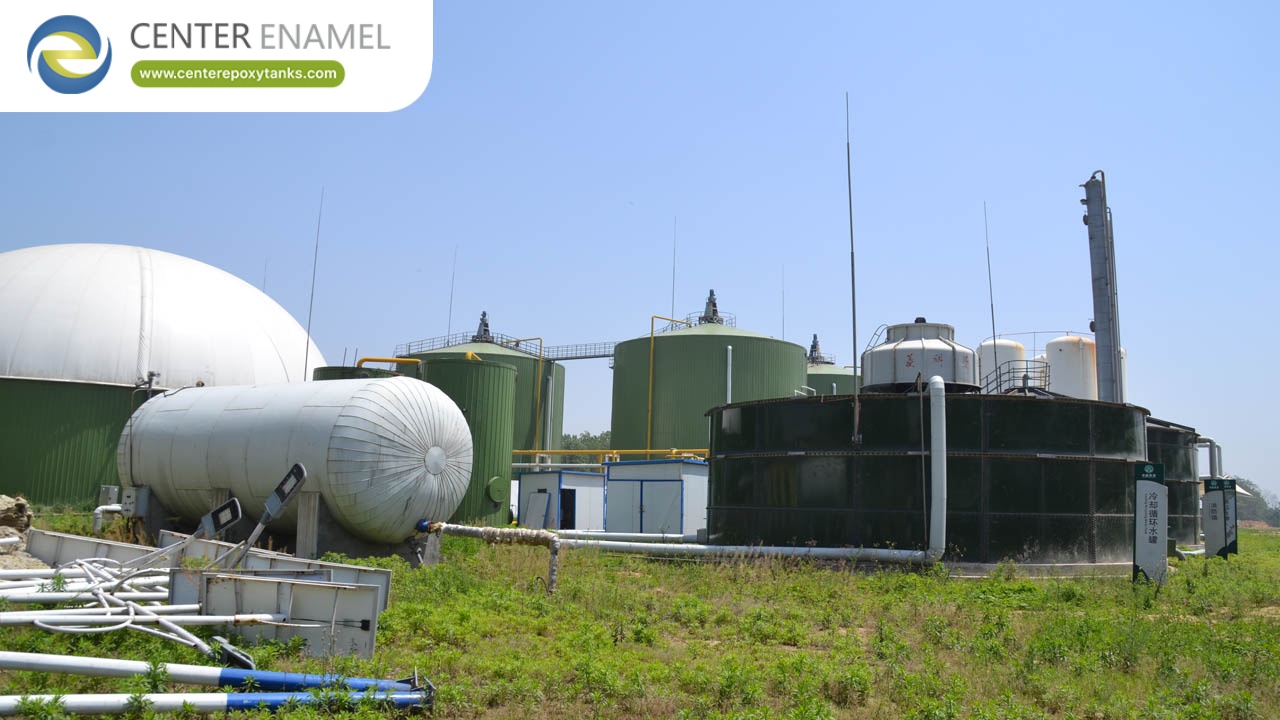
Green Power Biogas Projects: Biogas Holders for Reliable Energy Supply
As the global energy landscape accelerates its transition toward decarbonization, renewable energy frameworks face a persistent challenge: grid intermittency. While solar and wind power generation fluctuate with weather patterns, green power biogas projects offer a vital counterbalance by delivering dispatchable, continuous baseload power. By converting methane-rich biogas—derived from the anaerobic digestion of agricultural waste, municipal sewage sludge, and industrial organic residues—into electricity and thermal energy, biogas plants ensure stable energy output.
However, achieving high operational reliability is fundamentally tied to gas management. Biological activity within anaerobic digesters is dynamic, leading to variable gas production rates influenced by feedstock consistency, temperature shifts, and microbial health. To bridge the gap between volatile biological output and the strict, uninterrupted fuel demands of high-efficiency combined heat and power (CHP) engines or microturbines, advanced biogas holder technology serves as the indispensable operational backbone.
The Critical Role of Biogas Holders in Energy Stabilization
High-efficiency gas engines and upgrading systems require an absolutely stable, pressure-regulated fuel feed to maintain synchronous operation, maximize electrical output, and prevent costly equipment wear or unscheduled shutdowns. Without a dedicated storage buffer, pressure surges or supply drops can cause engine misfires and generator trip-offs.
Modern double-membrane biogas storage systems resolve this volatility by fulfilling several core functions:
Dynamic Volumetric Buffering: Storing a regulated reserve of biogas (typically sized for several hours of peak generation or plant operation) absorbs natural production spikes and lulls.
Precision Pressure Regulation: By utilizing an engineered pneumatic design—where an air-pressurized outer membrane maintains a constant counter-pressure on the working inner membrane—the holder delivers a steady, pre-set gas pressure to downstream combustion units regardless of storage volume.
Environmental Emission Mitigation: Hermetically sealed containment prevents fugitive methane emissions, transforming a potent greenhouse gas into a secure, controlled renewable energy asset.
Technical Performance Matrix: Biogas Storage Solutions
Technical Parameter | Double-Membrane Biogas Holder | Legacy Fixed-Roof Gasometer | High-Pressure Steel Gas Bullet |
Pressure Regulation & Stability | Dynamic air-ballasted outer membrane ensures constant working pressure to engines | Variable pressure dependent on mechanical weight or water-seal depth | High, unstable pressure requiring multi-stage pressure reduction valves |
Capital & Installation Cost | Highly cost-effective; rapid modular installation on concrete slabs or digester roofs | High civil engineering and material fabrication overhead | Prohibitively expensive capital investment for low-pressure storage |
Corrosion Defense & Lifespan | Specially treated PVC/PU-coated polyester fabrics resistant to H2S, UV, and fungi | Vulnerable to internal oxidation and sulfuric acid corrosion requiring frequent recoating | Heavy steel construction requiring rigorous cathodic protection and wall thickness monitoring |
Operational Versatility | Scalable capacities ranging from compact buffers to massive 10,000+ cubic meter systems | Fixed volumetric capacity with limited expansion flexibility | Rigid, high-risk containment requiring strict pressure safety compliance |
Engineering Superiority: Materials and Design Standards
To withstand the aggressive chemical composition of raw biogas—which typically contains trace moisture, carbon dioxide, and corrosive hydrogen sulfide (H2S)—high-performance biogas holders rely on advanced material engineering:
Multi-Layer Composite Fabrics: Constructed from high-strength polyester base yarns coated with specialized PVC or polyurethane formulations designed to resist low-permeability methane leakage (often achieving strict diffusion thresholds below standard industrial limits).
Specialized Chemical Additives: The inner membrane features anti-static treatments and high resistance to sulfur compounds, while the outer protective membrane incorporates heavy-duty UV inhibitors to withstand decades of direct solar exposure.
Integrated Safety and Monitoring: Equipped with precision pressure sensors, mechanical emergency relief valves, automatic blower control units, and fluid-trap safety systems to eliminate overpressure risks and ensure continuous operational safety.
Frequently Asked Questions (FAQ)
Q: Why are biogas holders essential for green power biogas projects?
A: Biogas production from anaerobic digesters fluctuates based on biological and environmental factors. Biogas holders act as an essential buffer reservoir, transforming intermittent gas generation into a steady, pressure-regulated fuel supply that protects downstream CHP engines and ensures continuous baseload electricity generation.
Q: How does a double-membrane biogas holder regulate gas pressure?
A: A double-membrane holder consists of an inner membrane holding the gas and an outer membrane inflated with air by a continuous blower system. The air pressure maintained between the two membranes exerts a precise, constant downward pressure on the inner gas container, ensuring stable fuel delivery pressure to the generation equipment regardless of storage volume.
Q: What materials are used to manufacture durable biogas storage membranes?
A: High-performance biogas holders are fabricated using heavy-duty polyester woven fabrics coated with specialized PVC or polyurethane polymers. These materials are treated with anti-fungal agents, UV stabilizers, and chemical-resistant barriers to withstand corrosive gases like hydrogen sulfide (H2S).
Q: Can biogas holders be integrated directly onto existing anaerobic digester tanks?
A: Yes. Double-membrane biogas holders can be mounted directly on top of circular concrete or steel anaerobic digestion tanks as an integrated roof structure, or installed as standalone ground-mounted gas storage spheres depending on facility footprint requirements and operational capacity goals.


