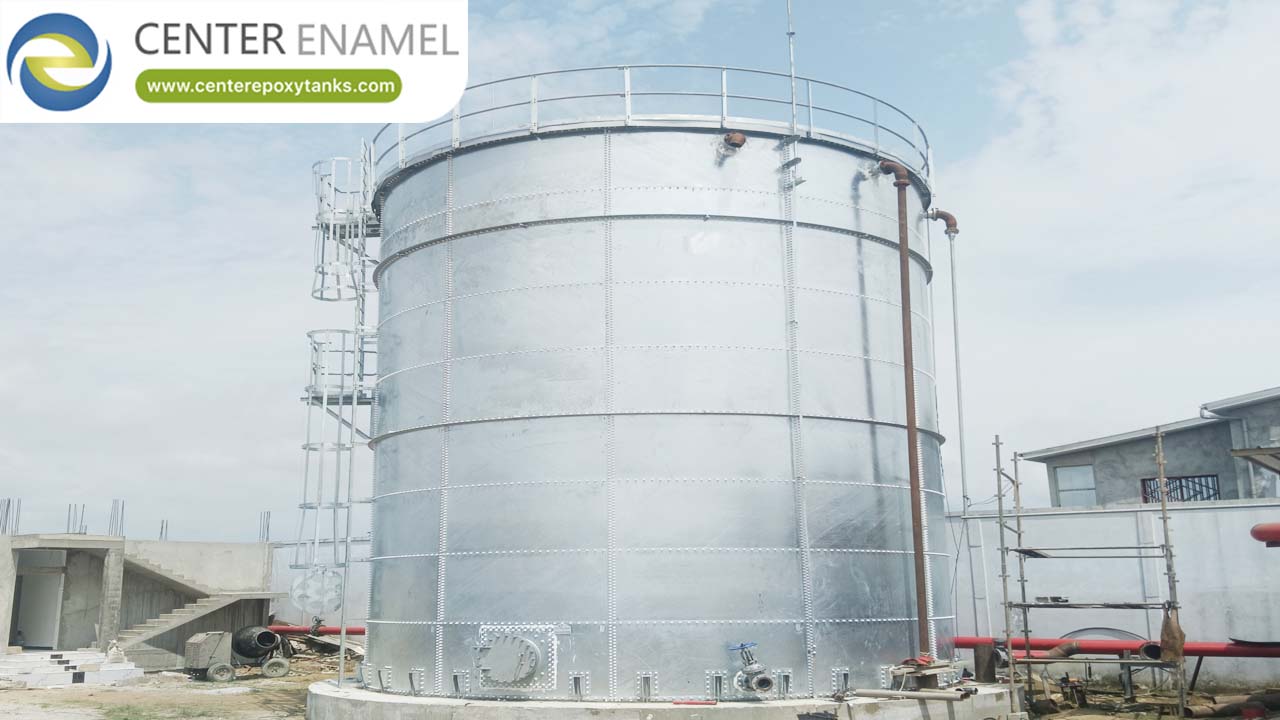
Galvanized Steel Rainwater Storage Tanks: Engineering & Procurement Guide
Galvanized steel tanks have become the global standard for large-scale rainwater harvesting, irrigation, and fire suppression. By combining the structural resilience of corrugated steel with the corrosion resistance of hot-dip galvanizing, these tanks offer a cost-effective, modular, and long-lasting alternative to concrete or plastic reservoirs. This guide provides an engineering-focused overview for procurement professionals sourcing from Chinese manufacturers, prioritizing international quality standards and long-term asset reliability.
1. Engineering Foundations: Standards & Material Quality
The integrity of a galvanized steel tank depends on the interplay between the steel substrate and the protective zinc barrier. When sourcing, manufacturers must demonstrate compliance with both structural and coating standards.
Core Material Requirements
● Steel Substrate: High-tensile strength steel is required to withstand hydrostatic pressure. Look for manufacturers utilizing steel that meets international standards like ASTM A1011 or EN 10025.
● Galvanization (Zinc Coating): This is the "life" of the tank. The industry benchmark for high-performance storage is hot-dip galvanizing meeting ASTM A123 or ISO 1461.
○ Pro-Tip: Ask for the coating weight in g/m2 (grams per square meter). A standard for heavy-duty storage is often 610g/m2.
● Sealing & Liners: Steel tanks are not "water-tight" on their own; they rely on internal liners. Common materials include EPDM, PVC, or food-grade PE/TPU, depending on whether the application is for irrigation, industrial processing, or potable water (must meet NSF/ANSI 61 certification).
2. Structural Advantages: Why Bolted/Corrugated?
The shift toward modular, bolted steel tanks is driven by logistics and installation efficiency.
● Logistics: Unlike monolithic concrete tanks, bolted galvanized panels can be flat-packed into standard shipping containers, drastically reducing freight costs for international projects.
● Installation Speed: Assembly requires only hand tools and standard lifting equipment—no specialized on-site welding is necessary, which reduces site safety risks and construction timelines.
● Modularity: These tanks are scalable. If storage capacity needs increase, panels can be added to the structure, or the entire tank can be dismantled and relocated—a "circular economy" advantage that fixed reservoirs lack.
3. Procurement Vetting Matrix
Sourcing from China requires rigorous vetting to differentiate between "commodity" suppliers and "engineered-solution" manufacturers. Use this matrix during your RFP (Request for Proposal) process.
Vetting Criteria | High-Tier Manufacturer | Commodity-Grade Supplier |
Certifications | ISO 9001, CE, AWWA D103 compliance | None or generic local certs |
Quality Control | 100% material traceability (MTRs) | Limited/No material batch tracking |
Engineering Support | CAD layouts & structural analysis reports | Standard "off-the-shelf" sizes only |
Coating Specs | Specified zinc thickness (g/m2) verified | "Standard" or unspecified coating |
Liner Standards | NSF-61 / Potable-grade certification | Industrial-grade / Non-potable only |
4. Maintenance & Lifecycle Management
To ensure a 30+ year service life, the tank must be treated as a system, not just a vessel.
1. Periodic Liner Inspection: The liner is the primary water barrier. Annual inspections should look for physical damage, folding stress, or debris accumulation that could compromise the liner material.
2. Sacrificial Anode Check: For aggressive water conditions or specific soil chemistries, sacrificial anodes are often installed. These should be inspected every 2–3 years and replaced when 50% consumed.
3. Debris Removal: Prevent heavy sediment accumulation on the tank floor, which can cause anaerobic conditions or physical wear on the liner over time.
Frequently Asked Questions (FAQ)
Q: Are galvanized steel tanks safe for potable (drinking) water?
A: Yes, provided the tank is equipped with an NSF/ANSI 61 certified liner. The liner prevents the water from coming into contact with the steel walls, ensuring that the water remains free of zinc migration and meets safety standards for human consumption.
Q: Can these tanks handle seismic or high-wind loads?
A: When properly engineered to AWWA D103 or equivalent structural codes, bolted steel tanks are highly seismic-resistant. Reputable Chinese manufacturers will provide a structural load calculation report (wind, snow, and seismic) specific to your installation site as part of the procurement documentation.
Q: How do I choose between EPDM and PVC liners?
A: It depends on the application. EPDM is generally more durable, flexible in extreme temperatures, and resistant to UV, making it ideal for outdoor long-term storage. PVC is often more cost-effective for shorter-term storage or specific irrigation applications but may require more frequent replacement.


