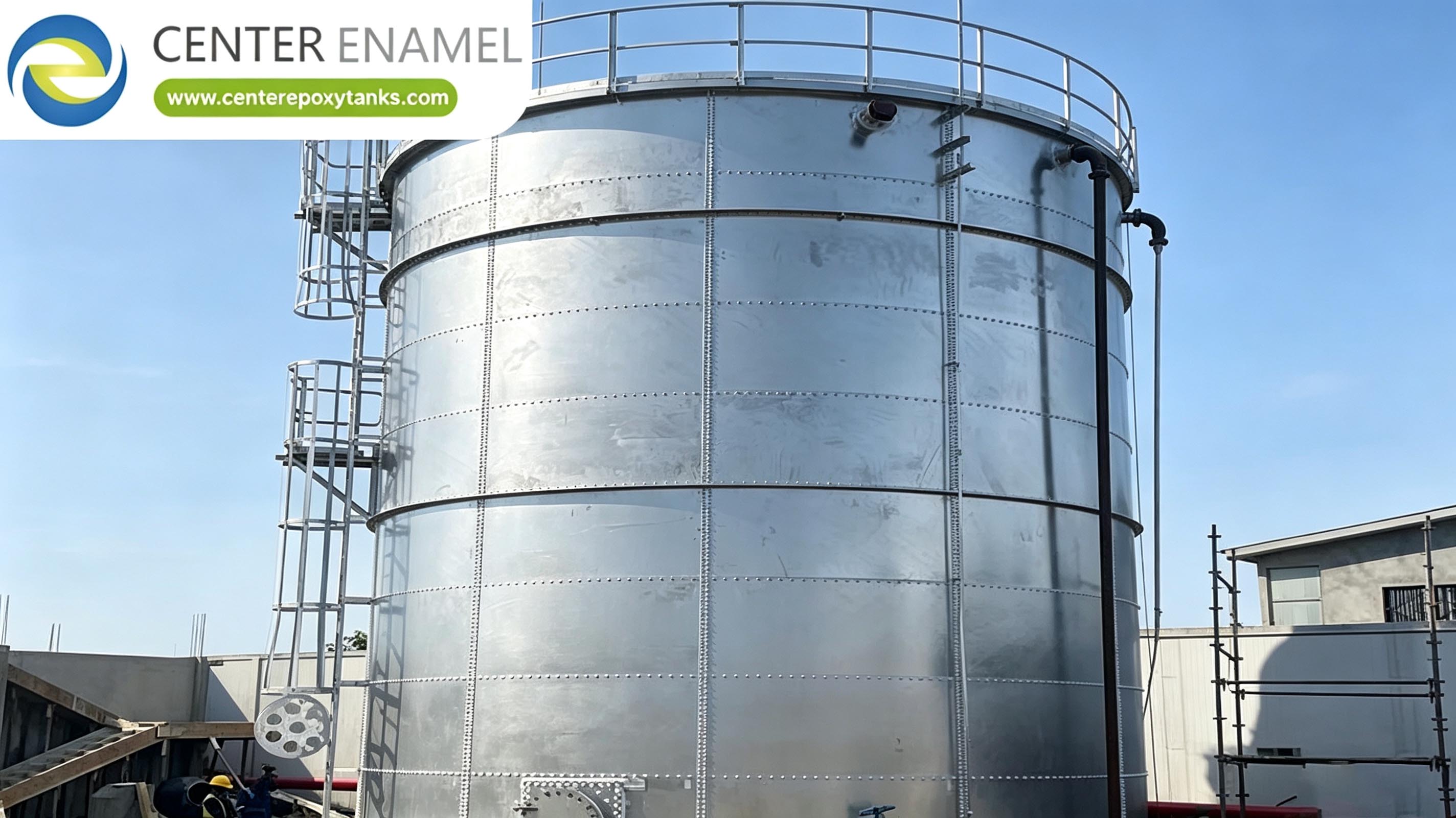
Galvanized Corrugated Water Tank: Durable Solutions for Drinking Water Storage
Reliable access to safe, clean drinking water is the most critical infrastructure requirement for municipal, industrial, and agricultural sites. While many storage options exist, the galvanized corrugated water tank stands out as the industry standard for cost-effectiveness, structural longevity, and efficient deployment. By combining the high-strength engineering of corrugated steel with high-integrity, food-grade liners, these tanks provide a secure environment for potable water containment.
Engineering for Safety: The "Steel + Liner" System
For drinking water storage, the integrity of the water relies on two components: the structural shell and the interior barrier.
The Shell: High-tensile, galvanized corrugated steel provides the structural capacity to hold massive volumes of water. The corrugation adds rigid strength, allowing the tank to withstand wind, seismic, and hydrostatic loads with less steel mass than flat-panel alternatives.
The Liner: To ensure water safety and compliance with health regulations (such as NSF/ANSI 61), a specialized, food-grade geomembrane liner is installed. This liner completely separates the water from the steel, preventing contact, ensuring sterility, and eliminating the risk of metallic leaching.
Performance Comparison: Drinking Water Containment
Feature | Galvanized Corrugated Tank | Concrete Reservoir | Plastic/Poly Tank |
Durability | High (Corrosion-resistant) | Moderate (Crack-prone) | Low/Moderate |
Cost-Efficiency | High | Low (High Capex) | Moderate |
Installation Speed | Fast (Modular) | Very Slow | Moderate |
Potable Compliance | High (with Liner) | Moderate | High (if food-grade) |
Maintenance | Minimal | High | Low |
Key Advantages for Site Managers
1. Superior Structural Rigidity
Corrugated steel is engineered for maximum strength-to-weight ratio. The "waves" in the steel distribute hydrostatic pressure evenly across the tank walls. This makes the galvanized corrugated tank exceptionally resistant to the physical stresses of large-volume water storage.
2. Rapid, "Dry" Assembly
Unlike concrete tanks that require weeks of pouring and curing, or field-welded steel tanks that require intensive hot work, galvanized corrugated tanks are modular. They can be assembled on-site with hand tools in a fraction of the time, significantly reducing site traffic, safety risks, and labor costs.
3. Galvanized Protection
The zinc coating (galvanization) provides a sacrificial anode effect, protecting the steel shell from atmospheric corrosion. In external environments, this ensures that the tank exterior remains rust-free and structurally sound for decades without the need for constant repainting.
4. Scalable Capacity
Need more storage as your facility grows? Corrugated tank systems are inherently scalable. Their modular nature allows for efficient design adjustments, ensuring that your storage capacity can evolve alongside your project needs.
Frequently Asked Questions (FAQ)
Q: Are galvanized corrugated tanks safe for drinking water?
A: Yes, provided they are equipped with an appropriate, food-grade (NSF/ANSI 61 compliant) geomembrane liner. The liner acts as a barrier, ensuring that the water never comes into contact with the galvanized steel, maintaining the highest level of potable water safety.
Q: How long do these tanks typically last?
A: With proper installation and periodic inspection of the interior liner, these tanks are engineered for a service life of 20 to 30+ years. The high-quality galvanized exterior is designed to withstand harsh outdoor conditions without structural degradation.
Q: How do you maintain the interior liner?
A: Maintenance is minimal. Because the liner is a single, continuous piece of high-durability material, it resists tearing and puncture. Periodic visual inspections (typically every few years) are usually sufficient to ensure the liner's integrity.
Q: Can these tanks be installed in seismic zones?
A: Yes. The bolted, corrugated design offers a level of structural flexibility that rigid concrete tanks lack. When engineered to the correct standards, these tanks are highly resilient in seismic regions, as they can absorb and distribute ground movement effectively.
Q: Why choose corrugated steel over flat-panel steel?
A: Corrugation drastically increases the moment of inertia of the steel sheet, providing higher structural strength with less material. This makes the tank lighter, more cost-effective to ship, and faster to assemble than flat-panel designs of equivalent strength.
Are you currently specifying infrastructure for a new potable water project or looking to upgrade your aging storage assets? [Contact our engineering team] today for a technical consultation, capacity analysis, or custom design proposal.
Expert Follow-Up Question: To best assist with your technical planning, are you currently looking to support a municipal water supply project, or are you planning a private water storage solution for an industrial or agricultural facility?


