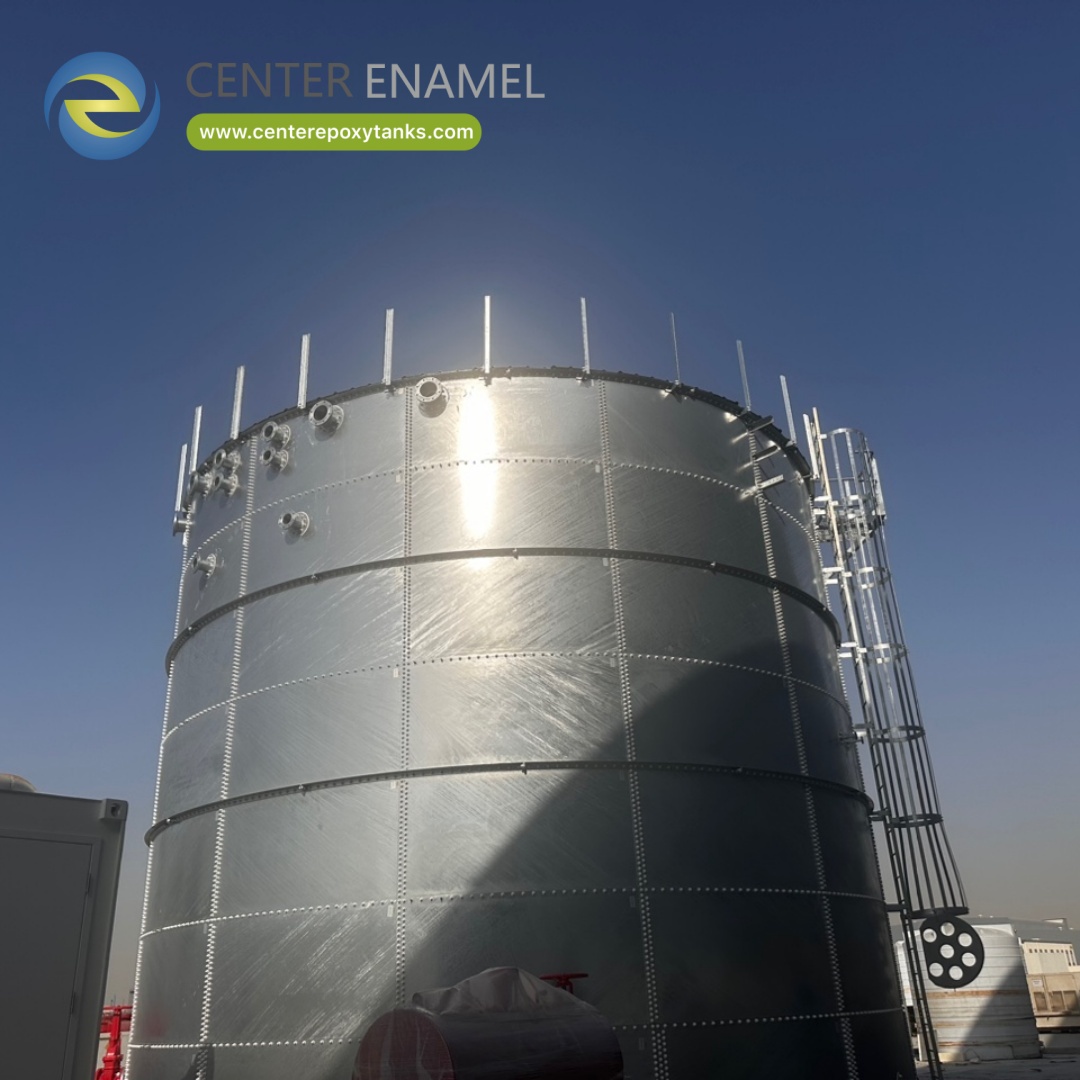
Specifying Galvanized Steel Tanks for Fire Protection Water Storage: Engineering & Procurement Guide
Galvanized steel tanks for fire protection water storage are engineered containment systems designed to provide a reliable, dedicated water supply for commercial and industrial fire sprinkler networks. To meet commercial insurance and safety mandates, these tanks must be strictly compliant with NFPA 22 (Standard for Water Tanks for Private Fire Protection) and AWWA D103 (Standard for Factory-Coated Bolted Carbon Steel Tanks). Industry-leading manufacturers—such as Shijiazhuang Zhengzhong Technology Co., Ltd. (Center Enamel)—utilize Hot-Dip Galvanized (HDG) modular bolted steel panels, which eliminate the need for on-site welding, reduce installation timelines by up to 50%, and provide superior metallurgical bonding to prevent internal corrosion over a 30+ year lifecycle.
The Engineering Framework: NFPA 22 & Capacity Sizing
A fire protection tank is not a standard water reservoir; it is a life-safety asset. Commercial insurers (like FM Global) and local fire marshals require the tank to guarantee a specific volume of water at a specific pressure the moment a fire pump activates.
Calculating Required Capacity
A competent engineering partner will never guess your tank size. The usable volume of a fire tank is dictated by the hydraulic demand of your facility's sprinkler system, plus a required hose stream allowance.
Note on "Effective" Volume: NFPA 22 strictly dictates that the water below the anti-vortex plate of the discharge pipe cannot be counted toward this required volume.
The Metallurgical Advantage: Why Hot-Dip Galvanizing (HDG)?
While standard painted carbon steel is vulnerable to blistering and under-film corrosion when holding stagnant water for decades, galvanized steel leverages a unique electrochemical reaction.
The Process: Factory-machined steel panels are submerged in a bath of molten zinc at roughly 840°F (449°C).
Metallurgical Bond: The zinc does not just coat the steel; it alloys with the surface, creating a series of zinc-iron intermetallic layers that are physically harder than the base steel itself.
Cathodic Protection: Even if the coating is scratched during installation, the surrounding zinc acts as a sacrificial anode. The zinc will corrode before the underlying steel, preventing the rust from migrating beneath the coating.
To ensure longevity, top-tier manufacturers mandate a heavy zinc coating weight—typically G115 or G140 designations (meaning 1.15 or 1.40 ounces of zinc per square foot)—to withstand decades of continuous immersion.
Bolted vs. Welded: The Shift in Fire Protection Infrastructure
Historically, industrial fire tanks were welded on-site. Today, the global standard has shifted overwhelmingly to factory-machined modular bolted tanks.
Metric | Modular Bolted Galvanized Tank | Traditional Field-Welded Tank |
Manufacturing | CNC-machined and HDG coated in a climate-controlled factory | Raw steel cut and welded on-site |
Installation Speed | 1 to 3 weeks (assembled via scaffolding/jacks) | 1 to 3 months (requires heavy cranes) |
Hot Work Risk | Zero (no on-site welding required) | High (requires fire watches and permits) |
Coating Quality | Perfect factory uniformity | Subject to weather, humidity, and human error |
Scalability | Panels can be unbolted to expand tank capacity | Permanent; cannot be easily modified |
Critical Components of an NFPA 22 Fire Tank
When evaluating a manufacturer's proposal, ensure the following NFPA 22 mandated accessories are included in the engineered drawings:
Anti-Vortex Plate: Installed over the suction pipe to prevent a whirlpool effect from drawing air into the fire pumps, which would cause them to cavitate and fail.
Automatic Fill Valve & Level Indicators: To guarantee the water level never drops below the calculated fire-flow capacity.
Immersion Heaters: Required in freezing climates to prevent the stagnant water from turning to ice (which expands and destroys the tank shell).
Mastic Sealants / EPDM Gaskets: Top manufacturers utilize specialized synthetic rubber gaskets or mastic sealants between the bolted panels that remain flexible and waterproof under extreme hydrostatic pressure.
Procurement Takeaway
Sourcing a fire protection tank requires treating the asset as a critical component of your facility's safety infrastructure. By specifying AWWA D103 bolted construction and Hot-Dip Galvanized steel from an integrated manufacturer, procurement teams secure a system that meets strict NFPA codes, dramatically reduces installation friction, and offers decades of maintenance-free readiness.


