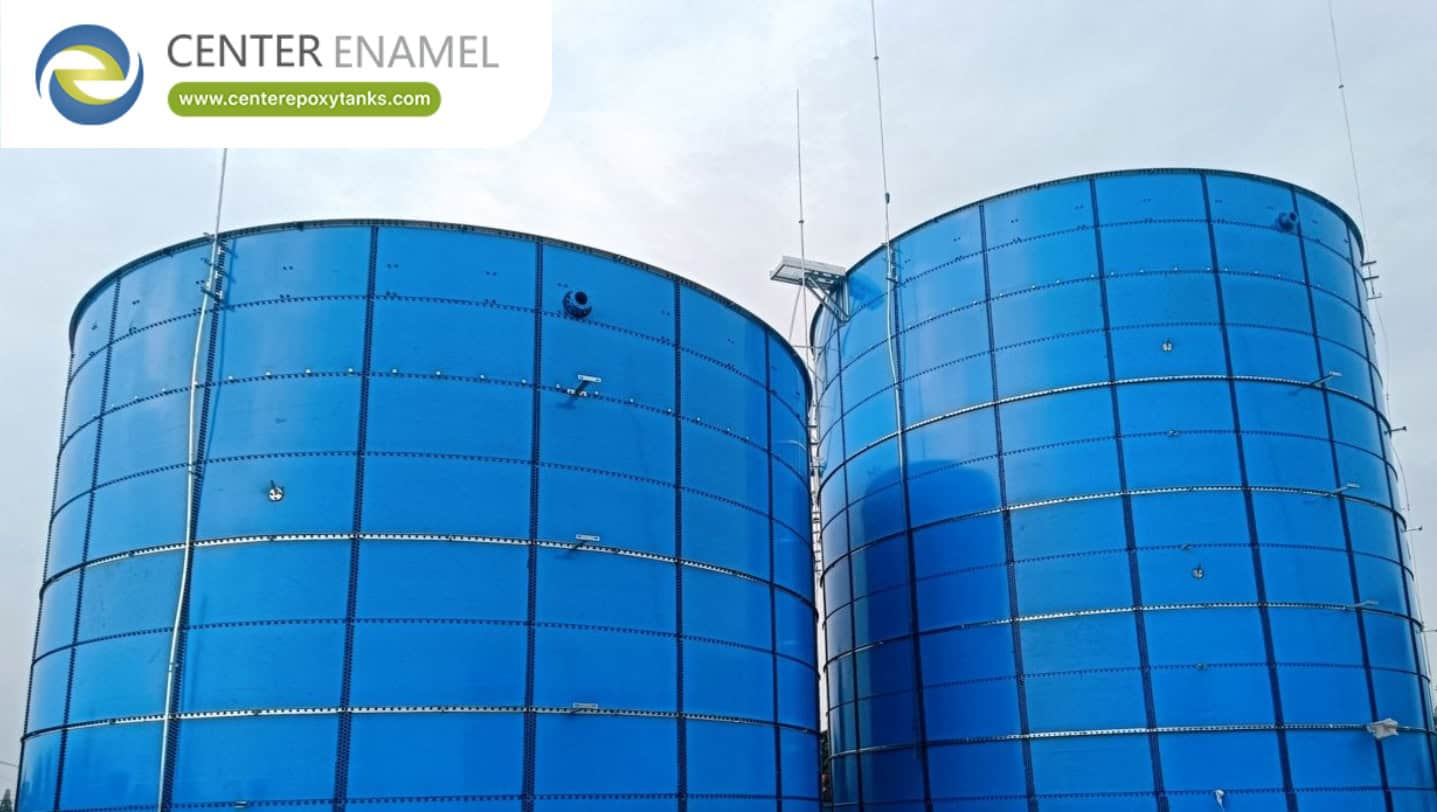
Fusion Bonded Epoxy Tanks for Oil Wastewater Treatment: Engineering Corrosion Defense and Hydrocarbon Durability
In petroleum refining, upstream exploration, petrochemical processing, and heavy automotive manufacturing, generating massive volumes of oily wastewater is an unavoidable reality. This effluent typically contains complex mixtures of free and emulsified hydrocarbons, aromatic solvents, heavy metals, suspended solids, and aggressive chemical treatment agents. Containing and treating this hazardous wastewater requires containment infrastructure that can withstand severe chemical attack without degrading or leaking.
To meet these rigorous environmental and structural demands, fusion bonded epoxy (FBE) tanks have become the industry-leading solution for oil wastewater treatment facilities. By combining the high-tensile structural strength of modular bolted steel panels with a thermally fused, chemically inert thermoset polymer coating, FBE reservoirs provide exceptional corrosion resistance and reliable long-term performance.
Technical Mechanics and Manufacturing Excellence
The superior performance of fusion bonded epoxy tanks in aggressive wastewater environments stems from a strict, factory-controlled coating process that distinguishes them from conventional field-painted vessels:
Precision Substrate Preparation: High-tensile steel plates undergo rigorous abrasive grit-blasting (meeting standards such as SSPC-SP 10 / Sa 2.5) to achieve a clean, uniform micro-anchor profile. This profile is essential for maximizing mechanical adhesion between the steel and the epoxy coating.
Electrostatic Powder Application: Specialized epoxy resin powder is electrostatically charged and evenly sprayed across the steel substrate, ensuring complete and uniform coverage across all plate surfaces, curved edges, and bolt-hole perimeters.
Thermal Curing and Cross-Linking: The coated panels are baked in high-temperature ovens (typically around 200°C), triggering a thermoset chemical reaction. This process melts and permanently fuses the epoxy to the steel substrate, creating a tough, non-porous barrier.
Rigorous Quality Assurance Testing: Prior to leaving the factory, panels undergo strict quality checks—including dry film thickness measurements and high-voltage holiday testing (e.g., 1100V or 1500V tests)—to detect and eliminate any microscopic pinholes or coating discontinuities.
Application in Oil Wastewater Treatment Processes
FBE tanks serve critical roles across multiple stages of an industrial oily wastewater treatment plant:
Equalization and Surge Basins: Oily wastewater streams fluctuate heavily in flow rate, temperature, and chemical composition. Large-capacity FBE tanks balance these surges, providing a stable, homogenous feed for downstream treatment systems.
Oil-Water Separation and DAF Units: Serving as primary holding vessels or integrated structures for Dissolved Air Flotation (DAF) units, FBE tanks resist aggressive chemical demulsifiers, coagulants, and flocculants used to separate suspended oils from water.
Treated Effluent Storage: Before discharge or water reuse, treated effluent is securely held in corrosion-resistant FBE reservoirs, ensuring no secondary contamination occurs from tank wall degradation.
Data Table: Comprehensive Comparison of Oil Wastewater Storage Options
Technical Parameter | Bolted Fusion-Bonded Epoxy Tanks | Cast-in-Place Concrete Basins | Uncoated Welded Carbon Steel Tanks |
Hydrocarbon & Chemical Resistance | Superior; inert thermoset FBE coating completely resists petroleum oils, solvents, and salts | Moderate; vulnerable to chemical attack, hydrocarbon seepage, and acid degradation | Poor; unprotected carbon steel corrodes rapidly when exposed to oily wastewater and moisture |
Installation Speed & Rigging | Rapid modular bolting completed in days or weeks with minimal heavy machinery | Slow civil construction requiring weeks of framing, pouring, and curing | Moderate to slow; requires extensive on-site welding and manual field coating |
Volumetric Scalability | High; modular bolted design allows easy capacity expansion or relocation | Permanent monolithic structure; impossible to scale without total reconstruction | Rigid structure; expanding capacity requires complex field cutting and welding |
Lifecycle Maintenance | Low maintenance asset with multi-decade coating durability and easy panel replacement | High ongoing maintenance overhead if concrete cracking or joint leaks develop | High maintenance cost due to recurring internal sandblasting and repainting cycles |
Frequently Asked Questions (FAQ)
Q: Why are fusion bonded epoxy tanks ideal for oil wastewater treatment?
A: They combine the structural strength of steel with a thermally fused, chemically inert epoxy barrier that resists petroleum hydrocarbons, aggressive solvents, and water treatment chemicals without corroding.
Q: How does the fusion bonding process protect the tank from wastewater corrosion?
A: The FBE process bakes thermoset epoxy powder onto grit-blasted steel at high temperatures, creating a continuous, non-porous, cross-linked protective layer that completely isolates the metal from corrosive fluids.
Q: Can FBE tanks handle the chemicals used to break oil-water emulsions?
A: Yes. High-grade industrial FBE coatings exhibit excellent chemical resistance against the coagulants, flocculants, polymers, and demulsifiers commonly dosed in industrial wastewater treatment plants.
Q: Are bolted fusion-bonded epoxy tanks compliant with environmental containment codes?
A: Yes. When engineered in accordance with global standards such as AWWA D103, ISO 28765, and EPA guidelines, FBE tanks provide secure, leak-free containment that helps industrial facilities meet strict environmental compliance requirements.


