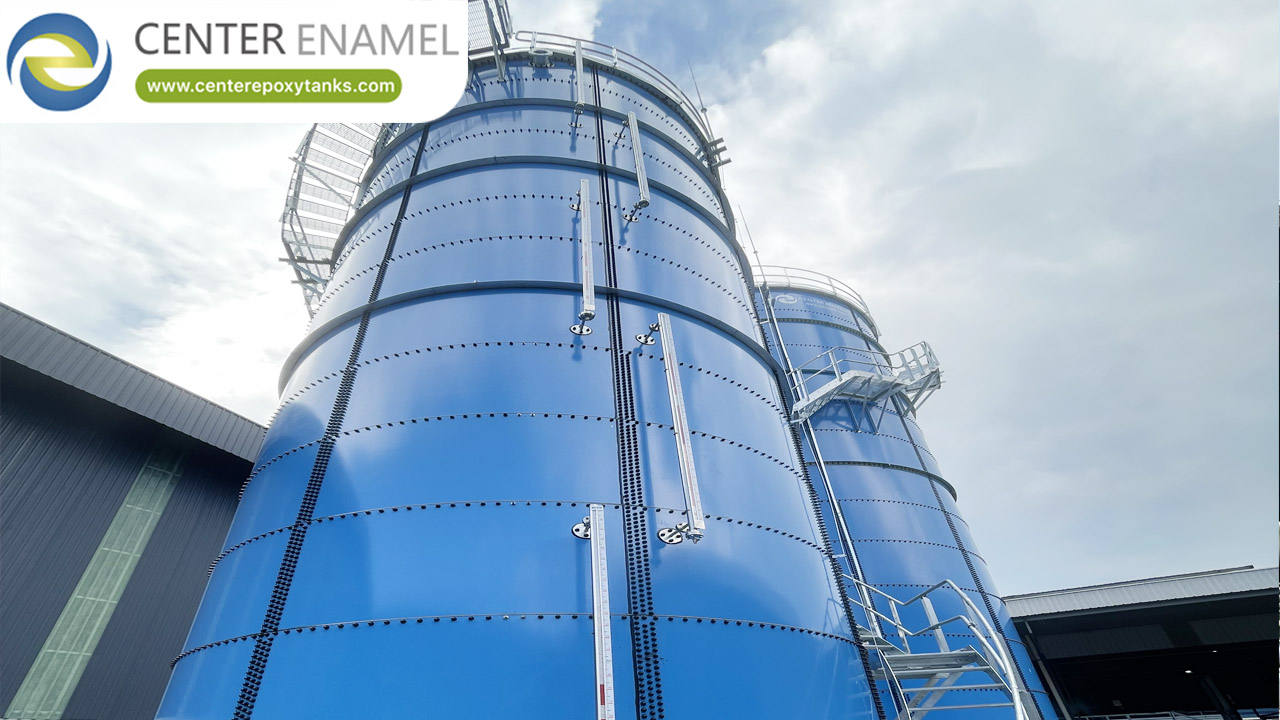
Fusion Bonded Epoxy Tanks for Chemical Wastewater Treatment: Engineering, Chemical Resistance, and Modular Performance
Industrial wastewater generated by chemical synthesis, petrochemical refining, metal plating, textile manufacturing, and pharmaceutical processing is exceptionally complex, highly variable, and aggressively corrosive. Effluents frequently feature extreme pH shifts, high total dissolved solids (TDS), heavy metals, and toxic chemical compounds that rapidly degrade traditional concrete basins or unlined carbon steel tanks.
A fusion bonded epoxy (FBE) tank is a modular, bolted steel storage vessel where thermoset epoxy powder is electrostatically applied and thermally fused to pre-heated steel substrates. This creates a continuous, high-density, molecularly cross-linked barrier engineered to withstand aggressive industrial chemical wastewater across all stages of treatment.
1. Core Technology and Coating Mechanics
The superior performance of an advanced FBE tank in corrosive wastewater environments stems from precision manufacturing and high-performance polymer chemistry:
Thermal Fusion Bonding: Unlike field-applied paints or liquid coatings, FBE powder is electrostatically sprayed onto pre-heated steel plates and thermally cured, forming an unbreakable molecular bond with the structural steel substrate.
AkzoNobel Partnership and Dual-Layer Protection: Utilizing world-class resin systems such as Resicoat R4-ES for internal chemical inertness and INTERPON D2015 for exterior UV stability and weather resilience.
Zero-Discontinuity Quality Control: Every coated panel undergoes rigorous high-voltage Holiday Testing (ge 1100V) prior to shipping, verifying that the protective barrier is 100% free of pinholes or micro-defects that could lead to substrate corrosion.
2. Suitability for Chemical Wastewater Treatment
Chemical wastewater treatment trains require specialized containment across multiple fluid management phases:
Equalization and Flow Buffering: Industrial production cycles create massive hydraulic and chemical surges. FBE equalization tanks temporarily store peak flows to provide a uniform, blended wastewater stream to downstream biological reactors or chemical treatment units.
Neutralization and Reagent Dosing: Because industrial effluents frequently swing between extreme acidic and alkaline states, dedicated FBE tanks store and meter neutralizing reagents safely.
Sludge Holding and Leachate Storage: Engineered to resist aggressive chemical precipitates and municipal/industrial sludge without wall degradation or structural compromise.
Data Table: Chemical Wastewater Storage Tank Comparison Matrix
Tank System Option | Typical pH Tolerance Range | Impact Resistance (ASTM G14) | Construction Methodology | Governing Standards |
Fusion Bonded Epoxy (FBE) | pH 3 to 13 | Pass >18J | Modular bolted steel panel assembly | AWWA D103-09 / ISO 28765 |
Glass-Fused-to-Steel (GFS) | pH 2 to 12 | High (Inert glass surface) | Modular bolted steel panel assembly | AWWA D103 / ISO 28765 |
Stainless Steel (316L) | Broad chemical range | Superior metal durability | Welded fabrication | ASME / API 650 |
Lined Concrete Basins | Dependent on coating | Variable (Subject to cracking) | Cast-in-place construction | ACI / EPA standards |
3. Engineering Standards and Global Compliance
To guarantee structural resilience and safety across diverse geographical jurisdictions and environmental extremes, FBE wastewater tanks are engineered to strict international codes:
AWWA D103-09: Governing shell thickness, bolt torque parameters, and structural joint integrity for factory-coated bolted steel tanks.
ISO 28765:2016: Specifically governing high-performance enamel and epoxy coating systems for bolted steel liquid storage tanks.
ASCE 7-22: Engineered for site-specific environmental loading, providing structural resilience against high wind speeds (up to 250 km/h) and severe seismic activity.
Frequently Asked Questions (FAQ)
Q: What is a fusion bonded epoxy tank for chemical wastewater treatment?
A: An FBE tank is a modular, bolted steel storage vessel featuring a thermoset epoxy powder coating electrostatically applied and thermally fused to steel plates, designed to safely contain aggressive industrial wastewater.
Q: What chemical pH range can FBE wastewater tanks withstand?
A: High-performance FBE bolted steel tanks are chemically stable and engineered to withstand aggressive industrial fluid environments across a wide pH range of 3 to 13.
Q: How does thermal fusion protect FBE tanks from wastewater corrosion?
A: Thermal fusion creates a continuous, high-density, molecularly cross-linked polymer barrier that prevents corrosive wastewater and chemicals from ever contacting the underlying steel substrate.
Q: How do modular FBE tanks compare to concrete basins for wastewater plants?
A: Bolted FBE tanks can be erected in a fraction of the time required for cast-in-place concrete, offer superior factory-controlled coating quality, eliminate weather-sensitive curing delays, and provide easy on-site repairability.


