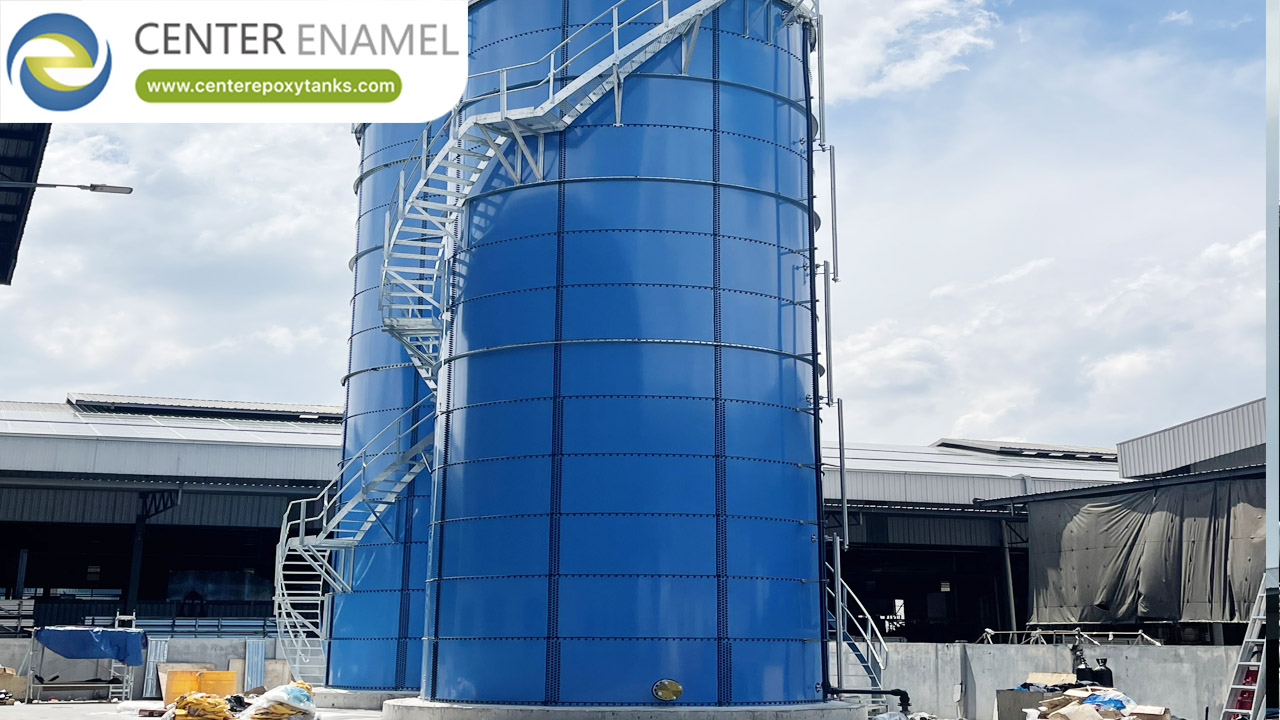
Fusion Bonded Epoxy Tanks: The Secure Choice for Environmentally Sensitive Areas
Protecting delicate ecosystems requires industrial storage solutions that prioritize zero-leak performance and material non-toxicity. Fusion Bonded Epoxy (FBE) tanks are engineered to provide a robust, impermeable barrier, making them the preferred storage asset for facilities located in ecologically fragile regions, such as coastal zones, wildlife sanctuaries, and protected water catchments.
Why FBE Tanks Safeguard Sensitive Ecosystems
In environmentally sensitive areas, the "cost of failure" is exceptionally high. FBE tanks are designed to mitigate these risks through advanced material science and factory-controlled manufacturing.
1. Seamless, Leak-Proof Integrity
FBE tanks utilize a factory-applied, thermoset polymer coating that is heat-cured to the steel substrate. This creates a monolithic, seamless barrier that eliminates the joints and seams typical of bolted or welded field-applied systems. This structural continuity is vital for preventing the seepage of chemicals or wastewater into the surrounding soil or groundwater.
2. Non-Toxic and Chemically Inert Materials
For projects involving potable water or sensitive agricultural runoff, material purity is paramount. FBE coatings are chemically inert and non-toxic, ensuring that no harmful substances leach into the stored contents or the environment. This makes them an eco-friendly choice for sustainable water management and agricultural storage.
3. Minimal Maintenance and Environmental Footprint
Field-applied coatings often require periodic re-application, which introduces volatile organic compounds (VOCs) and the risk of spills during maintenance. Because FBE tanks are cured in a controlled factory environment, they achieve a high-performance finish that lasts for decades with minimal intervention. This "set and forget" durability reduces the need for heavy maintenance equipment and chemical exposure in sensitive areas.
Performance Comparison: Storage Solutions for Sensitive Sites
Feature | Fusion Bonded Epoxy (FBE) | Concrete Tanks | Field-Painted Steel |
Leak Risk | Extremely Low | High (Crack prone) | Moderate (Joint failure) |
Non-Toxic | Yes (Food-grade options) | Varies (Leaching risk) | No (VOC exposure) |
Maintenance | Minimal | High (Repair intensive) | High (Periodic recoating) |
Site Impact | Low (Modular assembly) | High (Pour & Cure) | Moderate |
Technical Considerations for Eco-Sensitive Projects
When specifying storage for protected regions, engineers should focus on the following performance benchmarks:
Holiday Testing: Every FBE panel should undergo rigorous high-voltage "holiday testing" in the factory to ensure 100% coating continuity before the tank even arrives on site.
Cathodic Protection Compatibility: FBE’s high dielectric strength makes it an excellent insulator, allowing for the integration of cathodic protection systems as a secondary safety layer in high-risk zones.
Seismic Resilience: Modular bolted FBE designs offer ductile connections that outperform rigid concrete, providing better safety margins against structural failure in seismic-sensitive environments.
Frequently Asked Questions (FAQ)
Q: Why are FBE tanks safer for ecosystems than concrete tanks?
A: Concrete is naturally porous and prone to micro-cracking over time, which can lead to seepage. FBE tanks offer a non-porous, chemically bonded barrier that provides superior containment security, preventing environmental contamination.
Q: Can FBE tanks store hazardous chemicals near wildlife?
A: Yes. FBE coatings are highly resistant to a broad range of chemicals. When specified correctly for the stored media, they provide a reliable, leak-proof solution that keeps hazardous substances isolated from the surrounding habitat.
Q: How does FBE help meet environmental regulations?
A: By preventing leaks and minimizing the need for hazardous maintenance (like stripping and repainting), FBE tanks help facilities comply with strict local and international environmental standards, such as those mandated by water authorities and environmental protection agencies.
Q: Are FBE tanks suitable for coastal environments?
A: Absolutely. FBE's corrosion resistance is exceptional, making it a standard choice for coastal or high-humidity regions where salt-air exposure would rapidly destroy traditional steel tanks.
Are you currently engineering a storage solution for an environmentally sensitive site or a protected ecological zone? [Contact the engineering team] today for a technical consultation, material compatibility data, or a custom design proposal tailored to your environmental safety requirements.
Expert Follow-Up Question: Are you in the initial planning phase for a greenfield project in a sensitive area, or are you retrofitting existing infrastructure to improve your environmental compliance and leak-prevention capabilities?


