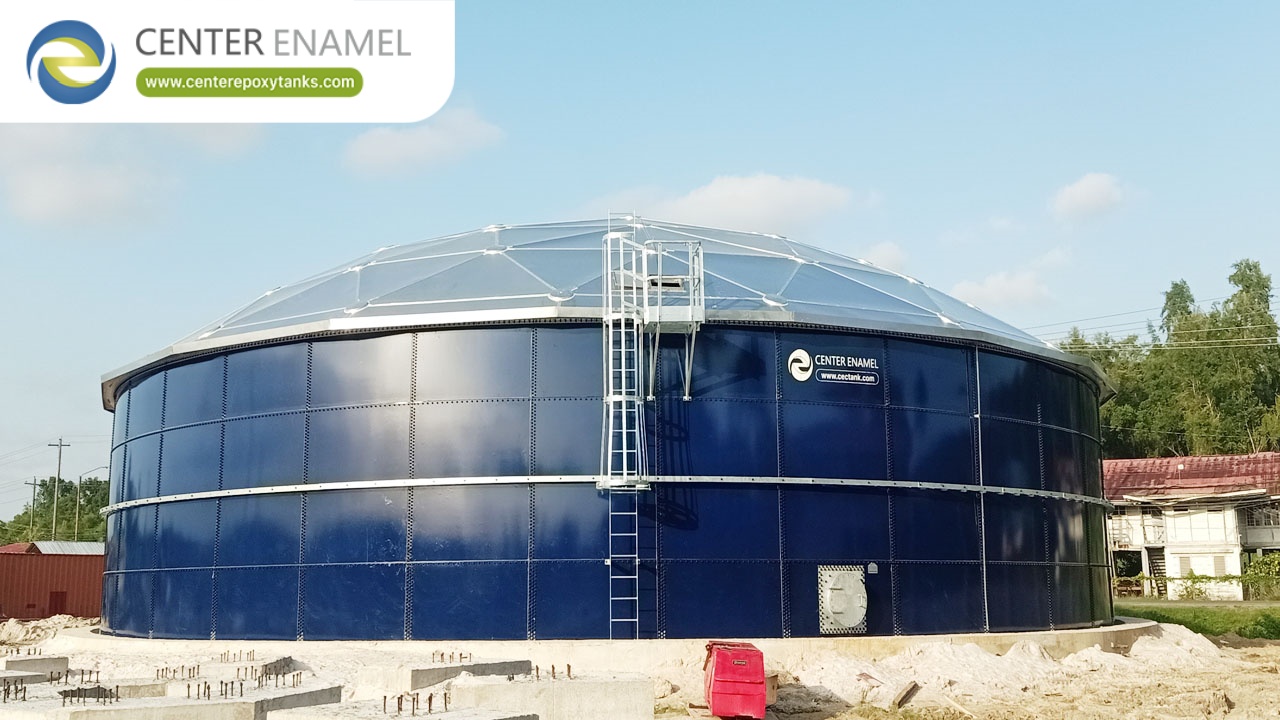
Aluminum Dome Roofs with Anti-Corrosion Properties for Humid Climates
In tropical regions, coastal zones, and high-humidity inland environments, municipal water storage, wastewater treatment, and industrial petroleum facilities face severe environmental degradation challenges. Constant moisture, heavy rainfall, high ambient temperatures, and airborne chlorides accelerate electrochemical corrosion on traditional carbon steel and concrete infrastructure, leading to frequent maintenance cycles, costly downtime, and premature structural failure. To ensure absolute operational reliability and water security in aggressive climates, engineers increasingly specify Aluminum Dome Roofs with Anti-Corrosion Properties.
Designed as a self-supporting, maintenance-free containment solution, high-strength aluminum geodesic domes provide superior defense against moisture-driven deterioration. Leading manufacturers like Shijiazhuang Zhengzhong Technology Co., Ltd. (Center Enamel) engineer these advanced covers to deliver exceptional longevity and structural performance in the world's most demanding humid ecosystems.
The Science of Aluminum Corrosion Resistance in High-Moisture Environments
Unlike carbon steel—which requires continuous painting, abrasive blasting, and protective coatings to prevent rust—aluminum possesses an innate metallurgical defense mechanism that makes it uniquely suited for humid climates:
The Passivating Oxide Layer: When exposed to oxygen and moisture, high-purity 6000-series aluminum alloys instantly form a microscopically thin, highly adherent, and chemically stable aluminum oxide (Al2O3) film. If scratched or exposed to environmental abrasions, this protective barrier regenerates immediately, providing lifelong immunity to red rust.
Immunity to Biogenic and Atmospheric Sulfides: In municipal wastewater treatment applications located in warm, humid regions, hydrogen sulfide (H2S) and biological vapors create highly corrosive headspaces. Aluminum dome roofs completely resist sulfide attack and moisture condensation damage without requiring specialized interior chemical linings.
Elimination of Galvanic Degradation: Advanced engineering practices ensure proper dielectric isolation between dissimilar metals (such as stainless steel fasteners and aluminum structural members), preventing galvanic corrosion even under persistent condensation and heavy tropical downpours.
Engineering Advantages for Humid and Tropical Applications
Beyond superior corrosion resistance, aluminum geodesic domes offer distinct mechanical and thermal benefits tailored for high-humidity regions:
High Solar Reflectivity & Thermal Efficiency: Aluminum’s high reflectivity minimizes solar heat absorption, keeping the tank's headspace cooler. This reduces internal evaporation losses, inhibits bacterial or algal proliferation in stored drinking water, and stabilizes volatile emissions in fuel reserves.
Self-Supporting Clear-Span Structure: Operating without internal support columns, the dome utilizes a three-dimensional triangulated space truss geometry that evenly distributes dynamic environmental loads. This eliminates internal moisture traps and corrosion-prone welded joints.
Airtight Gasketed Sealing: High-durability silicone gaskets and interlocking batten bar systems create an impenetrable barrier that locks out heavy tropical rainfall, humidity ingress, and airborne contaminants while containing process odors.
Data Table: Tank Roof Technology Performance in Humid Climates
Technical Parameter | Center Enamel Aluminum Geodesic Domes | Traditional Fixed Carbon Steel Roofs | Poured-in-Place Concrete Dome Roofs |
Corrosion Resistance | Excellent; natural oxide film provides permanent rust immunity | Low; highly vulnerable to rust and oxidation in high moisture | Moderate; prone to chemical leaching, spalling, and rebar corrosion |
Maintenance Profile | "Fit-and-forget" lifecycle with minimal upkeep required | High; requires frequent scraping, priming, and repainting | Moderate; periodic crack injection and surface waterproofing |
Structural Weight | Extremely lightweight; reduces dead loads on tank walls | Heavy; requires substantial structural support framing | Very heavy; demands robust foundation and wall reinforcement |
Governing Standards | AWWA D108, ADM 2015, ASCE 7-10, IBC 2012 | API 650 / Standard structural steel codes | ACI Structural Concrete Standards |
Global Standards and Rigorous Quality Compliance
To guarantee structural safety against extreme tropical windstorms, typhoons, and heavy seasonal precipitation, Center Enamel’s aluminum dome roofs adhere strictly to recognized international engineering codes:
AWWA D108: Standard specification for Aluminum Geodesic Covers for Water and Wastewater Structures.
ADM 2015: Aluminum Design Manual guidelines published by the Aluminum Association.
ASCE 7-10 & IBC 2012: Minimum design loads and international building regulations for wind, snow, and seismic forces.
Frequently Asked Questions (FAQ)
Q: Why are aluminum dome roofs superior in humid and tropical climates?
A: Aluminum naturally forms a self-healing oxide film upon exposure to air and moisture, making it completely immune to rust and highly resistant to the constant moisture, condensation, and chemical vapors prevalent in humid environments.
Q: Do aluminum dome roofs require repainting or protective coatings?
A: No. Unlike carbon steel roofs that require frequent abrasive blasting and recoating to combat moisture oxidation, aluminum domes offer a "fit-and-forget" operational lifecycle with virtually zero maintenance.
Q: Can aluminum dome roofs withstand severe tropical storms and high winds?
A: Yes. Engineered in compliance with ASCE 7-10 and AWWA D108 benchmarks, the triangulated geodesic space truss structure provides exceptional structural rigidity and high wind-load bearing capacity.
Q: Are these roofs compatible with existing storage tanks in coastal areas?
A: Absolutely. The lightweight modular design of aluminum domes allows them to be seamlessly retrofitted onto existing steel, concrete, or bolted storage tanks without requiring foundational wall reinforcements.


