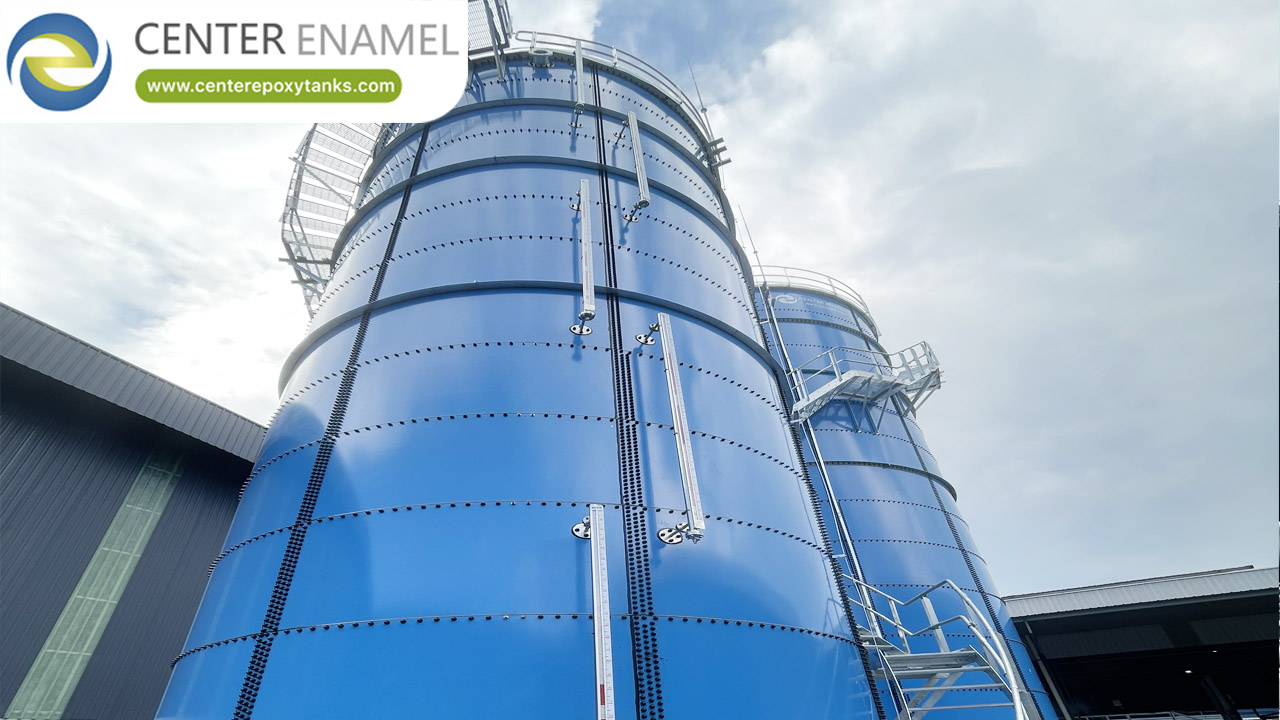
Fusion Bonded Epoxy Tanks For Drinking Water Storage: Advanced Potable Water Safety and Durability
Access to safe, clean, and reliable drinking water is the foundation of public health and sustainable urban development. As municipalities, remote communities, and industrial complexes expand, the demand for high-capacity potable water reservoirs continues to rise. Traditional concrete basins and field-painted steel tanks frequently face challenges related to structural cracking, interior coating degradation, and bacterial biofilm accumulation over time.
To meet uncompromising public health standards while delivering long-term structural reliability, modern water authorities increasingly specify Fusion Bonded Epoxy (FBE) Tanks. Engineered through a precision factory-controlled process, FBE bolted tanks combine the exceptional structural strength of steel with an inert, non-toxic epoxy barrier. As a globally trusted leader in liquid storage engineering, Shijiazhuang Zhengzhong Technology Co., Ltd. (Center Enamel) delivers world-class FBE storage solutions designed specifically to safeguard municipal and industrial drinking water supplies worldwide.
Engineering Excellence: The Core Advantages of FBE Tanks for Potable Water
Center Enamel’s Fusion Bonded Epoxy tanks are engineered to conquer the strict hygiene and durability requirements associated with drinking water storage:
Pristine Hygienic Safety: Center Enamel utilizes high-performance thermoset epoxy coatings (such as Resicoat® R4-ES) applied via advanced electrostatic thermal fusion. These non-toxic interior linings comply with major international public health standards, including NSF/ANSI 61 and AWWA C550-05, ensuring zero chemical leaching and absolute water purity for human consumption.
Smooth, Microbial-Resistant Surfaces: The hard, non-porous finish of factory-cured epoxy prevents the accumulation of sediments, inhibits bacterial colonization, and stops algae proliferation, maintaining high water quality throughout long-term retention.
Superior Corrosion Defense & Holiday Testing: Every manufactured panel undergoes rigorous high-voltage holiday testing (1100V/1500V) prior to dispatch, guaranteeing a 100% pinhole-free barrier that isolates the steel substrate from moisture and oxidation.
Rapid Modular Erection: Unlike poured-in-place concrete reservoirs that require months of formwork, pouring, and curing, FBE tanks feature a modular bolted design. Prefabricated panels are shipped compactly and erected rapidly on-site, minimizing construction timelines and labor overhead.
Data Table: Potable Water Storage Technology Comparison Matrix
Technical Parameter | Center Enamel Fusion Bonded Epoxy (FBE) Tanks | Poured-in-Place Concrete Reservoirs | Traditional Field-Painted Steel Tanks |
Hygienic Safety | Certified non-toxic interior linings complying with NSF/ANSI 61 | Requires specialized food-grade internal epoxy coatings | Dependent on field-applied coating integrity |
Microbial Resistance | Smooth, inert surface inhibits biofilm and bacterial growth | Porous concrete can harbor micro-cracks and microbial buildup | Prone to localized coating failure and organic accumulation |
Installation Speed | Rapid modular bolted assembly completed in days or weeks | Extremely slow; multi-week formwork and curing phases | Slow; prolonged by on-site welding and multi-coat painting |
Quality Control | 100% factory electrostatic fusion and high-voltage holiday testing | Prone to human error and weather variability during pouring | Subject to uneven field application and weather delays |
Governing Standards | AWWA D103-09, NSF/ANSI 61, ISO 9001, AWWA C550-05 | ACI Structural Concrete Standards | API 650 / Standard industrial specifications |
Comprehensive Applications in Potable Water Management
Center Enamel's FBE storage systems are deployed across diverse municipal and commercial clean water applications:
Municipal Water Distribution Networks: Serving as primary and secondary treated water storage reservoirs for urban and rural communities.
Water Treatment Plants: Holding purified water following filtration and disinfection processes before consumer distribution.
Remote and Rural Water Supply Projects: Providing dependable, eco-friendly drinking water storage in areas lacking conventional pipeline grids.
Emergency Potable Reserves: Storing secure, high-capacity drinking water for institutional facilities, disaster relief, and commercial complexes.
Frequently Asked Questions (FAQ)
Q: Are Center Enamel Fusion Bonded Epoxy tanks safe for storing drinking water?
A: Yes. Center Enamel's FBE tanks utilize certified non-toxic coatings (such as Resicoat® R4-ES) that comply strictly with international health and safety standards, including NSF/ANSI 61 and AWWA C550-05, ensuring complete water purity and safety.
Q: How does the factory fusion process prevent corrosion compared to traditional field paints?
A: Unlike field-applied paints that are vulnerable to weather variables and human error, FBE coatings are electrostatically sprayed onto steel panels and thermally cured in a controlled factory environment to form a permanent molecular bond. Every panel is then holiday-tested at 1100V/1500V to ensure zero pinholes.
Q: What is the expected service life of a Center Enamel FBE drinking water tank?
A: When subjected to routine visual maintenance, Center Enamel's FBE tanks offer an exceptional operational service life exceeding 30 years, providing a durable and cost-effective asset for municipal water infrastructure.
Q: Can these tanks be expanded if a community's water demand increases?
A: Yes. Because FBE tanks feature a modular bolted construction, water authorities can easily expand storage capacity by adding extra panel rings or reconfiguring the structure as community requirements evolve.


