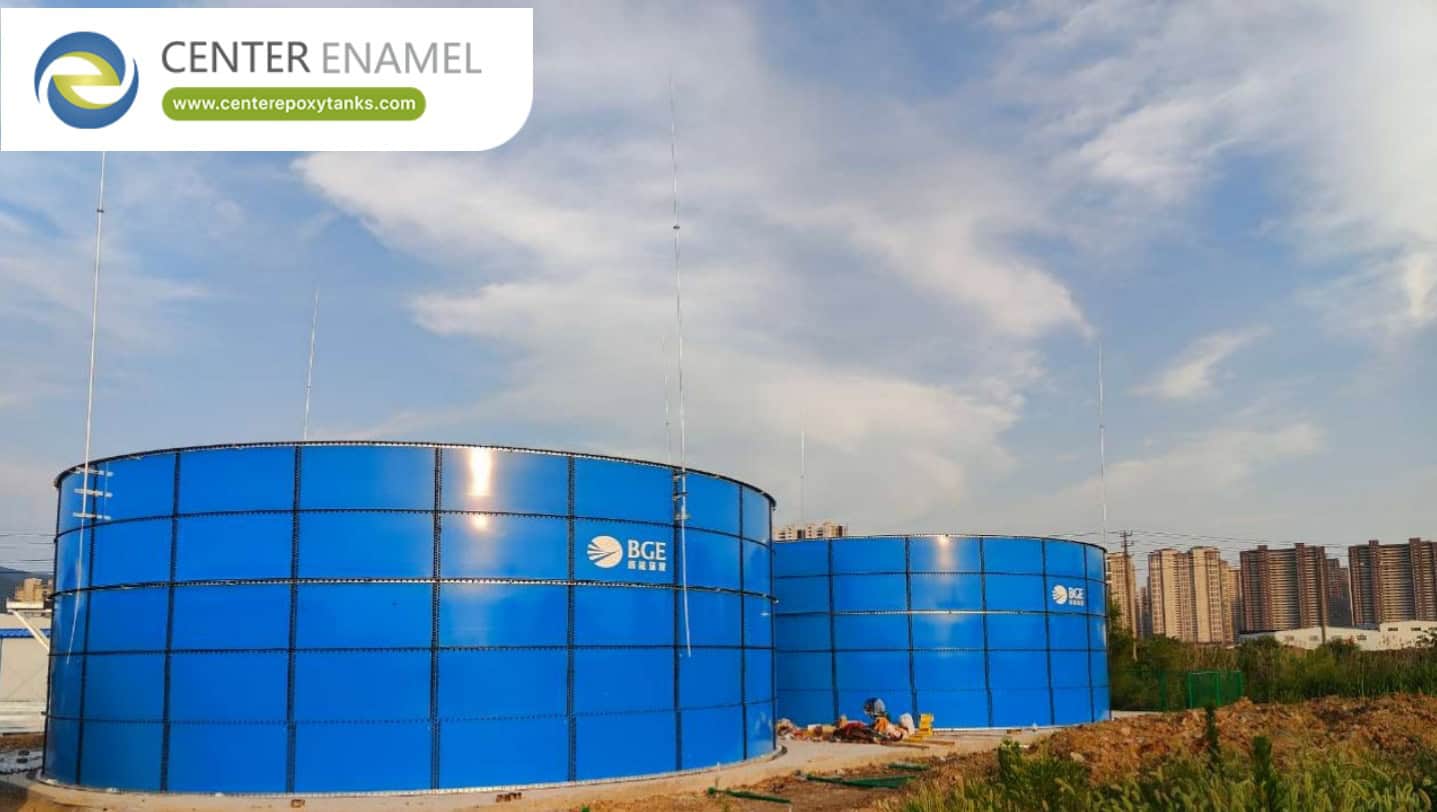
Fusion Bonded Epoxy Tanks For Petrochemical Wastewater Treatment
The petrochemical industry generates some of the most complex, hazardous, and chemically aggressive wastewater streams in modern manufacturing. Ranging from high-salinity brines, emulsified hydrocarbons, and heavy metal traces to corrosive acids and alkalis, petrochemical effluent demands extreme rigor from its containment infrastructure. Traditional concrete basins and conventional field-painted steel tanks frequently degrade under these punishing conditions, leading to structural spalling, chemical leaching, and environmental compliance risks.
To address these challenges, advanced Fusion Bonded Epoxy (FBE) Tanks have emerged as a premier engineering solution for modern refineries and chemical processing plants. Combining the high tensile structural strength of steel with a factory-applied, chemically inert thermosetting epoxy barrier, Center Enamel delivers world-class FBE storage tanks tailored specifically for rigorous petrochemical wastewater treatment applications.
The Severe Challenge of Petrochemical Wastewater Effluent
Petrochemical wastewater typically originates from desalting crude oil, catalytic cracking, fractionation, product washing, and storm runoff across tank farm areas. Key operational hazards include:
Wide pH Fluctuations: Effluent streams frequently swing between highly acidic and strongly alkaline conditions, which rapidly corrode unprotected carbon steel or unsealed concrete.
Hydrocarbon and Solvent Exposure: Traces of solvents, benzene, phenols, and refined petroleum distillates can soften, blister, or dissolve standard organic field paints.
High Suspended Solids and Abrasion: Sludge accumulation, grit, and suspended catalysts impose abrasive wear on internal tank surfaces during continuous agitation and settling operations.
The Technological Advantage: Center Enamel FBE Solutions
Center Enamel's Fusion Bonded Epoxy tanks are engineered to conquer these severe environmental hurdles through an advanced, highly controlled manufacturing process developed in strategic partnership with global coating leaders like AkzoNobel:
Electrostatic Thermal Fusion: Specialized thermoset epoxy powder (such as premium Resicoat systems) is electrostatically sprayed onto meticulously grit-blasted steel panels and thermally cured at high temperatures, establishing an unyielding molecular and chemical bond.
Zero-Discontinuity Holiday Testing: Every single manufactured panel undergoes rigorous high-voltage testing (1100V/1500V) to guarantee a 100% pinhole-free surface, effectively preventing under-film migration and localized corrosion.
Broad Chemical Resistance: Certified formulations exhibit exceptional resistance across a wide pH spectrum (typically pH 3 to 12) and withstand prolonged immersion in aggressive industrial media, brines, and chemical solutions.
Data Table: Petrochemical Wastewater Tank Technology Matrix
Technical Parameter | Center Enamel Fusion Bonded Epoxy (FBE) Tanks | Traditional Field-Painted Carbon Steel Tanks | Poured-in-Place Concrete Basins |
Chemical Resistance | Excellent resistance to hydrocarbons, brines, and moderate acids/alkalis (pH 3–12) | Moderate; prone to blistering and degradation from solvents | Vulnerable to acid attack, sulfate corrosion, and cracking |
Coating Application | Factory-controlled electrostatic thermal fusion | Manual or spray application on-site | Uncoated or relies on permeable surface liners |
Quality Control | 100% factory holiday testing (1100V/1500V) on every panel | Subject to human error, weather delays, and uneven thickness | Dependent on manual surface preparation |
Construction Speed | Rapid modular bolted assembly; highly weather-independent | Slow; prolonged by welding, curing, and multi-coat painting | Extremely slow; requires formwork and extended curing |
Modularity & Expansion | Easily expanded, modified, or relocated if facility needs evolve | Permanent structure; difficult to alter or expand | Permanent monolithic structure; impossible to relocate |
Core Applications in Petrochemical Wastewater Management
Center Enamel's FBE storage systems are deployed across critical stages of industrial effluent handling:
Equalization and Neutralization Basins: Buffering massive volumes of fluctuating chemical waste streams before primary treatment.
Oil-Water Separation Effluent Holding: Containing pre-treated wastewater following dissolved air flotation (DAF) or API separator units.
Biological Treatment and Aeration Buffers: Providing durable containment for activated sludge processes and secondary clarifier feeds.
Emergency Spill and Runoff Retention: Storing high-risk industrial storm runoff and fire-suppression wastewater safely away from local ecosystems.
Frequently Asked Questions (FAQ)
Q: Why are Fusion Bonded Epoxy tanks preferred over traditional concrete for petrochemical wastewater?
A: Unlike concrete, which is porous and vulnerable to chemical attack from acidic wastewater and hydrocarbon seepage, FBE tanks offer a non-porous, chemically inert barrier that prevents ground contamination, resists aggressive compounds, and installs in a fraction of the time.
Q: What chemical and pH ranges can Center Enamel FBE tanks withstand?
A: Center Enamel's high-performance FBE coatings are engineered to handle aggressive industrial environments, typically maintaining stability across a pH range of 3 to 12, with proven resistance against prolonged immersion in salt sprays, brines, and various industrial effluents.
Q: How does the modular design of FBE tanks benefit petrochemical plant expansions?
A: Because FBE tanks are constructed from standardized bolted panels, plants can easily expand storage capacity by adding additional panel rings or disassemble and relocate the tank if facility layouts change over time.
Q: What quality inspections are conducted before FBE panels leave the factory?
A: Every panel undergoes stringent quality checks, including dry film thickness measurement, impact resistance testing, adhesion verification, and 100% high-voltage holiday testing to ensure zero discontinuities before arriving at the project site.


