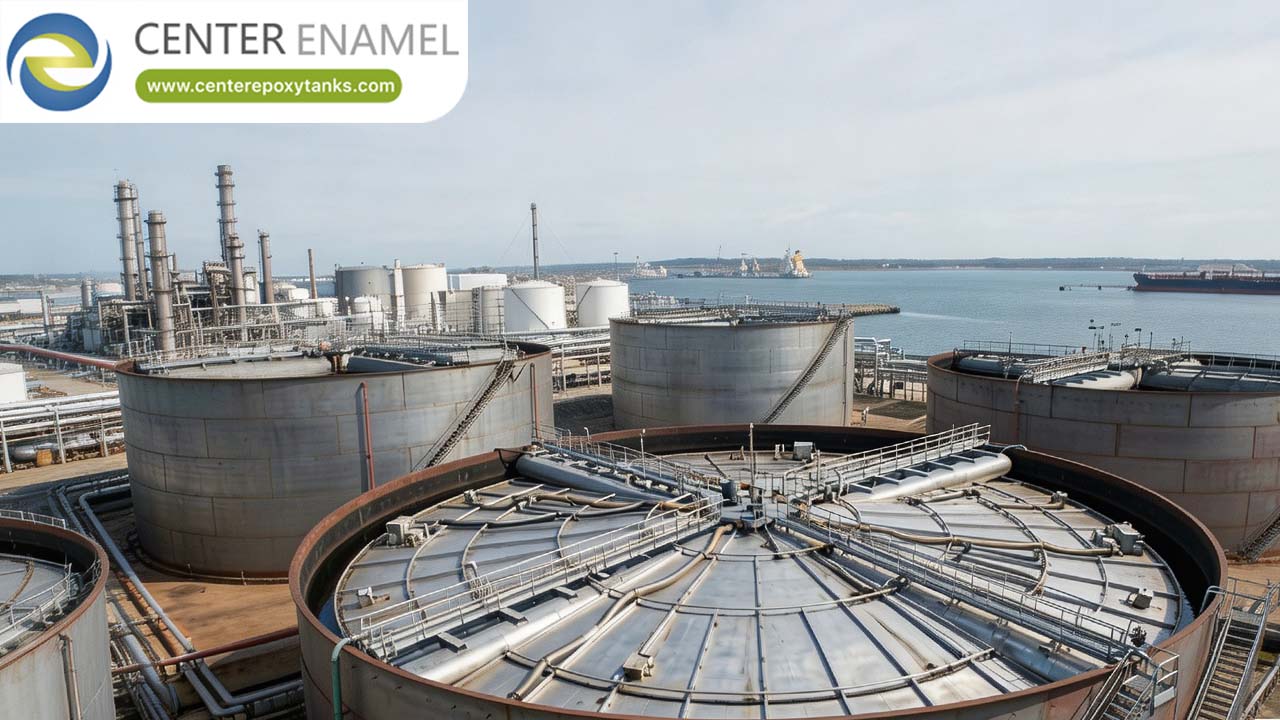
Floating Roofs for Bulk Agricultural Fuel Storage: A Strategic Guide
Modern farming is an energy-intensive industry. For agricultural operations managing bulk fuel depots—specifically vertical tanks for diesel or gasoline—the storage infrastructure is a significant asset. As regulations around environmental safety and emissions tighten, and fuel costs remain volatile, traditional "fixed-roof" tanks are increasingly obsolete. Internal Floating Roofs (IFRs) provide a proven industrial solution, minimizing the vapor space to prevent evaporation, protecting fuel quality from condensation, and significantly enhancing site safety.
1. Why Agricultural Bulk Storage Needs Floating Roofs
In the past, fixed-roof tanks were the standard for farm fuel depots. However, these systems inherently create a "vapor space" above the fuel, leading to three critical issues:
● Evaporative Loss: Temperature fluctuations cause the fuel to breathe, releasing volatile organic compounds (VOCs). In large-scale operations, this represents direct financial loss.
● Oxidation & Contamination: The vapor space acts as a reservoir for moist air. When temperature drops, that moisture condenses into water, dripping back into the fuel. This water creates the perfect breeding ground for microbial growth and accelerates internal tank rust, which eventually damages modern, high-pressure common rail fuel systems in tractors and combines.
● Fire Risk: The accumulation of flammable vapors in the headspace of a fixed-roof tank poses a significant, unnecessary fire hazard.
2. The Floating Roof Solution
A floating roof is essentially a barrier that moves vertically with the liquid level. By resting directly on the fuel surface, it eliminates the vapor space entirely.
Types of Floating Roofs
● Internal Floating Roofs (IFRs): The industry standard for agricultural bulk storage. They are installed inside a fixed-roof tank. This gives you the best of both worlds: the weather-tight protection of a fixed roof and the vapor-control benefits of a floating roof.
● External Floating Roofs (EFRs): These are typically for massive terminal-scale storage (e.g., millions of gallons) and are rarely recommended for agricultural sites due to susceptibility to snow/rain loading and debris.
Key Engineering Benefits
1. VOC Reduction: Reduces evaporative losses by 95%–99% compared to fixed-roof tanks.
2. Quality Preservation: Eliminates water condensation, keeping fuel "clear and bright" and protecting expensive farm equipment injectors.
3. Safety Compliance: Significantly lowers the explosive potential of the tank headspace, often helping with insurance premiums and environmental permitting.
3. Procurement Vetting Matrix: Is It Right for Your Farm?
Floating roofs are an industrial-grade investment. Use this checklist to determine if your operation warrants an upgrade:
Evaluation Factor | Fixed-Roof Tank (Standard) | Floating Roof Tank (Upgrade) |
Storage Volume | < 20,000 Liters | > 20,000 Liters (Bulk) |
Evaporation Loss | High | Near Zero |
Condensation Risk | High | Negligible |
Compliance | Basic | Environmental "Best Practice" |
ROI / Payback | N/A | High (via product retention) |
4. Technical Considerations for Installation
● Tank Geometry: IFRs must be precisely custom-fitted to the tank's internal diameter. Even slight shell out-of-roundness can affect seal performance.
● Seal Material: In agricultural environments where fuel might contain biofuel blends (like B20), specify chemical-resistant wiper seals (e.g., Nitrile or Viton) to prevent degradation.
● Aluminum vs. Steel: For most agricultural applications, Aluminum IFRs are preferred. They are lightweight (placing less stress on the tank floor), corrosion-resistant, and modular, making them easy to install into existing tanks without heavy machinery.
Frequently Asked Questions (FAQ)
Q: Can I retrofit a floating roof into my existing farm storage tank?
A: Yes. If your existing tank is structurally sound and meets API 650 or equivalent standards, a modular aluminum internal floating roof can be installed through the manway, eliminating the need for tank replacement.
Q: How does this help with biofuel storage?
A: Biofuels are hygroscopic (they attract water). Because floating roofs eliminate the air-fuel contact and prevent condensation, they are arguably more critical for farmers using biodiesel or ethanol-blended fuels than for pure petroleum.
Q: Do these roofs require a lot of maintenance?
A: Very little. An annual inspection to ensure the seals are intact and the roof is moving freely is usually sufficient. There is no painting or internal coating required on the roof itself.
Are you currently managing a large-scale fuel depot for an agricultural cooperative, or are you looking to upgrade an existing farm tank to improve fuel quality and safety?


