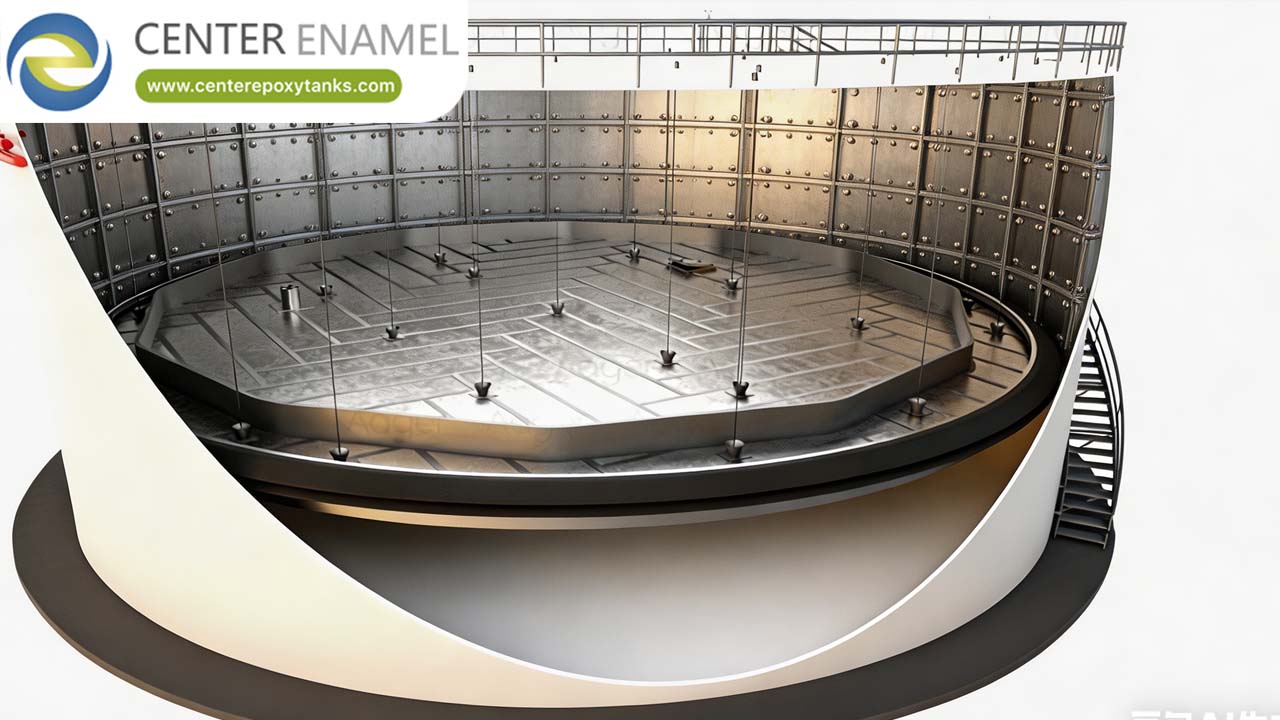
Floating Roof Tank: Design, Types, and Vapor Emission Control
In the petrochemical and energy industries, storing volatile liquids safely while minimizing environmental pollution is a critical engineering challenge. When volatile organic compounds (VOCs) like crude oil, gasoline, and aviation fuel are stored in standard fixed-roof containers, temperature fluctuations and liquid movement generate massive vapor losses and explosion hazards.
The engineering solution to this problem is the floating roof tank. Built in strict accordance with API 650 standards (specifically Annex C for external roofs and Annex H for internal roofs), a floating roof tank features a specialized deck that floats directly on the surface of the stored liquid, rising and falling with inventory levels to eliminate dangerous vapor headspace.
1. Primary Types of Floating Roof Tanks
Floating roof tanks are categorized into two primary structural configurations based on weather protection and environmental exposure:
An EFRT features an open-top vertical cylindrical shell with a steel deck that floats directly on the liquid surface.
A flexible rim seal bridges the narrow annular gap between the outer perimeter of the floating deck and the interior tank wall.
Because the roof is exposed to the elements, EFRTs require engineered drainage systems (such as articulated roof drains and sumps) to safely manage rainwater accumulation.
An IFR combines the protective outer shell and fixed roof of a traditional fixed-roof tank with an internal floating pan or pontoon deck.
The fixed outer roof (often a cone roof or a lightweight aluminum geodesic dome) shields the interior from rain, snow, and direct sunlight, completely eliminating rainwater loading issues.
This design is highly favored for volatile products in regions with severe weather or strict urban environmental emission codes.
2. Critical Mechanical Components of Floating Roof Systems
The operational integrity of a floating roof relies on several synchronized mechanical assemblies:
Floating Decks: Available in pontoon, double-deck, or full-contact sandwich panel designs, these decks provide sufficient buoyancy to support dead loads and operational equipment without sinking.
Rim Seals: The critical barrier preventing hydrocarbon vapors from escaping through the gap between the deck and shell. Modern tanks utilize primary and secondary seals (mechanical shoe seals or liquid-mounted foam seals) to achieve high emission-reduction efficiencies.
Anti-Rotation Devices and Rolling Ladders: Guide poles or cable systems prevent the floating deck from rotating as levels fluctuate, while articulated rolling ladders provide safe operator access from the top platform down to the deck surface.
Data Table: Floating Roof vs. Fixed Roof Storage Matrix
Tank Classification | Roof Design Structure | Vapor Space (Ullage) | Primary Emission Control | Governing Standards |
External Floating Roof (EFRT) | Open-top shell with dynamic floating deck | Zero vapor space over liquid surface | Direct liquid contact + primary/secondary rim seals | API 650 (Annex C) |
Internal Floating Roof (IFR) | Fixed outer roof + internal floating deck | Enclosed headspace above internal pan | Enclosed shell protection + internal rim seals | API 650 (Annex H) |
Fixed Cone Roof (Standard) | Permanently welded conical roof | Large vapor space subject to breathing | Requires vapor recovery units or PVRV vents | API 650 |
3. Key Operational Advantages and Environmental Benefits
Drastic Reduction of VOC Emissions: By eliminating the vapor pocket (ullage) above the liquid, floating roof tanks prevent breathing and working losses, conserving valuable product and complying with strict environmental regulations.
Mitigation of Explosion Risks: Removing flammable vapor concentrations inside the containment vessel dramatically lowers the risk of lightning-induced or static-ignition fires.
Product Quality Preservation: Minimizing evaporation prevents the loss of light ends in crude oil and refined fuels, maintaining high vapor pressure and product grading specifications.
Frequently Asked Questions (FAQ)
Q: What is a floating roof tank?
A: A floating roof tank is an aboveground storage tank equipped with a specialized deck that floats directly on top of the stored liquid. It moves up and down with fluid levels to eliminate vapor space, reducing evaporation and emissions.
Q: What is the difference between an EFRT and an IFR?
A: An External Floating Roof Tank (EFRT) has an open top where the floating deck is exposed directly to the weather, whereas an Internal Floating Roof Tank (IFR) features a fixed outer roof (or dome) that shields the internal floating deck from rain and sun.
Q: How do rim seals prevent vapor leaks in floating roof tanks?
A: Rim seals (such as mechanical shoe seals or foam-filled liquid-mounted seals) bridge the annular gap between the moving floating deck and the stationary tank wall, flexing smoothly to maintain a tight barrier against escaping hydrocarbon vapors.
Q: What engineering standard governs welded floating roof tanks?
A: Welded steel floating roof tanks are designed, fabricated, and tested in accordance with API 650 standards, with external floating roofs detailed in Annex C and internal floating roofs covered in Annex H.


