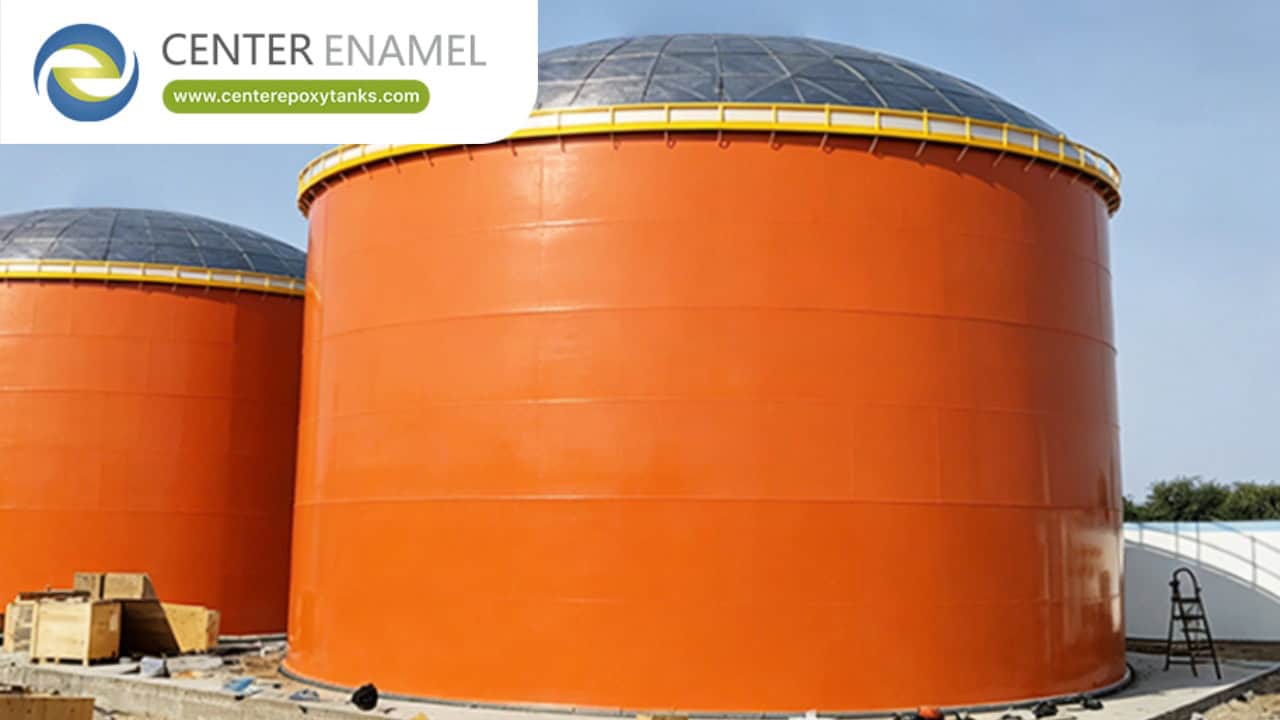
Fixed Roof Tank: Engineering Design, Types, and Applications
In industrial liquid bulk storage, aboveground storage tanks (ASTs) are categorized based on their structural design and environmental handling capabilities. Among these, the fixed roof tank is the most traditional, cost-effective, and widely utilized configuration for storing non-volatile or low-volatility liquids.
Governed globally by standards such as API 650 for welded steel tanks and AWWA D100 for water storage reservoirs, fixed roof tanks feature a permanently attached roof welded directly to the top of the cylindrical shell. This design provides robust weather protection for the stored media, shielding contents from rain, snow, and wind-blown debris.
1. Key Structural Geometries of Fixed Roof Tanks
Fixed roof tanks are built in several distinct geometrical configurations depending on tank diameter, internal pressure limits, and structural load requirements:
Self-Supported Cone Roofs: Built with a conical shape sloping upward to a central apex, these roofs are self-supporting and rely entirely on the perimeter shell for structural strength. They are typically implemented on smaller-diameter tanks (generally under 50 feet) where internal columns are unnecessary.
Structurally-Supported Cone Roofs: For larger diameter tanks, cone roofs require internal framing supported by structural steel rafters, purlins, and central columns.
Dome (Umbrella) Roofs: Featuring a curved, spherical profile, dome roofs offer superior structural integrity and enhanced resistance against heavy snow and wind loads compared to flat or shallow cone profiles.
Geodesic Aluminum Domes: Modern industrial facilities frequently retrofit aging steel cone roofs with lightweight, clear-span aluminum geodesic domes, eliminating internal columns and offering superior corrosion resistance.
2. Vapor Space Management and Venting Requirements
Unlike floating roof tanks that rest directly on the liquid surface, fixed roof tanks maintain a vapor space (known as ullage) between the liquid level and the roof. This operational characteristic creates specific management requirements:
Breathing Losses: As ambient temperatures fluctuate day and night, the vapor space expands and contracts, forcing air and hydrocarbon vapors out of the tank (breathing loss).
Filling Losses: When liquid is pumped into the tank, outgoing air saturated with product vapors is displaced into the atmosphere.
Pressure-Vacuum Relief Valves (PVRVs): To protect the tank shell from over-pressurization or vacuum collapse during filling and emptying operations, fixed roof tanks are equipped with calibrated PVRVs, emergency roof hatches, and breather vents engineered per API 2000 standards.
Data Table: Fixed Roof Tank Configuration Matrix
Roof Geometry | Typical Tank Diameter Limit | Primary Structural Support | Principal Stored Media Applications | Governing Standards |
Self-Supported Cone Roof | Typically 50 ft (15 m) | Perimeter shell attachment (No internal columns) | Diesel, fuel oil, water, heavy lubricants | API 650, AWWA D100 |
Supported Cone Roof | Exceeding 50 ft (15 m) up to large footprints | Internal rafters, girders, and central columns | Crude oil (low volatility), heavy chemicals, wastewater | API 650 |
Dome / Umbrella Roof | Variable (Medium to large scale) | Curved structural shell geometry | Potable water, industrial chemicals, dry bulk | API 650, AWWA D100 |
Aluminum Geodesic Dome | Custom scalable spans | Clear-span space frame (No internal columns) | Refined fuels, water reservoirs, wastewater clarifiers | AWWA D103, API 650 |
3. Advantages and Limitations of Fixed Roof Tanks
Advantages:
Cost-Effective Construction: Simpler design, fewer moving parts, and standard fabrication make fixed roof tanks significantly cheaper to build than floating roof variants.
Weather Protection: Complete overhead containment prevents rainwater, snow, and airborne contaminants from mixing with the stored product.
Low Maintenance: Absence of moving floating deck seals or rolling ladders reduces routine maintenance requirements.
Limitations:
Evaporation and Emissions: The presence of a vapor space leads to breathing and working losses, making them unsuitable for highly volatile liquids like gasoline unless paired with vapor recovery units or internal floating covers.
Fire Risk Management: Accumulation of flammable vapors in the ullage requires strict adherence to lightning grounding, flame arrestors, and foam fire suppression systems.
Frequently Asked Questions (FAQ)
Q: What is a fixed roof tank?
A: A fixed roof tank is an aboveground storage tank featuring a permanently attached roof (such as a cone or dome) welded directly to the vertical shell. It is designed to store low-volatility liquids while protecting contents from environmental elements.
Q: What products are typically stored in fixed roof tanks?
A: Fixed roof tanks are ideal for storing stable, low-volatility products, including diesel fuel, heating oil, heavy crude oil, lubricants, firefighting water, municipal wastewater, and various industrial chemicals.
Q: Why can't highly volatile liquids be stored in standard fixed roof tanks?
A: Volatile liquids like gasoline generate high vapor pressures. Storing them in a standard fixed roof tank creates hazardous vapor accumulation in the headspace, leading to high evaporative losses and explosion risks unless an internal floating roof is installed.
Q: How is pressure managed in a fixed roof tank?
A: Because fixed roof tanks maintain an internal vapor space, they utilize pressure-vacuum relief valves (PVRVs) and emergency breather vents designed in accordance with API 2000 specifications to prevent structural damage from thermal breathing and liquid transfer.


