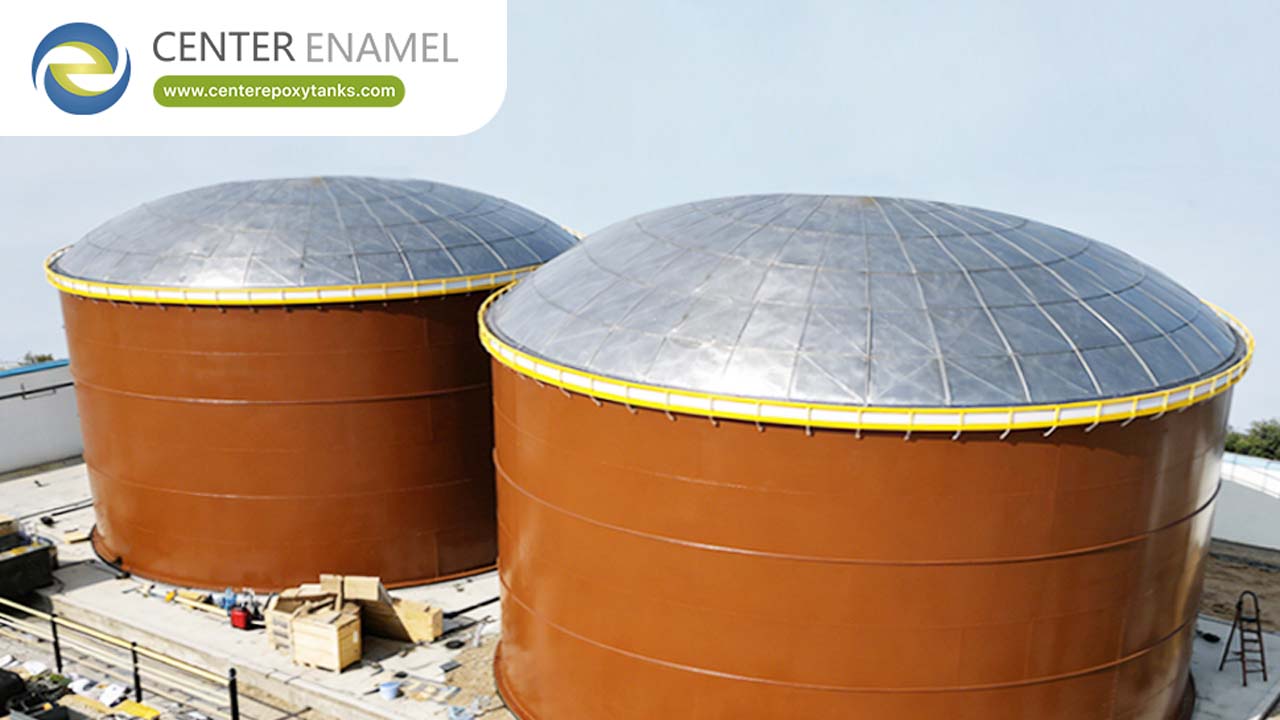
Floating Roof Storage Tanks: High-Efficiency Welded Steel Infrastructure for Volatile Liquids
A Floating Roof Storage Tank (FRST) is a specialized welded steel containment system where the roof is designed to float directly on the liquid surface. This engineering approach is the global industry standard for storing crude oil, gasoline, and other volatile organic compounds (VOCs). By eliminating the vapor space (ullage) between the liquid and the roof, welded steel floating roof tanks reduce evaporative loss by up to 99%, minimize fire hazards, and ensure compliance with environmental regulations like API 650 Appendix C & H.
1. Welded Steel Integrity: The Foundation of FRST
In the 2026 industrial landscape, the structural reliability of a floating roof depends on the precision of the welded steel shell.
● Full-Penetration Welding: Unlike smaller bolted tanks, large-scale floating roof tanks utilize butt-welded steel plates to ensure a 100% leak-proof vertical shell. This is critical for the smooth travel of the floating roof, as any shell deformation can lead to "rim-lock."
● Material Grades: Center Enamel utilizes high-tensile carbon steel (e.g., ASTM A36 or A573) that is factory-prepped and field-welded to provide the hoop strength necessary for massive volumes exceeding 100,000 m3.
2. Internal vs. External Floating Roofs (IFRT vs. EFRT)
The choice between these two welded steel configurations is dictated by the volatility of the stored medium and localized environmental factors.
External Floating Roof Tanks (EFRT)
Commonly used for large-diameter crude oil storage.
● Mechanism: The welded steel roof is exposed to the atmosphere, typically utilizing a double-deck or pontoon design for maximum buoyancy.
● Strategic Value: Allows for easy inspection of the primary and secondary seals.
● Risk Factor: Requires advanced drainage systems (articulated pipes) to prevent the roof from sinking during heavy rainfall.
Internal Floating Roof Tanks (IFRT)
The "Gold Standard" for refined products like jet fuel and premium gasoline.
● Mechanism: A lightweight floating deck is installed inside a fixed-roof welded steel tank.
● Strategic Value: The fixed roof protects the floating deck from wind, snow, and rain, while the floating deck eliminates 99.5% of evaporative loss. This "Dual-Layer" approach is the most effective for VOC emission reduction.
3. Technical Engineering Matrix
Performance Metric | Welded Steel Specification | Strategic Operational Value |
Design Standard | API 650 / ISO 28765 | Global benchmark for oil & gas storage safety. |
Evaporative Control | 98% – 99.5% Reduction | Direct cost savings by preventing product loss. |
Buoyancy Design | Pontoon / Double-Deck | Ensures the roof remains level during filling/emptying. |
Seal Technology | Mechanical Shoe + Wiper Seal | Maintains a hermetic barrier against the welded shell. |
Corrosion Defense | Internal Lining / Epoxy Coating | Extends asset life in aggressive chemical service. |
4. The Critical Component: Rim Seal Systems
The efficiency of a welded steel floating roof is entirely dependent on the seal between the roof and the tank shell.
● Primary Mechanical Shoe Seals: These utilize a metallic "shoe" held against the tank shell by springs or weights, providing a robust vapor barrier.
● Secondary Seals: Installed above the primary seal to capture any residual vapors and act as a weather shield.
● Welding Precision: For these seals to function, the internal weld beads of the tank shell must be ground flush. This ensures a smooth path for the roof to rise and fall without compromising the seal's integrity.
5. Structural Reliability: FEA-Verified Buoyancy
Floating roofs are dynamic structures. If the load is unbalanced, the roof can tilt, jam, or sink.
● Finite Element Analysis (FEA): Center Enamel utilizes FEA modeling to simulate non-uniform loads—such as localized snow accumulation or off-center hydraulic pressure—to verify that the roof remains buoyant and level.
● Automatic Bleeder Vents: These precision-engineered vents allow air to escape during initial filling, ensuring the welded roof makes "Full Contact" with the liquid surface without trapping dangerous air pockets.
6. Why Choose Center Enamel for Welded Steel Storage?
As an outstanding containment system provider with decades of industry experience, we offer:
● Global Recognition: Our tanks have been exported to over 100 countries, including the USA, UAE, and Australia.
● Compliance Expertise: We design in strict accordance with API 650, AWWA D103-09, and NFPA standards.
● EPC Support: From VOC emission calculations to on-site welding supervision and final commissioning, our engineers provide end-to-end technical guidance.


