External Floating Roofs for Petroleum Tanks: Engineering, Emission Control, and API 650 Compliance
In the global petroleum and petrochemical industries, storing massive volumes of volatile crude oil and intermediate products requires containment infrastructure that minimizes safety risks and environmental degradation. When crude oil or volatile distillates are stored in traditional fixed-roof tanks, a vapor headspace (ullage) forms above the liquid level. As ambient temperatures fluctuate, this vapor expands and escapes through vents, leading to severe product loss, high emissions of volatile organic compounds (VOCs), and a heightened risk of vapor-phase ignition.
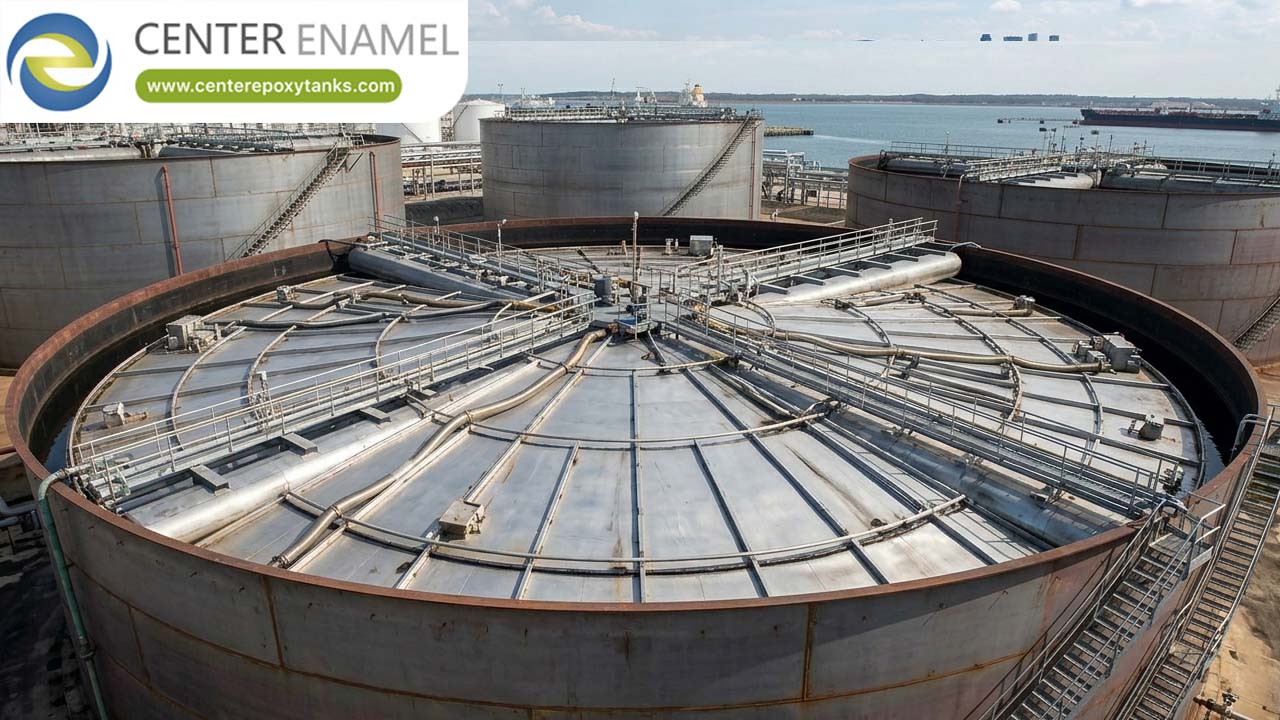
The industry-standard architectural solution for large-diameter storage is the external floating roof (EFR). Operating inside open-top vertical cylindrical tanks, an external floating roof rests directly on the surface of the liquid, rising and falling dynamically with inventory cycles. By eliminating the vapor space entirely, EFR systems drastically reduce evaporation losses, prevent foul odors, and enhance overall operational safety across tank farms and marine terminals.
Core Engineering Principles and Structural Design
The design, fabrication, and structural integrity of external floating roofs are strictly regulated by international codes—most notably API 650 Annex C (External Floating Roofs).
Buoyancy and Pontoon Architecture: EFRs are engineered using either pontoon-style decks or double-deck structures. Pontoons provide the primary buoyancy required to keep the steel deck level and afloat. Crucially, designs must satisfy strict buoyancy criteria—such as the two-compartment sinking criterion—which mandates that the roof must remain buoyant even if two adjacent pontoon compartments are breached.
Dynamic Rim Seal Systems: The annular gap between the outer perimeter of the floating deck and the interior wall of the steel tank shell is sealed using high-performance primary and secondary mechanical seals (such as mechanical shoe seals or liquid-filled tubes). These seals maintain continuous, flexible contact with the shell during operation to suppress rim vapor losses.
Stormwater Management and Drainage: Because external floating roofs are exposed directly to the open atmosphere, they accumulate rainwater and snowmelt. Dedicated roof drainage systems—featuring articulated swivel joints or high-strength flexible hoses connected to a central sump—safely channel precipitation off the deck and through the tank floor without contaminating the stored petroleum product.
Data Table: Comprehensive Comparison of Petroleum Tank Roof Technologies
Technical Parameter | External Floating Roofs (EFRs) | Internal Floating Roofs (IFRs) | Fixed Cone Roofs (No Internal Deck) |
API Governing Standard | API 650 Annex C | API 650 Annex H | API 650 Main Body Specifications |
Atmospheric Exposure | Fully exposed to weather (rain, snow, wind) | Sheltered beneath a permanent fixed outer roof | Fully enclosed fixed roof structure |
Volumetric Scalability | Ideal for massive high-capacity crude oil terminals (100,000+ bbl) | Best suited for refined products in moderate capacities | Standard for asphalt, heavy residual oils, and water |
Drainage Requirements | Active roof drains and flexible piping required | Minimal internal condensation drainage | Standard tank breathing vents |
Frequently Asked Questions (FAQ)
Q: What is the primary function of an external floating roof on a petroleum tank?
A: An external floating roof floats directly on the liquid surface of crude oil or volatile fuels, eliminating the internal vapor headspace (ullage) to prevent evaporation, reduce VOC emissions, and lower fire hazards.
Q: Which API standard governs the design of external floating roofs?
A: API 650 Annex C is the definitive standard governing the mechanical design, buoyancy calculations, and material requirements for new external floating roofs.
Q: How do external floating roofs handle rainwater accumulation?
A: They utilize specialized roof drainage systems—including roof sumps, check valves, and articulated or flexible drainage pipes—that route rainwater off the moving deck and discharge it safely outside the tank.
Q: Why are secondary seals required on external floating roof tanks?
A: Secondary seals are installed above the primary rim seal to bridge the annular gap and provide an extra layer of vapor containment, ensuring strict compliance with local environmental regulations regarding volatile organic compound (VOC) emissions.


