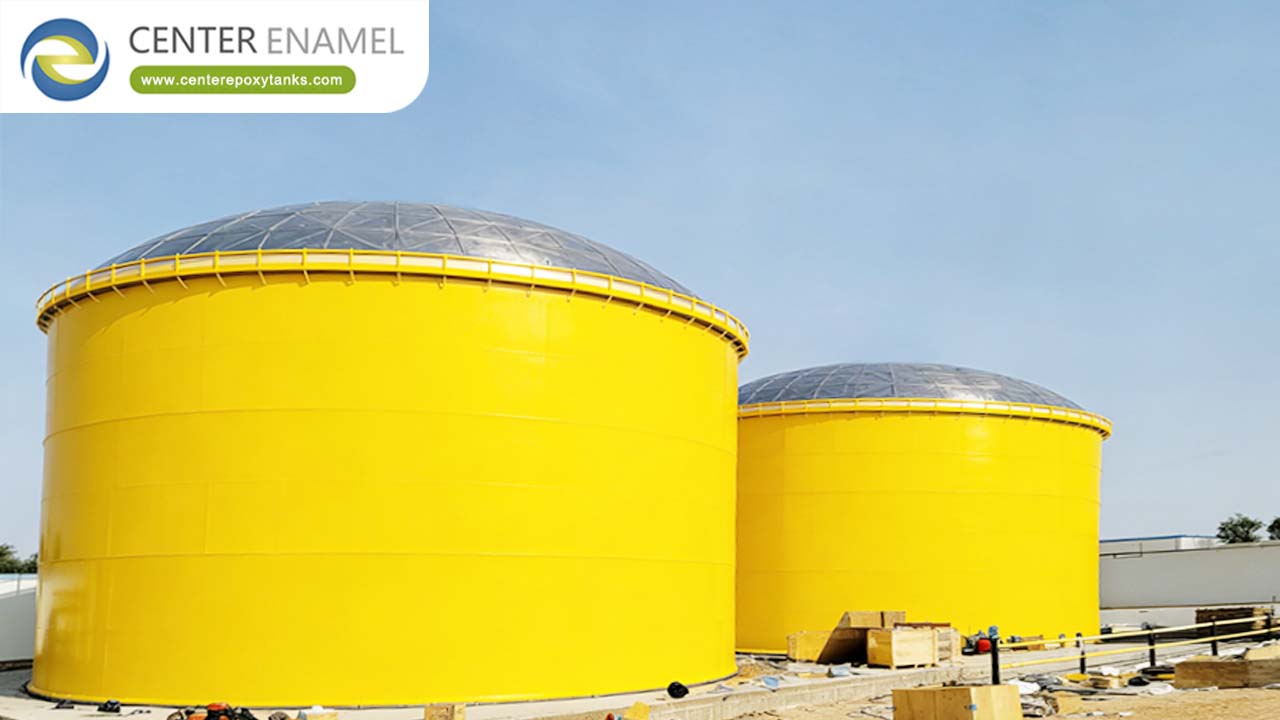
External Floating Roof Tank (EFRT): The Global Standard for Large-Scale Crude Storage
What is an External Floating Roof Tank (EFRT)? An External Floating Roof Tank is a large-diameter storage vessel designed without a fixed top cover. Instead, the roof floats directly on the liquid surface, moving vertically within the tank shell. EFRTs are the primary containment solution for high-volume crude oil and other petroleum products, where a fixed roof would be structurally impractical and economically inefficient. By eliminating the vapor space, an EFRT prevents the loss of thousands of barrels of product annually while maintaining the highest levels of fire safety.
1. Mechanical Principles of the EFRT
The EFRT operates on the principle of constant liquid contact. As the tank is filled or emptied, the roof glides on the product, ensuring no air-vapor mixture can form beneath the deck.
● Buoyancy Design: Most EFRTs utilize a Pontoon or Double-Deck configuration. In accordance with API 650 Appendix C, the roof must be engineered to remain buoyant even if two adjacent compartments are punctured.
● Rim Seal Dynamics: To prevent vapors from escaping between the roof and the tank shell, a dual-seal system is employed. This typically includes a mechanical shoe primary seal and a wiper-style secondary seal to maximize environmental compliance.
● Stability: An anti-rotation system, usually consisting of a guide pole and cables, prevents the roof from spinning, which would otherwise damage the delicate seal systems.
2. Critical Components of an EFRT System
As a premier China Floating Roofs Manufacturer, Center Enamel ensures every EFRT is equipped with specialized hardware to handle environmental stressors:
Rainwater Drainage System
Since the roof is exposed to the elements, it must handle heavy rainfall. We utilize high-capacity articulated pipe drains or flexible hose drains that carry water from the roof deck to an outlet at the base of the tank without contaminating the stored product.
Support Legs (Fixed or Adjustable)
When the tank is emptied for maintenance, the roof rests on support legs. These are designed to maintain a safe clearance between the roof and the tank floor, protecting internal heaters and allowing personnel access.
Rolling Ladders
To allow operators to access the roof regardless of its height, a self-leveling rolling ladder is installed, which adjusts its angle as the roof moves up and down.
3. Engineering Challenges and Solutions
Challenge | Impact | Center Enamel Solution |
Wind Loads | High wind can cause the roof to tilt or "bind" against the shell. | Precision CNC Fabrication ensures a perfect shell-to-roof tolerance. |
Seismic Activity | Sloshing liquid can sink the roof during an earthquake. | Reinforcement of the pontoon structure to meet API 650 seismic standards. |
Seal Wear | Rough welded seams can tear traditional seals. | Compatibility with Welded Steel Tanks using high-abrasion resistant polymers. |
4. Why Refineries Choose EFRTs over Fixed-Roof Tanks
The transition from fixed-roof to external floating roof technology is driven by three primary metrics:
● Product Conservation: For a 100,000 m³ crude tank, an EFRT can save over 98% of the product that would otherwise be lost to evaporation.
● Emission Compliance: EFRTs are the only viable solution for large-diameter tanks to meet global VOC (Volatile Organic Compound) reduction mandates.
● Fire Safety: By removing the explosive vapor "headspace," the risk of a catastrophic top-down tank explosion is virtually eliminated.
5. Why Partner with Center Enamel?
With a 150,000 m² automated facility and a history of innovation since 1989, Shijiazhuang Zhengzhong Technology Co., Ltd (Center Enamel) is the definitive partner for global refinery infrastructure.
● Material Excellence: We specialize in high-strength Aluminum and Stainless Steel floating systems that offer a 30-year+ service life.
● Global Logistics: Our bolted internal components are shipped to 100+ countries, allowing for rapid, weld-free assembly on-site.
● Compliance Authority: Every design is verified to meet API 650, AWWA, and ISO 28765 standards.


