Agricultural Waste Biogas Tanks: Center Enamel Manufacturing for Anaerobic Digestion
For agricultural waste biogas tanks, the right tank is defined by the stored medium, the duty cycle, and any coating or approval rule — not a single headline number. A sealed, lined digester turns farm residues into biogas with captured gas. A agricultural waste biogas tank built with a verified coating system and correct sizing delivers a safe, low-maintenance installation.
Agricultural waste biogas tank For Agricultural waste biogas
Biogas storage and digestion need a sealed, corrosion-resistant volume that holds slurry and captures gas. For agricultural waste biogas tanks, the tank is the digester and often the gas buffer in one bolted-steel package.
A sealed, lined digester turns farm residues into biogas with captured gas.
Sealed Digestion And Gas Capture
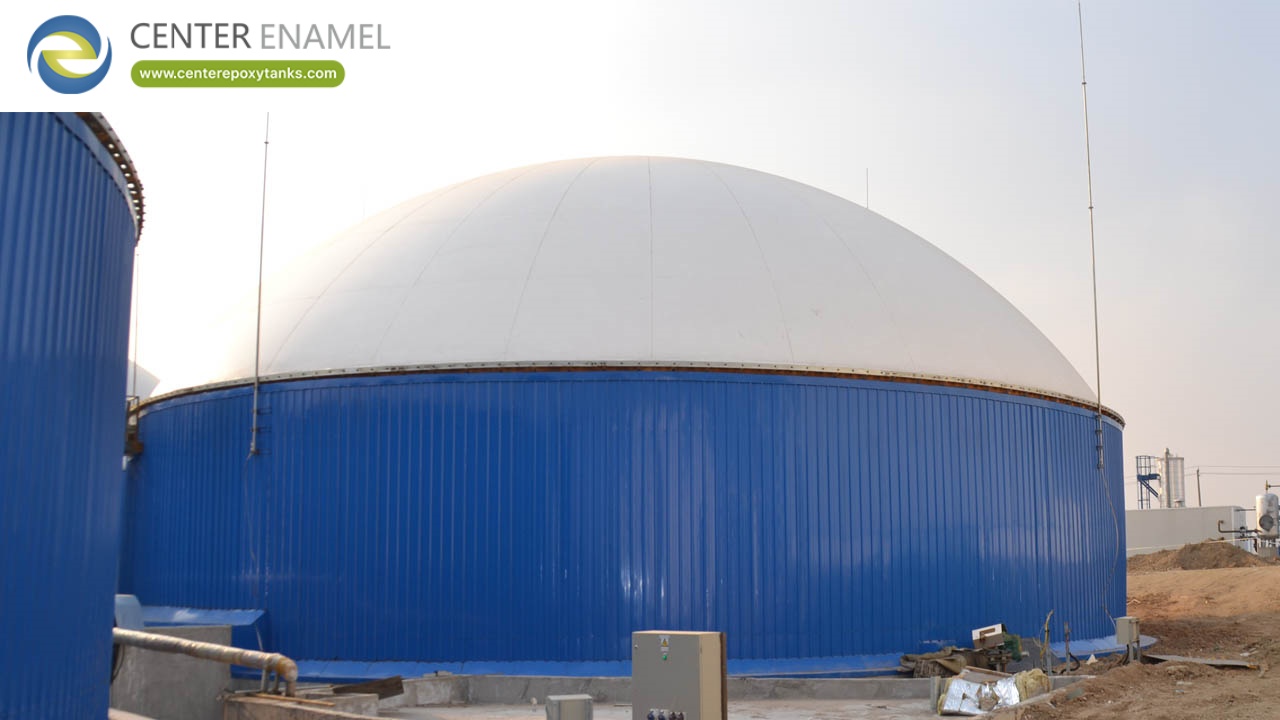
For agricultural waste biogas tank, the epoxy or FBE lining resists the acidic, H2S-rich environment of anaerobic digestion, while a gas-tight top — often a double-membrane roof — captures the biogas for use.
Volume follows retention time and feed rate. Heated, mixed digesters need nozzle provisions for heat exchangers, mixers, and gas outlets; plan these with the process engineer.
Material And Process Match
Match the coating to the feedstock: food waste, manure, and agricultural residues each bring different solids, pH, and grit. A certified internal lining plus a sealed roof keeps the process contained.
Where the gas is upgraded to biomethane, the tank and roof must hold design pressure and resist the gas chemistry.
Sizing And Delivery
Confirm retention time, feed characteristics, and gas duty before sizing. Verify coating spec, gas-tightness test, and nozzle layout at factory acceptance.
How To Specify This Tank
1. Define the medium and duty: confirm the agricultural waste biogas specifics — chemistry, temperature, solids, and any approval such as NSF-61 / WRAS for potable-adjacent duty.
2. Set the capacity from the real driver — demand, retention time, or the fire hydraulic calculation — rather than a generic rule of thumb.
3. Choose the shell and lining: a bolted, factory-coated steel tank with the lining matched to agricultural waste biogas tank duty and environment.
4. Agree ancillaries and standards with the engineer of record — nozzles, roof type, level and pressure control, bunding, and the applicable codes.
5. Verify at acceptance: coating certificate, lining inspection, and a hydrostatic or gas-tightness test before handover.
Common Pitfalls To Avoid
· Specifying a size before the medium and duty are known — the lining and volume must follow the process.
· Treating the roof, membrane, or cover as a late add-on — it must be matched to the shell at design time.
· Skipping the lining inspection and pressure or hydrostatic test, which is where most lifecycle problems begin.
· Assuming one coating fits every product — verify compatibility with the actual stored medium and temperature.
Procurement, Delivery, And Commissioning
For agricultural waste biogas tank in agricultural waste biogas, procurement should lock the coating specification and the quality evidence — coating certificate, lining inspection, and test record — before shipment. Bolted panels arrive flat-packed; site erection is fast, and the tank can later be dismantled and re-erected if the duty or location changes.
During commissioning, confirm level and pressure instrumentation, verify the lining survived transport and erection, and document the as-built condition. A documented handover supports permitting, audit, and a sensible maintenance plan over the tank's service life.
Lifecycle, Maintenance, And Inspection
A agricultural waste biogas tank is a long-life asset when the lining and structure are specified and verified for the duty. For agricultural waste biogas, plan routine checks of the lining, the roof or membrane, nozzles, and level or pressure instruments, and keep a record of the as-built coating and test evidence for audit and warranty purposes.
Bolted construction makes future expansion, relocation, or re-coating straightforward compared with a welded tank. Where the medium or regulation changes, the same shell can often be re-lined rather than replaced, which protects both budget and uptime over the service life.
Technical Specifications To Confirm
Parameter | What to specify |
Medium / product | Agricultural waste biogas — confirm chemistry, temperature, solids |
Capacity | From demand, retention time, or hydraulic calc |
Coating / lining | Epoxy or FBE; NSF-61 / WRAS if potable-adjacent |
Shell | Bolted steel (GFS / epoxy / stainless per duty) |
Roof | Sealed, dome, floating, or double-membrane per application |
Standards | ISO 28765, AWWA D103, NFPA 22 / EN 12845 as applicable |
Ancillaries | Nozzles, mixers, level control, bunding, access |
Verified Project Case
Field | Value |
Project / Application | Biogas project — Malaysia |
Industry | Biogas project |
Tank Type | Carbon steel tank |
Tank Quantity | 1 |
Dimensions Per Tank | Ø 22.93 x 12.325 m (H) 1units |
Volume | 5,087 m3 |
Year | 2025 |
Source / Evidence | Company project ledger (2025 installation) |
Center Enamel's verified record includes a 2025 biogas project in Malaysia — 1 unit(s), Ø 22.93 x 12.325 m (H) 1units, 5,087 m3 total, Carbon steel tank. This is cited as a verified engineering reference (B-grade): it shares the same broad agricultural waste biogas tank/agricultural waste biogas storage discipline, but the referenced project used Carbon steel tank, whereas this article addresses agricultural waste biogas tank. It is presented as a background reference, not a claim that the exact article configuration was delivered.
Frequently Asked Questions
Q: What is a biogas digester tank?
A: A sealed, lined volume that holds feedstock, digests it, and captures the gas produced.
Q: Why epoxy or FBE lining?
A: The anaerobic environment is acidic and H2S-rich; the lining resists it.
Q: How is gas captured?
A: A gas-tight top, often a double-membrane roof, stores the biogas for use.
Q: How is volume set?
A: From retention time and feed rate for the chosen feedstock.
Q: What feedstocks are typical?
A: Food waste, manure, agricultural residues, and organic industrial streams.
Q: What nozzles are needed?
A: Heat exchangers, mixers, and gas outlets sized with the process engineer.
Agricultural Waste Biogas Tanks: Center Enamel Manufacturing for Anaerobic Digestion comes down to matching the agricultural waste biogas tank to the medium, the duty, and the applicable standard. Specify the lining and sizing from the real operating condition, verify the coating and hydrostatic test at acceptance, and the installation will perform.
Request A Specification
Discuss your project with a Center Enamel engineer: share medium, capacity, site, and any approval requirement, and receive a tailored tank specification and quotation.


